Table of Contents
- Why the Right Questions to Ask a Home Inspector Matter
- Questions to Ask Before Hiring a Home Inspector
- What Does a Home Inspector Check? Key Areas of Focus
- How Long Does a Home Inspection Take? Plan Your Time
- 15 Questions to Ask a Home Inspector on Site
- Red Flags in Inspector Responses to Watch For
- Using Inspector Answers for Your Negotiation Strategy
- Conclusion
- Frequently Asked Questions
Last Updated: September 8, 2026
Why the Right Questions to Ask a Home Inspector Matter
A home inspection is the single most valuable due diligence step in a real estate transaction, yet many homebuyers treat it as a passive formality. The difference between a helpful inspection and a costly miss often comes down to the questions to ask a home inspector before and during the walkthrough. At Full Disclosure Property Inspection, the buyers who walk away most confident are the ones who arrived prepared with a clear line of questioning.
The questions to ask are not about testing the inspector’s knowledge. They are about understanding the property’s condition, the limits of the inspection itself, and how to use the findings in your negotiation. The right questions to ask a home inspector can save you thousands of dollars by identifying unknown property issues before you close, rather than discovering them after the sale is final.
Below, we will show you exactly how to structure your questioning across three phases: before hiring, during the on-site walkthrough, and after you receive the report. We will also cover the red flags in inspector responses that should make you pause, and how to convert answers into use when negotiating repairs.
Questions to Ask Before Hiring a Home Inspector
Your first round of questions to ask a home inspector happens before you schedule anything. This is the screening phase, and it determines whether you are working with a qualified professional or someone who simply walks through houses with a flashlight.
Start with credentials and experience. Ask about their licensing, certifications, and professional association memberships. A Certified Master Inspector designation signals advanced training and adherence to a strict Code of Ethics. Ask how many inspections they have performed and whether they inspect homes full time or as a side business.
Ask whether the inspector carries errors and omissions insurance. This protects you if the inspector misses a major defect that later requires expensive repairs. Many buyers never ask this question until it is too late.
You should also ask about the inspection standards they follow. Professional inspectors adhere to published standards of practice that define what is and is not covered. Ask if they belong to a recognized professional association that enforces those standards. Finally, ask about their background. An inspector with experience in general contracting or land development often spots issues that a purely inspection-focused professional might miss.
What Does a Home Inspector Check? Key Areas of Focus
Understanding what does a home inspector check helps you ask better follow-up questions on site. A standard home inspection is a visual, non-invasive examination of the property’s major systems and components. It is not a code compliance audit, and it will not catch every conceivable defect.
The core areas of focus include the structural integrity of the foundation, walls, and roof; the condition and safety of the electrical panel and wiring; plumbing systems for leaks and water damage; HVAC efficiency and functionality; attic insulation and ventilation; and visible drainage systems around the property. The inspector also checks for safety hazards, water damage, and signs of pest activity.
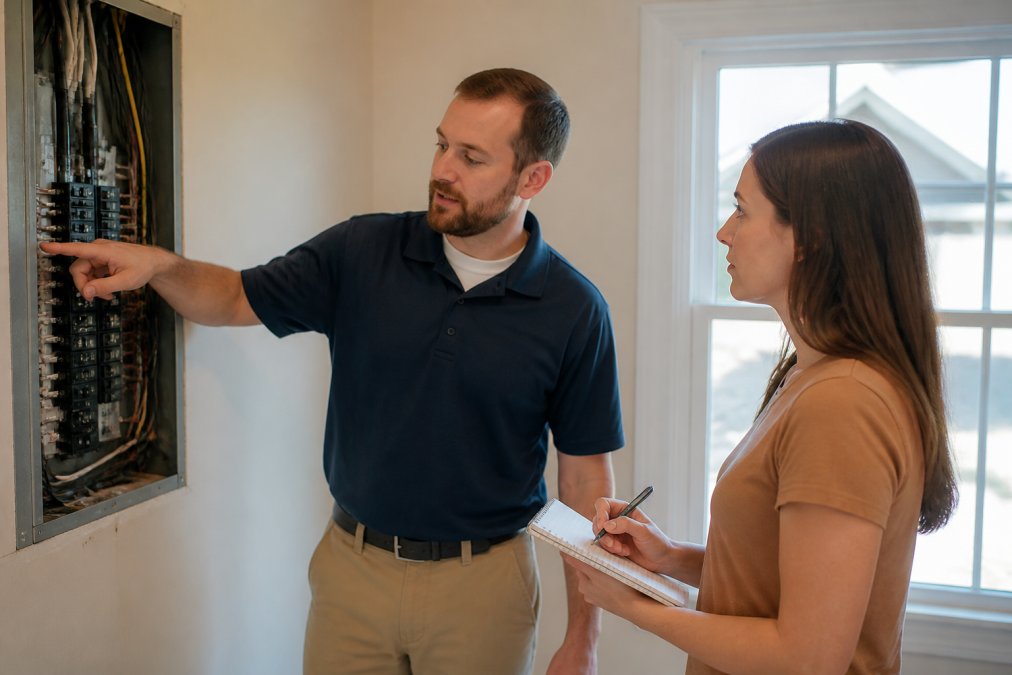
A common misconception is that the inspection covers everything. It does not. Most inspections exclude items that require invasive testing, such as inside walls, behind appliances, or within the sewer line. Radon testing and pest inspection are typically separate services that you must request and pay for independently. Knowing these boundaries before the walkthrough lets you ask targeted questions about what the inspector actually examined versus what remains unknown.
How Long Does a Home Inspection Take? Plan Your Time
A typical home inspection takes two to three hours for a standard single-family home, depending on the property’s size, age, and condition (nahb.org). How long does a home inspection take matters because you should plan to attend the final hour of the walkthrough in person.
The first portion of the inspection is the inspector’s focused examination of the exterior, roof, foundation, and major systems. The final portion is when the inspector walks through the interior and is often the best time for you to join. This is when you can ask questions about specific findings and see issues firsthand.
Larger homes, older properties with multiple systems needing attention, or homes with accessibility issues can take longer. If you are buying new construction, the inspection may be shorter, but it is still essential. New homes can have significant defects that are not visible to the untrained eye.
15 Questions to Ask a Home Inspector on Site
When you attend the walkthrough, your questions to ask a home inspector should focus on understanding the severity of findings and what they mean for your investment. The inspector’s answers during the walkthrough are often more candid and detailed than what appears in the written report.
Questions About Structural Integrity and Major Systems
-
Is this a structural issue or a cosmetic one? This is the most important question you can ask. It forces the inspector to categorize the severity of a finding and helps you prioritize what needs immediate attention versus what can wait.
-
How urgent is this repair? Some issues, like a leaking roof or active plumbing leak, need immediate attention. Others, like a cracked sidewalk or worn carpet, can wait. Understanding urgency helps you plan your budget.
-
What is causing this problem? A good inspector will explain the likely cause, whether it is poor drainage, improper installation, or normal wear and tear. The cause matters because it determines whether the fix is simple or complex.
-
How much longer will this system last? Ask about the remaining lifespan of major systems like the roof, HVAC, and water heater. This helps you plan for future capital expenses.
-
Can you show me the problem? Do not just accept a verbal description. Ask the inspector to physically show you the issue, whether it is a foundation crack, a plumbing leak, or a roof condition.
-
What should I ask the seller to fix? Inspectors see hundreds of homes and know what is reasonable to request in a negotiation. Their perspective on what constitutes a major defect versus a minor maintenance item is invaluable.
-
Is this a safety hazard? Safety issues, such as exposed wiring, carbon monoxide risks, or structural concerns, should be non-negotiable in your negotiation. Ask the inspector to explicitly identify any safety hazards.
-
What is not included in this inspection? Understanding the exclusions helps you decide whether to order additional specialized inspections, such as sewer line scope, radon testing, or pest inspection.
Questions About the Inspection Report and Next Steps
-
When will I receive the full report? Most inspectors deliver reports within 24 to 48 hours (ashi.org). Knowing the timeline helps you plan your contingency period.
-
Will the report include photos of the issues? Photographs help you understand the severity of findings and are useful when requesting repairs from the seller.
-
Can you explain how the report is organized? Reports vary in format. Understanding how to navigate the document helps you identify what actually matters versus minor issues.
-
Which findings are the most critical? Ask the inspector to prioritize the top issues. This helps you focus your attention and your negotiation strategy on what matters most.
-
How do I prioritize repairs if I move forward? The inspector can help you distinguish between urgent safety issues, major system failures, and routine maintenance.
-
Will you be available for follow-up questions after I review the report? A good inspector stands behind their work and is willing to clarify findings after you have had time to digest the report.
-
What is your process if I need to request a re-inspection? If you negotiate repairs with the seller, you may want the inspector to verify that the work was completed correctly. Ask about their re-inspection process.
The walkthrough is your opportunity to gain clarity. Write down your questions to ask a home inspector beforehand, and do not leave the property until you understand the severity of every major finding.
Red Flags in Inspector Responses to Watch For
The answers you receive are just as informative as the questions you ask. Certain responses should raise concerns about the inspector’s thoroughness or independence.
If the inspector dismisses your questions or rushes through the walkthrough, that is a red flag. A professional inspector understands that the walkthrough is a critical part of the service. If the inspector cannot explain the cause of a problem or gives vague answers, they may not have the expertise you need.
Be wary of inspectors who are unwilling to categorize issues by severity. Every finding is not equal, and a good inspector will help you understand the difference between a major defect and a minor maintenance item. An inspector who refuses to prioritize findings leaves you without the information you need to negotiate effectively.
Watch for inspectors who downplay every issue or, conversely, alarm you about everything. Both extremes suggest a lack of professional judgment. You want an independent, authoritative opinion based on evidence, not a sales pitch or a scare tactic.
You should also confirm that the inspector has no financial relationship with contractors or real estate agents that could influence their findings. Independence is the foundation of the inspection’s value. Ask directly whether they receive referral fees from repair companies, and ask how they handle conflicts of interest.
Using Inspector Answers for Your Negotiation Strategy
The questions to ask a home inspector do not end at the property. The answers you gather become the foundation of your post-inspection negotiation strategy. This is where the real financial value of the inspection is realized.
Begin by categorizing the findings into three buckets: safety hazards, major defects, and maintenance items. Safety hazards and major defects are legitimate grounds for requesting repairs or a price reduction. Maintenance items are typically your responsibility as the new owner.
guidance on real estate contingencies and inspection objections
When you submit your repair request to the seller, reference the inspector’s specific findings rather than making a general request. Attach relevant photos from the report and cite the inspector’s assessment of severity. This makes your request credible and difficult to dismiss. Prioritize your requests, starting with safety hazards and structural issues, and be prepared to compromise on minor items.
For significant defects, you have several options: request that the seller complete the repairs, negotiate a price reduction to cover the estimated repair costs, or ask for a credit at closing. The right approach depends on the local market conditions and the severity of the issues. Your real estate agent can help you determine which approach is most likely to succeed.
If the seller agrees to make repairs, schedule a re-inspection with your original inspector to verify that the work was completed correctly. This final step ensures that the negotiated repairs actually address the problems identified during the inspection.
| Finding Category | Examples | Negotiation Approach |
|---|---|---|
| Safety hazards | Exposed wiring, gas leaks, structural concerns | Non-negotiable: request immediate repair or credit |
| Major defects | Roof replacement, HVAC failure, foundation cracks | Request repair, price reduction, or closing credit |
| Maintenance items | Worn carpet, minor cosmetic cracks, clogged gutters | Typically buyer responsibility, not negotiated |
Conclusion
A home inspection is only as valuable as the questions you ask and the answers you understand. The questions to ask a home inspector span the entire process, from screening candidates before you hire, to probing findings during the walkthrough, to using the report strategically in your negotiation.
At Full Disclosure Property Inspection, led by Certified Master Inspector Melanie Crabtree, we bring over 5,000 inspections performed, a background in general contracting and land development, and advanced diagnostic tools like infra-red thermal imaging to every property we examine. Our detailed, computer-generated reports highlight critical areas so you understand what actually matters, and our strict Code of Ethics guarantees an independent opinion free from outside influence.
Schedule an inspection with Full Disclosure Property Inspection and get the answers you need to make a confident, informed investment decision.
Frequently Asked Questions
What is the biggest red flag in a home inspection?
The biggest red flag is an inspector who gives verbal reassurances without documenting findings in the report. Another major red flag is evidence of structural issues like foundation cracks or sagging roof lines, which can signal costly repairs. Focus on issues that threaten safety or structural integrity rather than cosmetic flaws.
Should I be present during the home inspection?
Yes, attending the inspection is highly recommended. It typically takes 2-3 hours, and being present lets you ask questions directly, see issues firsthand, and better understand the inspector’s findings. You will also get real-time explanations of what does a home inspector check, which makes the written report easier to interpret later.
How do I know if a home inspector is qualified?
Look for credentials like a Certified Master Inspector (CMI) designation and state licensure where applicable. Ask about professional association memberships, years of experience, and the number of inspections performed. A qualified inspector should carry liability insurance and be able to provide a sample report that shows clear documentation and photos.
What are the most common home inspection fails?
Common findings include improper electrical wiring, roof damage or aging shingles, plumbing leaks, inadequate attic insulation, and grading issues that direct water toward the foundation. HVAC systems past their expected lifespan and signs of water intrusion in basements or crawl spaces are also frequent concerns that buyers should understand before closing.


