Table of Contents
- Why New Builds Need Independent Inspections
- Phase 1: Pre-Pour and Pre-Drywall Inspection Importance
- Phase 2: The Final Walkthrough Inspection
- The 11-Month Warranty Inspection: A Second Chance
- Your New Construction Inspection Checklist
- Why Hiring a Private Home Inspector for New Construction Matters
- Coordinating Schedules and Protecting Your Rights
- Conclusion: Secure Your Investment at Every Stage
- Frequently Asked Questions
Last Updated: September 7, 2026
Why New Builds Need Independent Inspections
A new build inspection is the process of hiring an independent, third-party inspector to evaluate a newly constructed home for defects, code violations, and quality issues before you close. Many buyers assume a brand-new house comes with a clean bill of health, but construction defects happen more often than you would expect. Municipal inspectors check for code compliance, yet they do not act as your personal quality assurance advocate, nor do they catch every cosmetic or workmanship issue.
This guide from Full Disclosure Property Inspection covers when to schedule inspections so you protect your investment at every construction phase. The timing matters as much as the inspections themselves. Miss the pre-drywall window, and you lose visibility into the structural core of the home. The best time to hire a home inspector for new builds is a series of strategic checkpoints aligned with the builder’s construction phases.
A builder’s work is rarely reviewed by an independent set of eyes before you take ownership. Scheduling your own new construction inspection at key phases is the only way to verify quality and catch issues while they are still fixable.
Phase 1: Pre-Pour and Pre-Drywall Inspection Importance
The single most valuable checkpoint is the pre-drywall inspection, which happens after the framing, plumbing rough-in, electrical wiring, and HVAC installation are complete, but before the insulation and drywall cover everything up. Once the walls are sealed, verifying structural integrity becomes nearly impossible without invasive measures.
The pre-drywall inspection importance cannot be overstated. This is your only opportunity to see the bones of the house: foundation footings, framing connections, and the routing of mechanical systems. An inspector checks that floor joists are properly notched, that load-bearing walls are correctly supported, and that plumbing and electrical lines are installed according to code. The National Association of Home Builders notes that catching issues during construction rather than after completion saves significant time and money for all parties.
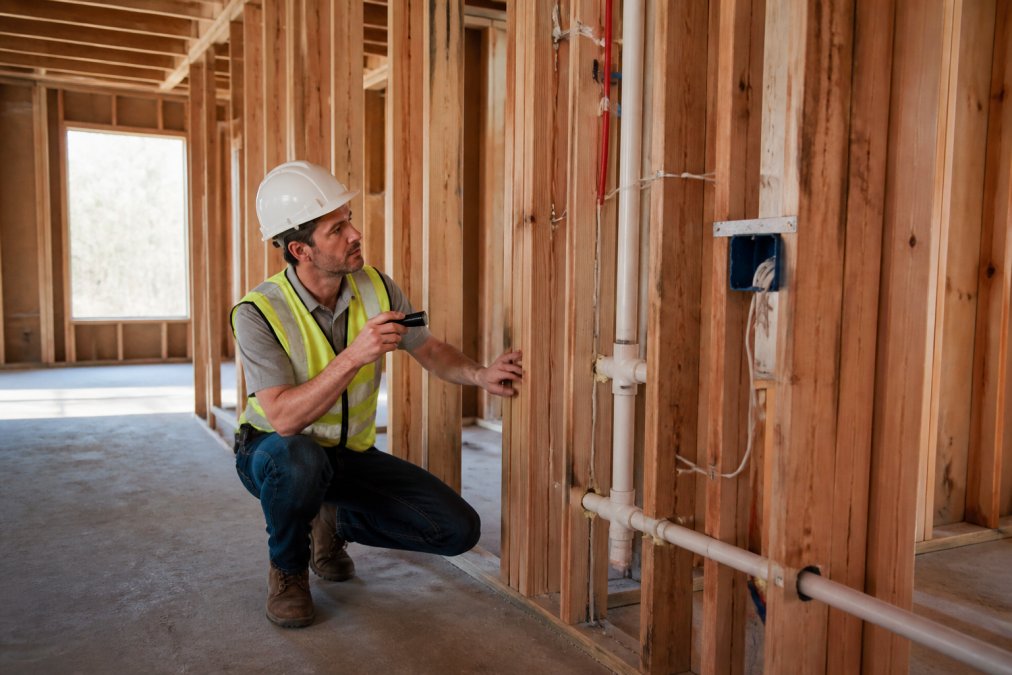
Schedule this inspection before the insulation goes in. Once insulation and drywall are installed, the building envelope is sealed and most defects become hidden. A deficiency report gives your builder a clear, itemized list to correct before closing, far less disruptive than post-closing repairs.
Phase 2: The Final Walkthrough Inspection
The final walkthrough is the second critical checkpoint, typically scheduled a week or two before closing. This inspection focuses on livability and safety, verifying the home is complete, functional, and ready for occupancy. Your inspector checks that all systems operate correctly, fixtures are installed, and the builder has addressed items from the earlier pre-drywall deficiency report.
A common mistake is treating the final walkthrough as a cosmetic check. It is far more than that. The inspector verifies site grading slopes away from the foundation, confirms the HVAC system functions properly, and tests for moisture intrusion risks. The International Code Council publishes the building codes most jurisdictions enforce, and an independent inspector checks the finished home against those standards.
Never sign off on the final walkthrough without an independent inspection, even if the builder offers their own quality checklist. You need an unbiased evaluation of the finished product, not a confirmation of the builder’s work.
The 11-Month Warranty Inspection: A Second Chance
Most builders provide a one-year warranty on workmanship and materials. The critical detail is that you typically have only 11 months from closing to file claims, which is why the 11-month inspection exists. By this point, the home has been through all four seasons, and seasonal shifts often expose issues that were invisible at closing.
This inspection catches settling cracks in drywall, nail pops, HVAC performance problems, and window seal failures. The builder warranty covers many of these defects, but only if you report them within the contractual window. An inspector documents the issues so you can submit a comprehensive punch list before the warranty expires.
The Federal Trade Commission advises homeowners to understand their warranty rights and document all defects promptly, since builder warranties vary widely in what they cover. This inspection is your second chance to hold the builder accountable, and it costs a fraction of what major repairs would run you later.
Your New Construction Inspection Checklist
A thorough inspection of a new build covers the same core areas as an existing home, plus a few construction-specific items. Use this checklist to understand what a qualified inspector evaluates at each phase:
- Foundation and site grading for proper drainage away from the structure
- Framing connections, floor joists, and load-bearing wall support
- Plumbing rough-in for correct pipe sizing and secure connections
- Electrical wiring for code compliance and proper circuit installation
- HVAC installation, including ductwork sealing and unit placement
- Insulation coverage and ventilation in attic and crawl spaces
- Building envelope details: flashing, windows, doors, and exterior cladding
- Interior finishes, trim, cabinetry, and flooring for workmanship defects
- Mechanical systems operation, including water heater and electrical panel
- Moisture intrusion risks, checked with infrared thermal imaging where needed
| Inspection Phase | When to Schedule | What It Covers | Why It Matters |
|---|---|---|---|
| Pre-Drywall | After rough-in, before insulation | Framing, plumbing, electrical, HVAC | Only chance to see behind walls |
| Final Walkthrough | 1-2 weeks before closing | Functionality, livability, site grading | Verifies home is move-in ready |
| 11-Month Warranty | Before warranty expires | Seasonal settling, workmanship defects | Triggers builder warranty claims |
Why Hiring a Private Home Inspector for New Construction Matters
A municipal building inspector and a private home inspector serve fundamentally different roles. The municipal inspector works for the local jurisdiction and verifies that construction meets the minimum requirements of the building code in effect at permit issuance. They do not work for you, do not produce a report you can use in negotiations, and do not evaluate workmanship beyond code minimums.
A private inspector works exclusively for you, evaluating whether the home was built correctly, not just legally. That distinction matters because building codes are a floor, not a ceiling. A home can pass every municipal inspection and still have serious defects that will cost thousands to repair later.
What Municipal Inspectors Miss
Municipal inspections are typically brief, checklist-driven reviews focused on life-safety issues. A framing inspection might last 15 minutes and check that structural connections meet code. A private pre-drywall inspection often takes 2-3 hours and evaluates:
- Framing tolerances: Whether walls are plumb and square, not just whether they are structurally sound. Out-of-square walls cause cabinet gaps, uneven floors, and doors that do not close properly.
- Nail patterns: Whether nails are spaced correctly and driven flush. Overdriven nails compromise structural connections; underdriven nails leave heads exposed.
- Plumbing rough-in quality: Whether pipes are properly sloped for drainage, not just whether they are the right size. A pipe that is level instead of sloped will drain slowly and may eventually clog.
- Electrical wiring neatness: Whether wires are secured and protected, not just whether circuits are wired correctly. Loose wires can be damaged by insulation installation or pest activity.
- HVAC duct sealing: Whether duct joints are sealed with mastic or foil tape, not just whether ducts are connected. Unsealed ducts leak conditioned air into unconditioned spaces, increasing your energy bills by 20-30%.
The Workmanship Gap
Building codes do not address workmanship. A code official will not flag a crooked tile backsplash, a scratched window pane, or a cabinet door that does not align. These are quality issues a private inspector documents as part of a comprehensive new construction inspection. In a typical new build, private inspectors often find numerous defects, ranging from minor cosmetic issues to significant structural problems. Municipal inspections rarely document any of these.
The Report Difference
When a municipal inspector finds a violation, they issue a correction notice to the builder. You may never see that notice, and you have no way to verify the correction was made properly. A private inspector provides a detailed, computer-generated report with photographs, descriptions, and severity ratings for every issue found. This report is your negotiation tool, specific, documented evidence to present to the builder when requesting corrections.
The Cost-Benefit Reality
The cost of inspections depends on various factors, including the size and complexity of the home, and the specific services requested. Compare that to repairing a single hidden defect, a structural framing issue can run thousands of dollars, and moisture intrusion behind finished walls can cost significantly more to remediate. The inspections pay for themselves if they catch even one significant issue.
Municipal inspections verify code compliance. Private inspections verify quality, workmanship, and long-term durability. For a purchase as significant as a new home, you need both, but only the private inspector works for you.
The Inspector’s Toolkit for New Builds
A qualified new construction inspector brings more than a flashlight and a ladder. The best inspectors use specialized tools that reveal issues invisible to the naked eye:
- Infrared thermal imaging camera: Detects missing insulation, air leaks, moisture intrusion, and electrical hot spots behind walls and ceilings.
- Moisture meter: Measures moisture content in wood framing, drywall, and concrete to identify water intrusion risks before they cause mold or rot.
- Digital manometer: Tests gas pressure in gas lines to verify safe operation of furnaces, water heaters, and stoves.
- Circuit tester: Verifies that all electrical outlets are wired correctly, including proper grounding and polarity.
- Duct leakage tester: Measures how much conditioned air is escaping through unsealed duct joints.
These tools are not standard equipment for every inspector. When you interview a potential inspector, ask specifically whether they use thermal imaging and moisture meters on new construction inspections. The answer tells you whether you are getting a visual checklist or a comprehensive evaluation.
The Bottom Line
A private inspector is not a luxury, it is a necessity for anyone buying a new construction home. The municipal inspection process is designed to protect the public from life-safety hazards, not to protect your investment from poor workmanship. Only a private inspector gives you the documentation, technical depth, and unbiased perspective you need to hold the builder accountable.
Coordinating Schedules and Protecting Your Rights
The single biggest friction point in new build inspections isn’t finding an inspector, it’s getting the builder to let one on site at the right time. Builders control the schedule, and the pre-drywall window can close in a matter of days. A structured communication strategy prevents you from missing that window.
The Builder Coordination Playbook
Step 1: Notify the builder in writing at contract signing.
As soon as you sign the purchase agreement, send a brief, polite email to the builder’s project manager. State that you will be hiring an independent inspector at key phases and will provide at least 48 hours’ notice before each requested site visit. This sets expectations early and normalizes the process. Most builders accept third-party inspections, but they need advance notice to schedule their trades around your inspector’s visit.
Step 2: Book your inspector before the builder announces the rough-in date.
Schedule an Inspection or Request a Proposal →
Do not wait for the builder to tell you the drywall is going up. As soon as your foundation is poured, contact your inspector and put a tentative hold on their calendar for the pre-drywall phase. Builders often give only 5-10 business days of notice before insulation and drywall installation begins. A good inspector will work with your timeline, but only if you book early.
Step 3: Use a standard email template for scheduling.
When the builder announces the rough-in is complete, send a message like this:
Subject: Scheduling Third-Party Inspection – [Your Address]
Dear [Builder Project Manager],
As discussed at contract signing, I will be conducting a pre-drywall inspection with my independent inspector, [Inspector Name], on [Proposed Date] at [Proposed Time]. Please confirm this works with your schedule and let me know if any trades need to be present. I will provide the inspection report to you within 24 hours of the visit.
Thank you,
[Your Name]
This template works because it is professional, specific, and puts the burden on the builder to respond. If the builder objects, you have a written record of your request.
Step 4: Follow up in writing if the builder resists.
If the builder refuses access or tries to rush the inspection, escalate in writing. Reference your purchase contract’s inspection clause (most standard contracts allow buyers reasonable access during construction) and request a specific alternative date. Do not accept a verbal “no”, get everything in email or text.
Your Legal Rights and Contract Terms
Your right to hire an inspector is not a federal statutory right; it is a contractual right defined by your purchase agreement. Most standard new construction contracts in the United States include a clause granting the buyer reasonable access to the property during construction for inspections. However, the exact language varies by builder and state.
Before you sign, review your contract for these specific provisions:
- Access clause: Look for language like “Buyer may enter the property at reasonable times during construction to inspect the work.” If this clause is absent, request that it be added before signing.
- Inspection notice period: Some contracts require 48 or 72 hours’ written notice before any site visit. Know this number and plan around it.
- Defect correction obligations: Understand whether the builder is contractually obligated to fix items on your inspection report, or whether they can simply acknowledge the report and proceed. Most builders will correct legitimate code violations, but workmanship issues may be subject to negotiation.
- Dispute resolution: If the builder refuses to correct a significant defect, your contract likely specifies a dispute resolution process, often mediation or arbitration. Know this process before you need it.
What to Do When the Builder Says “No”
If your contract clearly grants access and the builder still refuses, document everything. Send a certified letter referencing the specific contract clause and your requested inspection date. In most states, a builder who denies contractual access is in breach of the agreement, which gives you leverage in negotiations. In practice, most disputes resolve before legal action because builders know a documented denial looks bad in front of a judge or arbitrator.
Keep every email, text, and letter related to inspection scheduling. If a dispute escalates, your documentation is your strongest asset. A simple folder in your email client labeled “Inspection Correspondence” can save you thousands in legal fees later.
The Post-Closing Coordination Gap
The 11-month warranty inspection requires a different coordination strategy. By this point, the builder’s project manager has moved on, and warranty claims go through a separate department. Contact the builder’s warranty office 60 days before your 11-month anniversary to request a claim window. Some builders require claims in writing, while others schedule a joint walkthrough. Knowing the process in advance ensures you file before the deadline.
Your inspector’s role at this stage is to document defects with photographs and clear descriptions so your warranty claim is undeniable. The inspector does not negotiate with the builder, that is your job. But a professional inspection report gives you the evidence you need to make your case.
The Bottom Line
Coordinating with a builder is a communication problem, not an inspection problem. Approach it with written requests, early booking, and a clear understanding of your contract. Builders who resist inspections are the ones who have something to hide, and those who welcome them are confident in their work. Either way, your contract and documentation are your protection.
Conclusion: Secure Your Investment at Every Stage
A new construction home is a significant investment, and protecting it requires more than trusting the builder’s word. The best time to hire a home inspector for new builds is at three distinct points: before the drywall goes up, before you close, and before your builder warranty expires. Each inspection gives you use to demand quality work and catch defects while they are still the builder’s responsibility.
Full Disclosure Property Inspection provides independent, comprehensive new construction inspections for buyers in the greater Chattanooga area. Led by a Certified Master Inspector with over 5,000 inspections performed, we combine general contracting experience with advanced infrared thermal imaging to uncover issues other inspectors miss. Our detailed, computer-generated reports explain what matters and what does not, so you understand exactly what needs attention before you close.
Get started with Full Disclosure Property Inspection and protect your investment at every construction phase.
Frequently Asked Questions
Should you get a home inspector for a new build?
Yes. A new build inspection is critical. Builders are subject to tight timelines and subcontractor oversight varies, which can lead to construction defects and code violations. Even a brand-new house can have issues like improper flashing, insufficient insulation, or faulty electrical wiring. Hiring an independent inspector protects your investment by identifying these problems before closing, giving you the leverage to request repairs from the builder.
What is the biggest red flag in a new construction inspection?
The biggest red flag is often improper site grading that directs water toward the foundation. This can cause serious structural integrity issues and moisture intrusion over time. Other major red flags include missing or incorrect flashing on the building envelope, and visible gaps in insulation. A deficiency report from your inspector will highlight these critical issues, which you can then address with the builder before your closing date.
How long do new build inspections take?
The duration depends on the phase and the size of the home. A thorough pre-drywall inspection typically takes 1.5 to 2 hours, as the inspector checks the framing, plumbing rough-in, electrical wiring, and HVAC installation. A final walkthrough inspection is usually shorter, around 1 to 1.5 hours. However, a detailed final inspection of a larger home with specialized systems can take longer, so plan your schedule accordingly.
What is the best time to hire a home inspector for new construction?
The best time to hire a home inspector for new builds is before the foundation is poured, but the most critical time is the pre-drywall inspection. This is your only chance to see the infrastructure, including framing, insulation, and mechanical systems, before it’s covered by drywall. Hiring an inspector at this stage provides crucial quality assurance and helps ensure building code compliance before the builder proceeds.
Can a home inspector find issues in a brand-new house?
Absolutely. New construction is not immune to defects. Common issues include improperly installed windows, incomplete insulation, unsealed ductwork, and even structural problems. A third-party inspector provides an independent opinion, free from the builder’s influence. They perform a detailed quality assurance review, creating a punch list of items for the builder to correct, ensuring you receive a home that is safe and livable.


