Table of Contents
- Why New Construction Needs an Inspection
- Common Defects in New Construction Homes
- Phases of New Construction Inspection
- Building Codes and Municipal Requirements
- Builder’s Warranty vs. Independent Inspection
- New Construction Home Inspection Checklist
- Inspection Contingencies and Legal Protections
- Handling Builder Pushback After Inspection
- Frequently Asked Questions
Last Updated: September 3, 2026
Why New Construction Needs an Inspection
The assumption that new construction homes don’t need inspections is one of the costliest mistakes homebuyers make. A builder’s warranty and municipal sign-off are not the same as an independent assessment of structural integrity, workmanship quality, and code compliance. New homes fail inspections regularly, sometimes with serious defects that affect safety, durability, and resale value.
At Full Disclosure Property Inspection, we’ve conducted thousands of inspections on newly constructed homes. What we consistently find is that builder quality varies dramatically, and municipal inspectors focus on code compliance, not craftsmanship. A property may pass municipal inspection while still containing construction defects that will cost thousands to repair after closing.
The real question isn’t whether you need an inspection, it’s whether you can afford not to have one. New construction is still construction. Materials are installed by workers who make mistakes. Inspections catch those mistakes before you own them.
Many builders pressure buyers to waive inspections in competitive markets. This is when inspections matter most. An independent assessment gives you use in negotiations and protects your investment when market conditions favor sellers.
Common Defects in New Construction Homes
New construction homes develop the same types of defects as older homes, often within the first year. The difference is that new homes are under warranty, which means you have use to demand repairs before closing, if you catch the problems.
Moisture intrusion is among the most common issues. Poor grading and drainage around the foundation, improperly sealed windows, and inadequate ventilation systems allow water to penetrate walls and attics. This leads to mold, rot, and structural damage that can take years to manifest visibly. Thermal imaging technology reveals moisture patterns invisible to the naked eye, making it an essential tool for detecting this hidden threat early.
Electrical wiring defects appear frequently in new builds. Reversed polarity, improper grounding, and code violations in panel installation create shock hazards and fire risks. HVAC installation problems, incorrect ductwork sizing, poor insulation of supply lines, and inadequate refrigerant charge, result in systems that don’t heat or cool effectively despite being brand new.
Structural issues, though less common than mechanical defects, carry the highest stakes. Foundation settlement, framing gaps, and roof installation errors affect the long-term integrity of the home. Workmanship quality varies widely. Some builders maintain tight tolerances; others cut corners on details that won’t show up until years later.
Insulation gaps and thermal performance issues are nearly universal in new construction. Builders often install insulation quickly without ensuring proper density or coverage, especially in attics and rim joists. This reduces energy efficiency and increases utility costs from day one.
Missing or improperly installed insulation can cost $1,000+ annually in wasted heating and cooling ([energy.gov](https://www.energy.gov/articles/insulate-your-home-and-your-bank-account)). Catching this before closing means the builder absorbs the repair cost, not you.
Phases of New Construction Inspection
New construction inspection occurs in two critical phases, each serving a different purpose. Understanding when and why each phase happens is essential for protecting your investment.
Pre-Drywall Phase
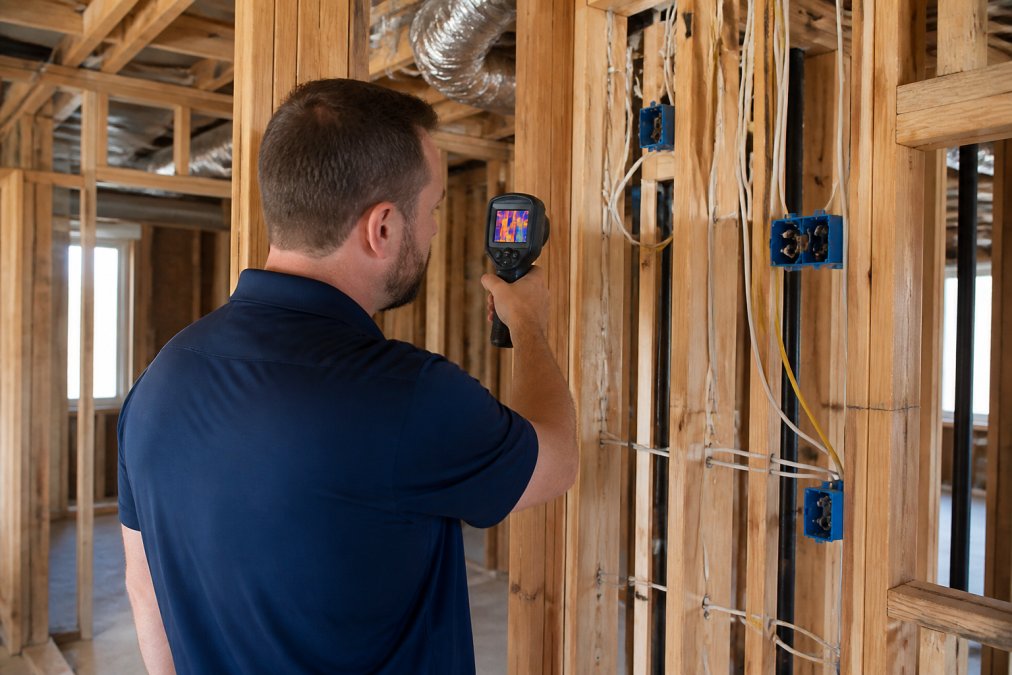
The pre-drywall inspection happens after the frame is complete but before walls are closed. This is your only chance to see structural framing, electrical rough-in, plumbing lines, and HVAC ductwork. Once drywall goes up, these systems are hidden forever.
At this stage, an inspector verifies that structural framing meets building codes, electrical wiring is properly installed and grounded, plumbing pressure tests pass without leaks, and HVAC ductwork is properly sized and sealed. Thermal imaging reveals thermal bridging and insulation gaps before they’re covered. Any defects found at this phase are inexpensive for the builder to fix, they’re still accessible.
This phase typically occurs 4-8 weeks into construction. Timing is critical: you need to be notified when framing is complete so you can schedule the inspection before drywall installation begins. Missing this window means losing your best opportunity to catch hidden defects.
Final Walkthrough Phase
The final walkthrough happens just before closing, after all construction is complete. This is your last chance to verify that all work was completed as specified, all builder-promised repairs were made, and the home is in the condition you agreed to purchase.
During final walkthrough, the inspector verifies that all appliances are installed and operational, all fixtures and finishes are in place and undamaged, all utilities function properly, and any punch-list items from earlier inspections were completed. The inspector also checks for new damage or incomplete work that may have occurred during final construction stages.
This phase is critical for catching last-minute issues and ensuring the builder completed promised repairs. Many builders rush final stages, and defects can appear during the final weeks of work.
The pre-drywall inspection protects you from hidden structural and mechanical defects. The final walkthrough protects you from incomplete work and damage. Both are necessary for complete protection.
Building Codes and Municipal Requirements
Municipal building codes establish minimum standards for construction safety and structural integrity. A municipal inspector verifies that construction meets these codes before issuing a certificate of occupancy. However, passing municipal inspection does NOT guarantee that workmanship is acceptable or that the home is defect-free.
Municipal inspectors focus on code compliance, does the electrical panel meet code? Is the foundation depth adequate? Are handrails the right height? They do not evaluate craftsmanship quality, material selection, or construction practices that exceed minimum standards.
Building codes vary by jurisdiction but generally address structural safety, fire safety, electrical safety, plumbing safety, and energy efficiency. In most jurisdictions, building codes are enforced through inspections at framing, rough-in, insulation, and final stages. These inspections verify minimum compliance, not quality.
An independent home inspection evaluates both code compliance and workmanship quality. It identifies defects that don’t violate code but will cause problems over time, poor drainage design that meets code minimums but fails to protect the foundation, HVAC sizing that’s code-compliant but undersized for actual needs, or insulation installation that passes visual inspection but has gaps that reduce effectiveness.
Many homebuyers assume that if municipal inspection passed, they don’t need an independent inspection. This assumption is costly. Code compliance and construction quality are different standards.
Builder’s Warranty vs. Independent Inspection
Every new home comes with a builder’s warranty, typically covering structural defects for 10 years and mechanical systems for 1-2 years (the FTC). This warranty protects you after closing, but only for defects you can prove exist and prove were caused by the builder.
The problem: you must discover defects within the warranty period, prove they’re construction-related (not maintenance issues), and get the builder to acknowledge responsibility. Builders often resist warranty claims, dispute causation, or delay repairs indefinitely.
An independent inspection before closing gives you use. If defects are documented before you take ownership, the builder must fix them as a condition of sale. After closing, you’re fighting to prove the builder caused the problem and arguing over whether the warranty covers it.
The builder’s warranty protects you if the builder is still in business, responds to warranty claims, and acknowledges responsibility. An independent inspection protects you by preventing defects from becoming your problem in the first place.
Full Disclosure Property Inspection’s detailed, computer-generated reports document existing conditions and defects before closing. This documentation becomes your proof if warranty disputes arise later, and it gives you negotiating power with the builder before you sign the final deed.
Buyers in competitive markets who can’t afford to waive inspections, investors evaluating multiple new construction properties, and anyone purchasing from builders with limited track records.
New Construction Home Inspection Checklist
A comprehensive inspection checklist ensures nothing is missed. While professional inspectors use detailed protocols, understanding what gets inspected helps you recognize gaps if you’re considering a less thorough inspection.
Schedule an Inspection or Request a Proposal →
Structural Systems:
- Foundation for cracks, settlement, and proper grading
- Framing for straightness, proper connections, and code compliance
- Roof framing and decking installation
- Exterior walls for plumb and proper sheathing
Exterior:
- Roofing materials, flashing, and proper installation
- Siding or cladding for gaps, improper fastening, and water intrusion risk
- Windows and doors for proper installation and sealing
- Grading and drainage around foundation
Electrical:
- Panel installation and proper grounding
- Wiring for proper gauge and routing
- Outlet and switch installation
- Code compliance throughout
Plumbing:
- Water supply lines for proper sizing and connections
- Drain lines for proper slope and venting
- Fixture installation and operation
- Pressure test results
HVAC:
- Equipment sizing and installation
- Ductwork for proper sizing, sealing, and insulation
- Thermostat operation
- Proper refrigerant charge and airflow
Insulation and Thermal:
- Attic insulation for proper density and coverage
- Wall insulation for gaps and voids (verified with thermal imaging)
- Basement or crawlspace insulation
- Air sealing around penetrations
Interior:
- Drywall installation for proper finishing
- Paint and trim quality
- Flooring installation
- Appliance installation and operation
Safety Systems:
- Smoke and carbon monoxide detectors
- Proper egress from bedrooms
- Handrails and guardrails
A thorough inspection covers all these areas. Abbreviated inspections skip sections, leaving you vulnerable to undiscovered defects.
| Inspection Component | Why It Matters | Pre-Drywall | Final Walkthrough |
|---|---|---|---|
| Structural framing | Catches installation errors before walls close | ✓ | ✓ |
| Electrical rough-in | Only visible before drywall | ✓ | – |
| Plumbing pressure test | Detects leaks before walls close | ✓ | – |
| HVAC ductwork | Verifies sizing and sealing before concealment | ✓ | – |
| Thermal imaging | Reveals insulation gaps and moisture patterns | ✓ | ✓ |
| Final systems check | Confirms all systems operate correctly | – | ✓ |
| Appliance installation | Verifies all appliances are operational | – | ✓ |
| Punch-list verification | Confirms builder completed promised repairs | – | ✓ |
Inspection Contingencies and Legal Protections
Most purchase contracts include an inspection contingency, a provision allowing you to back out or renegotiate if inspection reveals unacceptable defects. Understanding your contractual rights is essential before signing.
An inspection contingency typically gives you 7-10 days to complete an inspection and another 3-5 days to request repairs or credits (realtor.org). If the builder refuses to make repairs and you can’t reach agreement, you can usually cancel the contract and recover your earnest money.
However, contingencies vary by contract. Some limit the dollar amount of defects that trigger renegotiation rights. Others require you to accept the home “as-is” for defects under a certain threshold. Read your contract carefully, or have a real estate attorney review it, before signing.
In competitive markets, some buyers waive inspection contingencies to make offers stronger. This is extremely risky. Without a contingency, you have no legal recourse if inspection reveals major defects. You’re obligated to close regardless of what’s found.
Many jurisdictions have disclosure requirements for known defects, but these apply primarily to existing homes. New construction disclosure laws vary widely. Some states require builders to disclose known defects; others don’t. Relying on builder honesty without contractual protection is unwise.
The inspection contingency is your legal protection. Without it, you’re betting that the builder built correctly and that you won’t discover problems after closing.
Waiving an inspection contingency in a new construction purchase is a critical mistake. You lose your only legal use to demand repairs before you own the home.
Handling Builder Pushback After Inspection
Builders often resist inspection findings, especially in competitive markets where they face multiple offers. Common pushback tactics include dismissing defects as “normal,” claiming they’re cosmetic rather than structural, or refusing to make repairs unless you pay for them.
Anticipate this resistance. Document all defects clearly with photos and written descriptions. If you’re using Full Disclosure Property Inspection, our detailed reports provide professional documentation that builders take seriously. Vague complaints are easy to dismiss; documented defects backed by a professional inspector’s analysis are harder to ignore.
Some builders claim that minor cosmetic issues don’t warrant repair. Distinguish between cosmetic and functional defects. A paint touch-up is cosmetic; a window that doesn’t seal is functional. Functional defects affect the home’s durability, safety, or performance and are the builder’s responsibility to fix.
When a builder refuses repairs, you have use if you’re still within your inspection contingency period. You can demand repairs as a condition of closing, request a credit toward repairs you’ll make yourself, or walk away if the defects are serious enough. This use disappears after you close.
Some builders offer to address defects during a warranty period rather than before closing. Avoid this if possible. Repairs made under warranty are often lower quality, and you’ll have to manage the repair process yourself. Repairs made before closing are the builder’s responsibility and quality concern.
Negotiate firmly but professionally. Builders respond better to documented defects and clear requests than to emotional arguments. If the builder refuses reasonable repairs, consult a real estate attorney about your options before closing.
A home inspection for new construction isn’t optional, it’s foundational to protecting one of your largest investments. Builders construct thousands of homes; you’re buying one. An independent assessment ensures you understand exactly what you’re purchasing and identifies problems before they become your responsibility. Full Disclosure Property Inspection provides the detailed, computer-generated documentation and professional expertise that gives you confidence in your new construction purchase. Request a proposal to schedule your pre-drywall and final walkthrough inspections, and ensure your new home meets the standards you expect.
Frequently Asked Questions
Is a home inspection really necessary for new construction if the builder provides a warranty?
Yes. A builder’s warranty covers manufacturing defects for a limited time and only what the builder agrees to cover. An independent home inspection identifies workmanship quality issues, code compliance problems, and construction defects that warranties may exclude. Many defects discovered during inspection, grading and drainage issues, HVAC installation problems, or structural concerns, fall outside standard warranty coverage. An inspection protects your investment beyond what the builder guarantees.
What are the main phases of new construction inspection?
New construction inspections typically occur in two critical phases. The pre-drywall inspection happens after framing but before walls are closed, allowing inspectors to examine electrical wiring, plumbing pressure tests, HVAC installation, and structural integrity without obstructions. The final walkthrough inspection occurs after construction completion, checking appliance installation, code compliance, thermal imaging for insulation gaps, and overall workmanship quality. Some projects include a third-party inspection during foundation work. Each phase catches different defects that would be impossible to detect at other stages.
What common defects should I watch for in new construction homes?
Common defects in new construction homes include moisture intrusion from poor grading and drainage, electrical wiring violations, plumbing pressure test failures, HVAC installation errors, missing or inadequate insulation, roofing material defects, foundation settlement issues, and ventilation system problems. Workmanship quality issues like misaligned doors, unfinished trim, and appliance installation errors are frequent. Thermal imaging often reveals thermal gaps and moisture problems invisible to the naked eye. A comprehensive checklist during inspection catches these issues before closing.
Can I waive the inspection in a competitive market, or is it too risky?
Waiving a home inspection in a competitive market is a significant financial risk. While a strong offer may help, an inspection protects you from inheriting construction defects that cost thousands to repair. Builders are not responsible for defects discovered after closing. Even in competitive markets, negotiating an inspection contingency into your contract is standard practice. If you must make an offer without an inspection, at least schedule one immediately upon acceptance and negotiate repairs or credits based on findings before final closing.
This article was written using GrandRanker


