Table of Contents
- Questions About the Builder’s Experience and Licensing
- Critical Questions About Your Construction Contract
- What to Ask About Home Inspection for New Construction Homes
- Builder Punch List Items and Final Walkthrough
- New Home Warranty Coverage Questions Before Closing
- Questions About Timeline, Permits, and Construction Standards
- Post-Closing Support and Legal Protections to Verify
- Frequently Asked Questions
Last Updated: September 24, 2026
Buying a new construction home requires knowing what questions to ask home builders before closing. Asking the right questions to ask home builders is one of the smartest moves you can make before signing final paperwork. This guide covers the essential areas you need to understand.
Questions About the Builder’s Experience and Licensing
Ask how long the builder has been in business and how many homes they’ve completed. Request the builder’s licensing information and verify it’s current with the state licensing board. A licensed builder carries professional accountability that an unlicensed contractor doesn’t.
Ask whether the builder carries builder’s risk insurance and liability insurance. This protects you if something goes wrong during construction. Request proof of insurance before signing anything.
Ask to speak with past clients directly, not just references the builder provides. Call at least three homeowners who closed on similar floor plans within the last two years. Ask them about communication, quality, and whether the builder addressed issues after closing.
Ask who supervises the construction site daily. Daily site supervision catches problems early when they’re cheaper to fix.
Critical Questions About Your Construction Contract
Ask for a detailed written contract that specifies exactly what’s included and what costs extra. Your contract should list every floor plan detail, material specification, and included feature. If something isn’t in writing, assume it won’t happen.
Ask about escalation clauses that allow price increases if material or labor costs rise. Request that escalation clauses be capped or eliminated. If the builder won’t remove them, negotiate a firm completion date.
Ask about change orders and how they’re handled. Your contract should explain the process for requesting changes, how costs are calculated, and who approves them. Specifically ask: Do change orders require written approval before work begins? Request a change order log that documents every modification, its cost, and approval date.
Ask what happens if the builder encounters unexpected site conditions, buried debris, poor soil, underground utilities, contamination. Your contract should specify who pays for addressing these issues and how delays are handled.
Ask about material sourcing and supply chain responsibility. If the builder cannot obtain a specified material, who decides the replacement? Your contract should require your written approval for any substitution.
Ask about dispute resolution. Some contracts require arbitration, which is faster but prevents you from suing in court. Others allow lawsuits in civil court. Understand which applies to you and whether costs are split fairly.
The most important contract question: What happens if the builder goes bankrupt or abandons the project? Understand your legal remedies and whether your deposit is protected in escrow. Ask whether your contract includes a mechanic’s lien waiver clause, this protects you from subcontractors placing liens on your home if the builder doesn’t pay them. Request that the builder provide proof of payment to all subcontractors before closing.
Ask whether the contract includes a warranty disclaimer or limitation of liability clause. Review these clauses carefully, a builder who stands behind their work typically doesn’t hide behind aggressive liability limitations.
Ask for clarification on timeline penalties and incentives. If the builder misses the promised completion date, what compensation do you receive? If no penalty exists, ask whether you can cancel the contract if the builder is significantly late.
Request a copy of the contract at least one week before you’re expected to sign it. Do not sign on the spot. Have an attorney review it if possible, many real estate attorneys charge $300-$500 for a contract review, which is inexpensive insurance against a six-figure mistake.
What to Ask About Home Inspection for New Construction Homes
Ask the builder when you can schedule an independent home inspection. Most builders allow inspections after framing but before drywall, and again before closing. These inspections catch framing issues, electrical problems, and plumbing mistakes early.
Ask whether the builder will be present during your inspection. An inspector who can ask the builder questions directly gets better answers about materials and methods used.
Ask the builder to provide copies of all building permits and inspection records from the municipality. These documents prove the home was built to code and passed official inspections at each stage.
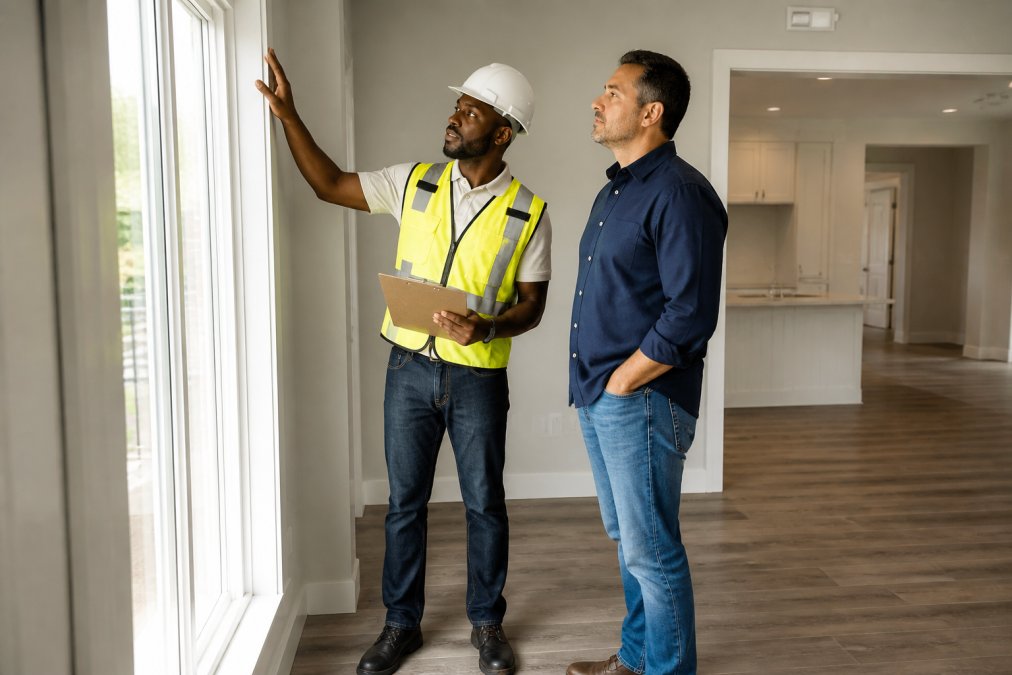
Request that the builder address any defects the inspector finds before closing. Get this commitment in writing.
Schedule an Inspection or Request a Proposal →
Builder Punch List Items and Final Walkthrough
Ask the builder to provide a detailed punch list before your final walkthrough. Walk through the home with the builder and your inspector, and add anything you notice. Get the punch list in writing with specific completion dates.
Ask whether punch list items will be completed before closing or after. Insist on completion before closing whenever possible.
Ask how long the builder typically takes to complete punch list items. Get a specific date in writing.
Ask what happens if punch list items aren’t completed by closing. Will the builder hold money in escrow to guarantee completion? Will you get a credit toward the purchase price? Don’t close without a clear answer.
Never close on a home with incomplete punch list items unless money is held in escrow specifically to complete them. Once you own the home, the builder has no legal obligation to finish the work.
New Home Warranty Coverage Questions Before Closing
Ask for the builder’s written warranty in detail. What does it cover? What doesn’t it cover? How long does coverage last? Typical builder warranties cover structural defects for 10 years, major systems for 2-5 years, and finishes for 1 year (Warranties for New Homes).
Ask whether the warranty is transferable if you sell the home within the warranty period. Some warranties transfer to new owners. Others don’t. This affects your home’s resale value.
Ask how to file a warranty claim and what the process looks like. How long does it take to get repairs?
Ask whether the builder carries insurance to back up the warranty. If the builder goes out of business, does the warranty still apply?
New home warranty coverage questions should also address what’s NOT covered. Ask specifically about cosmetic issues, settling cracks, and minor gaps between materials. These are common in new homes but often aren’t covered by builder warranties.
Ask about the builder’s process for handling warranty work after closing. Get contact information for the warranty department and ask about their typical response time.
Questions About Timeline, Permits, and Construction Standards
Ask for a detailed construction schedule with specific completion dates for each phase. Ask what happens if the builder misses these dates and whether the contract includes penalties for delays.
Post-Closing Support and Legal Protections to Verify
Keep detailed records of any issues you discover, including photos, dates, and descriptions. If the builder disputes whether a defect is covered by warranty, your documentation will be critical evidence. Many warranty disputes hinge on whether the defect was present at closing or developed afterward.
Ask the builder about statute of limitations for warranty claims. Most builder warranties cover structural defects for 10 years, major systems for 2-5 years, and finishes for 1 year (Warranties for New Homes). However, the statute of limitations for suing the builder (if the warranty doesn’t cover the defect) varies by state and typically ranges from 3-10 years depending on the type of defect. Ask your builder’s attorney or a real estate attorney in your state what the applicable statute of limitations is for construction defects. This determines how long you have to pursue legal action if a serious problem emerges after the warranty expires.
Do not close without a clear understanding of who to contact for warranty claims, how quickly the builder will respond, and what documentation you need to file a claim. Builders who are vague about post-closing support are often slow to respond to warranty requests. Get everything in writing before you sign the closing documents.
Request a final walkthrough checklist at least one week before closing. Walk through the home with the builder and your inspector, and document the condition of every room, appliance, and system. Take photos or video. This creates a baseline for what the home looked like at closing, if a defect appears later, you can prove it wasn’t present at closing. Have the builder sign off on this checklist to confirm the home’s condition at closing.
Frequently Asked Questions
What are the most important questions to ask a home builder before closing?
Prioritize questions about the builder’s licensing and insurance, the completion of your punch list, warranty coverage details, and verification that all permits and inspections have been passed. Ask about the timeline for any remaining work, the builder’s process for addressing defects, and their post-closing support. Request references from recent buyers and confirm the builder’s financial stability. These questions protect your investment and ensure you understand your rights after closing.
Should I get a home inspection for new construction homes even if the builder completed one?
Yes. A home inspection for new construction homes by an independent third party provides an unbiased assessment of construction quality and code compliance. Builders have financial incentive to minimize reported defects, while an independent inspector protects your interests. Many issues, structural concerns, improper installations, or code violations, may not be obvious during a builder’s walkthrough. An independent inspection catches problems before closing, giving you leverage to require repairs or credits.
What happens if the builder hasn’t finished the punch list before closing?
If the builder hasn’t completed punch list items, negotiate a holdback of funds in escrow to cover completion. Establish a specific deadline in writing for each remaining item and define what constitutes acceptable completion. Without this protection, you may struggle to get the builder to return and finish work after closing. Ensure your contract specifies who pays for any repairs if work is incomplete or done incorrectly, and get a timeline with penalties for delays.
What should I look for in new home warranty coverage questions before closing?
Ask your builder to provide written details on warranty length (structural defects typically 10 years, major systems 2-5 years, workmanship 1 year), what is and is not covered, the claims process, and any exclusions. Understand whether the warranty transfers to future owners and what documentation you need to keep. Ask about builder’s risk insurance during construction and who is responsible for defects discovered after closing. Verify the builder’s financial ability to honor warranty claims if the company faces difficulties.


