Quick Summary
To negotiate after foundation damage is found, first confirm the problem is structural with a written engineer’s report, not just a general inspection note. Then get at least two matching repair estimates and request a repair, credit, or price reduction backed by those documents before your contract’s inspection deadline expires.
- Confirm the damage is structural before asking for money, since vague concerns are easy to dismiss.
- Hire a structural engineer whose written report carries more weight than a general inspection observation.
- Get at least two written repair estimates covering the same scope of work.
- Add related damage such as drywall, doors, and grading to your repair request.
- Respect the inspection contingency deadline, because missing it can cost you leverage or the right to cancel.
Table of Contents
- Why Foundation Damage Changes the Negotiation
- Step 1: Confirm the Damage Is Structural Before You Negotiate
- Step 2: Hire a Structural Engineer for Home Purchase Due Diligence
- Step 3: Build Repair Estimates and Negotiation Math
- Step 4: Choose Between Repair Credits and a Price Reduction
- Step 5: Write the Request and Respect Contract Deadlines
- Booking Your Foundation Assessment Before Your Next Offer Deadline
- Frequently Asked Questions
Why Foundation Damage Changes the Negotiation
Last Updated: November 4, 2026
Foundation damage is one of the few findings that can shift a home’s price in a real way.
Buyers who do best confirm the problem, price it accurately, then make a specific request.
Foundation problems matter for three reasons:
- Cost is large and uncertain. Structural repairs can be costly, and the first estimate may not be the final one.
- Safety is involved. Sagging floors and wide cracks can point to conditions needing prompt attention.
- Financing and insurance may be affected. Some lenders and insurers ask about known structural defects.
A foundation finding is a negotiating tool only after you know what it is. Our guide on identifying foundation issues before buying walks through the signs to check for before you make an offer.
Step 1: Confirm the Damage Is Structural Before You Negotiate
Before you ask for money, confirm the issue is structural.
Ask the inspector to describe what they saw, where, and how severe it looks. Take photos and note any recorded measurements for crack width and wall movement.
A common mistake is treating every crack as a crisis. Some cracks are normal. Others are not. Learn the difference first.
Distinguishing Cosmetic Cracking From Structural Damage
Cosmetic cracks are usually narrow, shallow, and limited to surface finishes like drywall or mortar. They often come from normal settling or drying. Structural cracks tend to be wider, move over time, or show other warning signs such as:
- Horizontal cracks in basement walls
- Stair-step cracks in brick or block
- Doors and windows that stick or no longer close properly
Cosmetic cracking can still matter, but it rarely justifies a large price cut. Structural signs usually do. Our guide to signs of structural damage in older houses explains what to look for in older homes.
Step 2: Hire a Structural Engineer for Home Purchase Due Diligence
When a general inspection points to possible foundation damage, a structural engineer is usually the right next call.
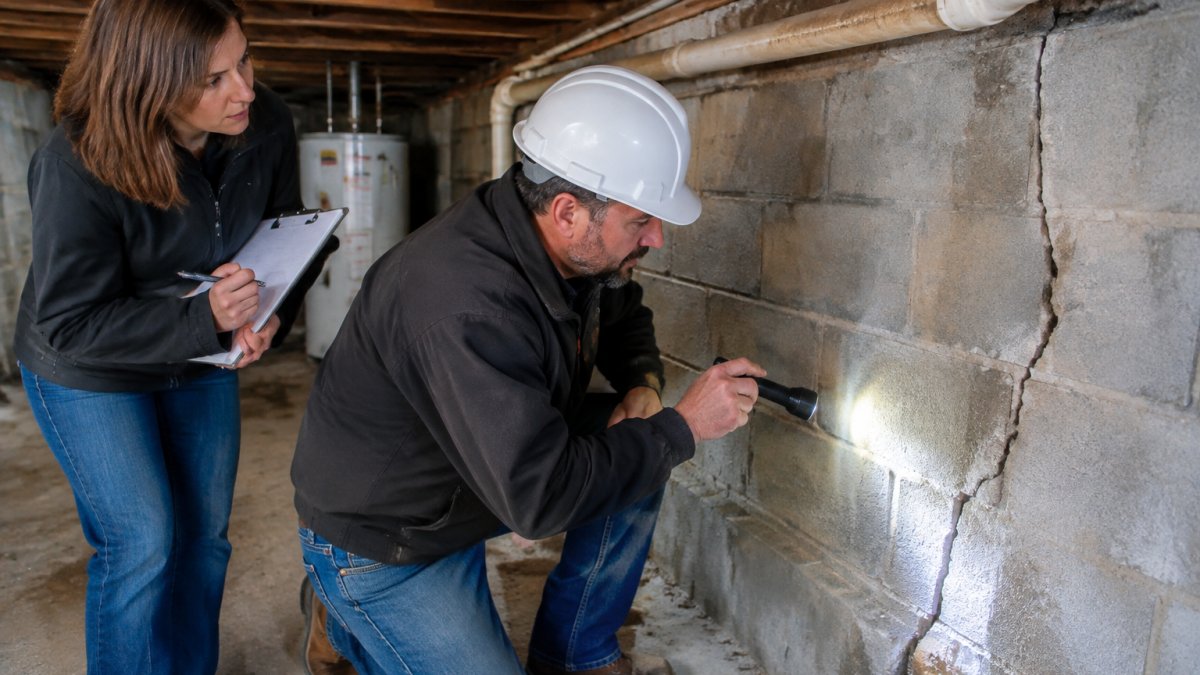
Schedule the engineer as early as your contract allows. Our page on when to schedule inspections for new builds explains timing for the purchase process.
Ask the engineer for:
- A written report with photos and locations of defects
- An opinion on whether the damage is active or historical
- A recommended repair approach, if one is needed
Keep in mind that the engineer may not give a repair price. That usually comes from a foundation contractor.
Step 3: Build Repair Estimates and Negotiation Math
Once you know the problem, you need a number the seller can audit. A single verbal ballpark will not survive a counteroffer. Turn contractor bids into a defensible range, then pick the point you are willing to defend line by line.
Get at least two written repair estimates from qualified foundation contractors, and make sure each bid describes the same scope. Our guide on estimating home repair costs after an inspection shows how to organize those numbers. Bids that solve different problems cannot be compared.
Reading Bids Side by Side
Put every bid into the same columns so differences are visible:
- Scope of work: underpinning, wall anchors, carbon-fiber straps, crack injection, drainage, grading, or sump work
- Quantity and location: number of piers, linear feet of wall, or injection points, and where on the structure
- Permits and engineering: whether the bid includes permit fees and any required engineer’s letter or stamped design
A low bid that excludes permits, engineering, and finish repair is not a low bid. Normalize each estimate by adding excluded items before comparing totals.
Building the Negotiation Range
Use a three-tier model rather than a single number:
- Floor: the lowest complete bid, with exclusions added back in
- Midpoint: the average of the complete bids
- Ceiling: the highest complete bid plus a contingency for related damage and unknowns
Set the contingency by scope uncertainty, not habit. A single stabilized crack with a clear cause needs a smaller buffer than active movement on a hillside lot where the contractor cannot see the footing. Most practitioners treat the ceiling, not the floor, as the opening ask, because the buyer who asks for the low bid often pays the difference after closing.
Accounting for Related Damage
Foundation movement damages more than the foundation. Add these to the range when the inspection or engineer’s report supports them:
- Drywall and plaster repair where cracks were patched
- Door and window adjustment or replacement where frames are out of square
- Floor leveling or subfloor repair
Ask each contractor whether their bid includes restoring these items. If not, get a separate bid from a general contractor so the seller sees a complete number.
Schedule an Inspection or Request a Proposal →
Turning the Range Into an Ask
Write the request as a short schedule the seller can follow:
- The engineer’s finding, quoted in one sentence
- The repair scope both contractors agree on
- The bid totals, with exclusions listed
- The related-damage line items
- The contingency, with a one-line reason
- The total you are requesting, stated as a credit or price reduction
Attach the bids and the engineer’s report. A seller who can see the arithmetic is harder pressed to call the request inflated.
Watch out: an estimate is not a guaranteed final cost. Contractors price from what they can see, and hidden conditions such as a failed footing or undocumented prior repair can raise the final bill. Say so in your request and explain the contingency exists for that reason.
Using a Foundation Repair Estimate Template
A foundation repair estimate template keeps your numbers consistent across bids and across negotiations. Use one with these fields:
- Property address and inspection date
- Contractor name, license number, and contact details
- Scope of work (underpinning, wall anchors, crack injection, drainage)
Attach the completed template to your repair request so the seller can see exactly how you reached your figure, and keep a copy for your lender and appraiser if the deal moves forward.
Step 4: Choose Between Repair Credits and a Price Reduction
There are three main ways to handle the cost: the seller completes the repairs, the seller gives you a closing credit, or the price drops. Our article on whether to negotiate seller credit or repairs compares these options in more detail. Each has tradeoffs, and the right choice depends on what your contract, lender, and insurer will allow.
- Seller repairs: The work gets done before closing. You need proof, such as a contractor’s invoice, permits, and a post-repair inspection. Risk: the repair may be poorly done, rushed, or completed by an unlicensed handyman.
- Closing credit: You receive money at closing to use for repairs. This gives you control over the contractor and timing. Lenders may cap how much credit they allow, often tied to a percentage of the loan or the closing costs.
- Price reduction: The purchase price drops, and you handle the repairs. This can simplify the process, but it may affect your loan amount, your appraisal, and your cash position at closing.
Contract and Contingency Constraints
Your options are bounded by the purchase agreement, not by the size of the repair bill. Before you choose, read the inspection contingency and any repair-request addendum for:
- The deadline to deliver a written repair request
- Whether the seller must agree to repair, or may refuse and let you cancel
- Whether the contract limits credits or requires a specific form
If the contingency period has expired, you may have lost the right to demand a credit or cancel without penalty (Schedule a home inspection). Your leverage is then limited to what the seller will voluntarily agree to, usually a smaller concession.
Lender Rules on Credits
Closing credits are not unlimited. Many loan programs cap seller concessions as a percentage of the purchase price, and the cap varies by loan type and down payment. A credit exceeding the cap cannot be used, so a large foundation concession may need to be structured partly as a price reduction. Ask your loan officer two questions before requesting a credit: what is the maximum seller concession for my loan, and will a credit reduce my closing costs or my loan amount?
Appraisal Consequences
A price reduction changes the contract price, but the appraiser still values the house. If the appraiser notes the foundation defect, the appraisal may come in below the reduced price, reopening the financing gap. A credit leaves the contract price intact and may avoid that problem, but the appraiser can still condition the appraisal on repair. Ask your agent whether the appraisal should be ordered after the repair scope is agreed, and keep the engineer’s report and contractor bids ready for the appraiser.
Insurance and Insurability
Unresolved foundation issues can affect whether you can insure the home and on what terms. Some insurers ask about known structural defects, prior repairs, and active movement, and a policy may exclude the very damage you are negotiating over. Before you accept a credit and buy as-is, call your insurance agent and ask whether the carrier will write a policy with the known condition, and whether a completed repair with a transferable warranty changes the answer.
Resale and Disclosure
Whatever you negotiate, the defect and the repair become part of the home’s history. Keep the engineer’s report, permits, contractor invoices, and warranty documents. If you later sell, you will likely need to disclose the prior foundation work, and buyers will pay more for documented, permitted, warrantied repairs than for an undocumented patch.
Choosing in Practice
For many buyers, a credit is the most flexible choice when the repair scope is clear and the amount fits within the lender’s cap.
Watch out: a closing credit is paid at closing, not before, so you still need cash or financing to cover the repair if the work must happen immediately for safety or insurance reasons.
The three main ways to handle foundation repair costs each carry different tradeoffs, summarized below.
| Option | How it works | Key tradeoff |
|---|---|---|
| Seller repairs | Work is completed before closing | Needs invoice, permits, post-repair inspection; quality risk |
| Closing credit | Money at closing used for repairs | Lenders may cap the amount; you control the contractor |
| Price reduction | Purchase price drops; you handle repairs | May affect loan amount, appraisal, and cash at closing |
Step 5: Write the Request and Respect Contract Deadlines
Your written request should be specific, short, and tied to facts. Include:
- The defects found and where they are located
- The engineer’s and contractors’ findings
- The repair or credit amount you are requesting
Respect the deadlines in your purchase agreement. If the inspection contingency expires, you may lose the right to cancel or renegotiate without penalty. Know your options before that date:
- Accept the seller’s response if it addresses the issue fairly
- Negotiate further if the response falls short
- Cancel the contract if the seller refuses and the damage is serious
Walking away is a legitimate choice. Set your limit before you negotiate so emotion does not decide for you.
Booking Your Foundation Assessment Before Your Next Offer Deadline
The strongest position in any foundation negotiation starts with facts you can document. Confirming the damage, getting a qualified structural opinion, and building a defensible estimate all take time, so start early. Full Disclosure Property Inspection, led by Certified Master Inspector Melanie Crabtree, can help you understand what your inspection findings mean. [Schedule an Inspection or Request a Proposal] before your next offer deadline.
Frequently Asked Questions
How do you fix foundation settlement?
Foundation settlement is usually corrected by stabilizing the soil or lifting the structure. Common methods include helical piers, push piers, and polyurethane foam or slab jacking for concrete slabs. The right method depends on the cause of the movement, such as expansive clay, poor drainage, or water erosion. Ask for a written repair estimate from a qualified foundation contractor before you decide how to address it in your negotiation. A structural engineer can confirm whether the settlement is active or has stabilized.
Can you negotiate after an inspection?
Yes. In most U.S. purchase contracts, the inspection contingency gives you a set number of days after the inspection to review the report and deliver a written request to the seller. You can ask for repairs, a closing credit, a purchase price reduction, or a combination. Your options to walk away or cancel the contract depend on the terms of your contingency, so confirm the exact deadline with your real estate agent or attorney before the period expires.
Can you back out of a contract if foundation issues are discovered?
Often, yes, if you act within the inspection contingency period. If the seller refuses your reasonable request and you have not waived the contingency, you can typically cancel the contract and recover your earnest money. Once the contingency has expired, backing out may put your deposit at risk. Keep written records of the inspection report, the structural engineer’s findings, and every repair request, and have an attorney review the specific contract language.
Should I ask for repairs or a price credit for foundation damage?
A repair request lets the seller control the contractor and scope, but you have limited ability to verify the quality of the work. A closing credit or price reduction lets you hire your own contractor after closing, which often gives you more control. Many buyers prefer a credit when the repair scope is large or the seller is slow to respond, while a seller who completes the repairs before closing may be more attractive if the work is documented and verified by a licensed professional.


