Table of Contents
- Why Foundation Issues Matter When Buying a Home
- What Is a Structural Home Inspection
- Interior Signs of Foundation Issues
- Exterior Signs of Foundation Issues
- Foundation Crack Types and Severity
- Hiring a Structural Engineer for Home Inspection
- Negotiating Home Price After Inspection
- When to Call a Professional Inspector
- Frequently Asked Questions
Last Updated: September 27, 2026
Why Foundation Issues Matter When Buying a Home
Buying a home is one of the largest financial decisions you’ll ever make. A foundation problem can cost tens of thousands to repair and may signal deeper structural issues that affect the entire property’s value and safety. Yet many homebuyers skip thorough inspections or misinterpret warning signs, only to discover costly damage after closing.
The stakes are high. A cracked foundation might seem minor, but it can indicate settlement, water damage, or structural movement that worsens over time. The difference between a casual walk-through and a professional structural assessment often comes down to knowing what to look for and understanding what each sign actually means.
This guide covers the critical steps to identifying foundation issues before buying, from recognizing interior and exterior warning signs to understanding when you need a structural engineer’s expert opinion. You’ll learn how to interpret crack types, evaluate site drainage problems, and negotiate effectively once issues are discovered.
What Is a Structural Home Inspection
A structural home inspection is a comprehensive evaluation of a home’s foundation, framing, and load-bearing components to assess their condition and identify defects. Unlike a standard home inspection, which covers general systems and safety, a structural inspection focuses specifically on the integrity of the foundation and the home’s ability to support its own weight safely.
A qualified structural inspector examines both visible and hidden structural elements. They look for cracks, settlement patterns, water intrusion, soil movement, and other indicators of foundation failure. Many inspectors now use advanced tools like infrared thermal imaging to detect moisture and temperature variations that reveal hidden problems behind walls and in crawl spaces.
The inspection produces a detailed report documenting findings, severity levels, and recommendations. This report becomes crucial negotiating use when foundation issues are discovered. A professional assessment protects you by providing an independent, unbiased opinion, not influenced by real estate agents or contractors who may have financial interests in the sale.
Interior Signs of Foundation Issues
Inside a home, foundation problems often reveal themselves through cracks, uneven floors, and misaligned doors and windows. These aren’t always cosmetic issues; they’re visible evidence of structural movement happening beneath the surface.
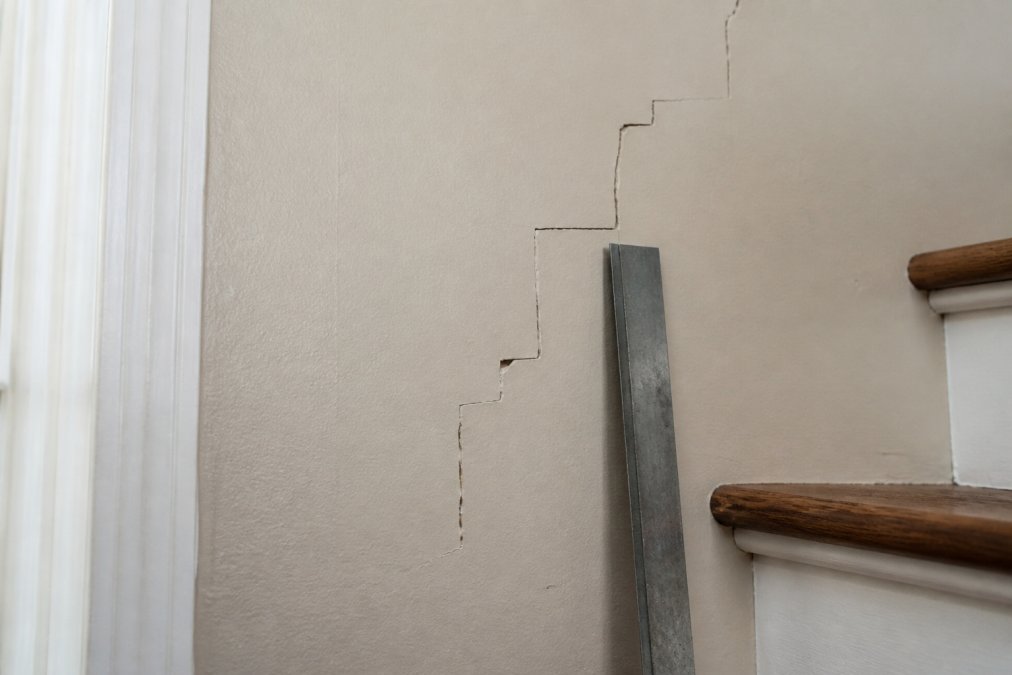
Cracks in walls and drywall
Cracks in interior walls and drywall are among the most common signs of foundation movement. Not all cracks indicate serious problems, some are simply the result of normal settling or seasonal humidity changes. But certain patterns demand attention.
Vertical cracks running straight up a wall are often less concerning than diagonal or stair-step cracks, which typically indicate foundation settlement or heaving. Stair-step cracks follow the mortar joints in concrete block or brick, creating a distinctive zigzag pattern that signals uneven movement. Horizontal cracks are especially worrying because they suggest pressure from outside the foundation pushing inward, often caused by hydrostatic pressure from soil and water.
The width of the crack matters. Hairline cracks under 1/8 inch are usually minor. Cracks wider than 1/4 inch warrant professional evaluation.
Uneven or sloping floors
Walk across the floor and notice if it feels level. Uneven or sloping floors indicate foundation settlement, the foundation has shifted or sunk unevenly, causing the structure above to move with it. You might notice:
- Floors that slope noticeably toward one side of the room
- Visible gaps between the floor and baseboards
- Doors that swing open or closed on their own
- A springy or bouncy feeling when walking, especially near walls
Doors and windows sticking or misaligned
Doors that stick or close unevenly are a classic sign of foundation settlement. As the foundation shifts, the frame above it shifts too, throwing door and window openings out of square. You may notice:
- Doors that bind or drag at the top or bottom
- Windows that stick when opening or closing
- Visible gaps between the frame and the wall on one side but not the other
- Doors or windows that no longer close properly or leave visible daylight around the edges
Exterior Signs of Foundation Issues
The outside of the home often shows foundation problems more clearly than the interior. Water damage, visible cracks, and soil issues are red flags that demand investigation.
Foundation settlement vs. heaving
Foundation settlement occurs when the soil beneath the foundation compresses or erodes, causing the foundation to sink unevenly. Heaving is the opposite: the foundation rises as soil expands, typically from frost or moisture. Both cause structural stress and visible damage.
Look for these exterior clues:
- Visible gaps between the foundation and the home’s rim board
- Cracks in the concrete foundation itself
- Corners of the home that appear lower or higher than others
- Exterior walls that appear to lean or bow outward
Bowing walls and visible cracks
Examine the foundation walls from the outside, looking along their length for bowing or bulging. Bowing indicates lateral pressure from soil or water pushing inward. Concrete spalling, where the surface is flaking or breaking apart, signals moisture damage and reinforcement corrosion.
Site drainage and soil grading problems
Poor drainage around the foundation is one of the leading causes of foundation failure. Water should flow away from the home, but improper grading directs it toward the foundation instead.
Schedule an Inspection or Request a Proposal →
Look for these drainage problems:
- Gutters and downspouts that drain water directly against the foundation
- Landscaping or mulch piled against the foundation wall
- Visible water stains on the foundation
- Standing water or wet soil near the foundation after rain
- Cracked or missing grading around the perimeter
Foundation Crack Types and Severity
Understanding crack patterns helps you assess risk and communicate findings to a structural engineer. Each type of crack tells a story about what’s happening beneath the surface.
Vertical cracks and horizontal cracks
Vertical cracks run straight up and down the foundation wall. They often result from normal concrete shrinkage as the material cures, or from minor settlement. Many vertical cracks are benign and don’t indicate ongoing movement. However, if a vertical crack is wider than 1/4 inch, leaking water, or growing over time, it warrants investigation.
Stair-step cracks and diagonal cracks
Stair-step cracks follow the mortar joints in concrete block or brick foundations, creating a distinctive zigzag pattern. They indicate uneven settlement, different parts of the foundation are sinking at different rates. This pattern is common in homes with differential settlement and often signals ongoing movement.
Hiring a Structural Engineer for Home Inspection
When you’ve identified potential foundation issues, a structural engineer provides an independent, expert assessment. This professional has the training and experience to determine whether cracks are cosmetic, structural, or critical.
A structural engineer will:
- Conduct a detailed visual inspection of all foundation components
- Use specialized tools like a crack gauge to measure widths precisely
- Assess soil conditions and drainage patterns
- Evaluate the home’s structural framing for signs of movement
- Produce a written report with findings and repair recommendations
- Estimate repair costs (though they don’t perform repairs themselves)
Negotiating Home Price After Inspection
Once foundation issues are identified, you have negotiating power. The inspection report becomes your evidence for requesting price reductions, repair credits, or seller-funded repairs before closing.
Approach negotiations strategically:
-
Get repair estimates. Contact local contractors to get written estimates for fixing the identified issues. This gives you a concrete dollar figure for negotiations.
-
Understand severity. Minor cracks that don’t affect structural integrity are less negotiating use than active settlement or water intrusion. A structural engineer’s assessment helps clarify severity.
-
Request credits or repairs. You can ask the seller to reduce the purchase price by the repair cost, repair the issues before closing, or provide a credit at closing. Different sellers respond differently to each option.
-
Know your walk-away point. Before negotiating, decide the maximum repair cost you’ll accept. If repairs exceed that amount, you may choose to walk away from the deal.
-
Document everything. Keep copies of all inspection reports, repair estimates, and correspondence. This protects you and strengthens your negotiating position.
When to Call a Professional Inspector
You should hire a professional structural inspector in these situations:
- You’ve noticed interior cracks, uneven floors, or sticking doors
- The home has visible exterior foundation cracks or bowing walls
- Site drainage is poor or grading slopes toward the foundation
- The home is in an area with known soil stability issues
- You’re buying a home older than 30 years
- You’re buying new construction and want an independent quality assessment
Frequently Asked Questions
What should I consider when buying a house with foundation issues?
First, determine the severity and type of foundation issues through a structural home inspection. Get a detailed repair estimate from a licensed contractor. Consider the cost of repairs against the home’s purchase price and your budget. Investigate whether the issue is active (ongoing movement) or stable. Review the home’s history for previous repairs. Consult a structural engineer if cracks are significant. Factor in potential resale impact and insurance implications before proceeding.
How can you tell if a home has foundation issues?
Look for interior signs: stair-step cracks in drywall, uneven or sloping floors, doors and windows sticking or misaligned, and gaps between trim and walls. Exterior signs include visible foundation cracks, bowing walls, gaps between the foundation and home, and soil grading problems around the perimeter. Check crawl spaces for moisture intrusion, water stains, or settling. A professional structural home inspection using tools like thermal imaging reveals issues not visible to the naked eye.
Is it better to get a standard inspection or hire a structural engineer?
A comprehensive home inspection identifies most foundation issues and is essential before buying. If the inspection reveals significant cracks, settlement, or movement, hire a structural engineer for a detailed assessment. Engineers provide repair recommendations and cost estimates that protect your investment. A structural engineer’s report is especially valuable when negotiating repairs or price reductions, as it carries professional weight with lenders and insurers.
When should you walk away from a house with foundation problems?
Walk away if the foundation is actively settling with recent damage, or if the seller refuses inspection or disclosure. Avoid homes where multiple structural issues compound (foundation movement plus water intrusion plus mold). If the structural engineer identifies ongoing hydrostatic pressure or bowing walls, repair costs are typically very high. Trust your inspector’s severity assessment and your budget limits.


