Table of Contents
- Can You Attend the Home Inspection as a Buyer?
- Why Attending the Home Inspection Matters
- What to Do During a Home Inspection as a Buyer
- Questions to Ask a Home Inspector
- How Long Does a Home Inspection Take?
- Home Inspection Checklist for Buyers
- Understanding Your Inspection Report and Next Steps
- Frequently Asked Questions
Last Updated: October 6, 2026
Can You Attend the Home Inspection as a Buyer?
Yes, you can attend the home inspection as a buyer. Most inspectors welcome it.
At Full Disclosure Property Inspection, we encourage buyers to be present. Your participation turns a written report into a real education about the home, teaching you what’s minor maintenance versus a major structural concern.
Many buyers skip the inspection or send someone in their place. That’s a missed opportunity.
Why Attending the Home Inspection Matters
You see problems with your own eyes. A report describes issues in technical language.
You catch details the report might miss. Inspectors are thorough but human. You might notice a smell, sound, or visual clue that prompts them to dig deeper.
You protect yourself from surprises after closing. Attending means you can’t later claim you didn’t know about a problem.
What to Do During a Home Inspection as a Buyer
Attending is one thing. Attending productively is another.
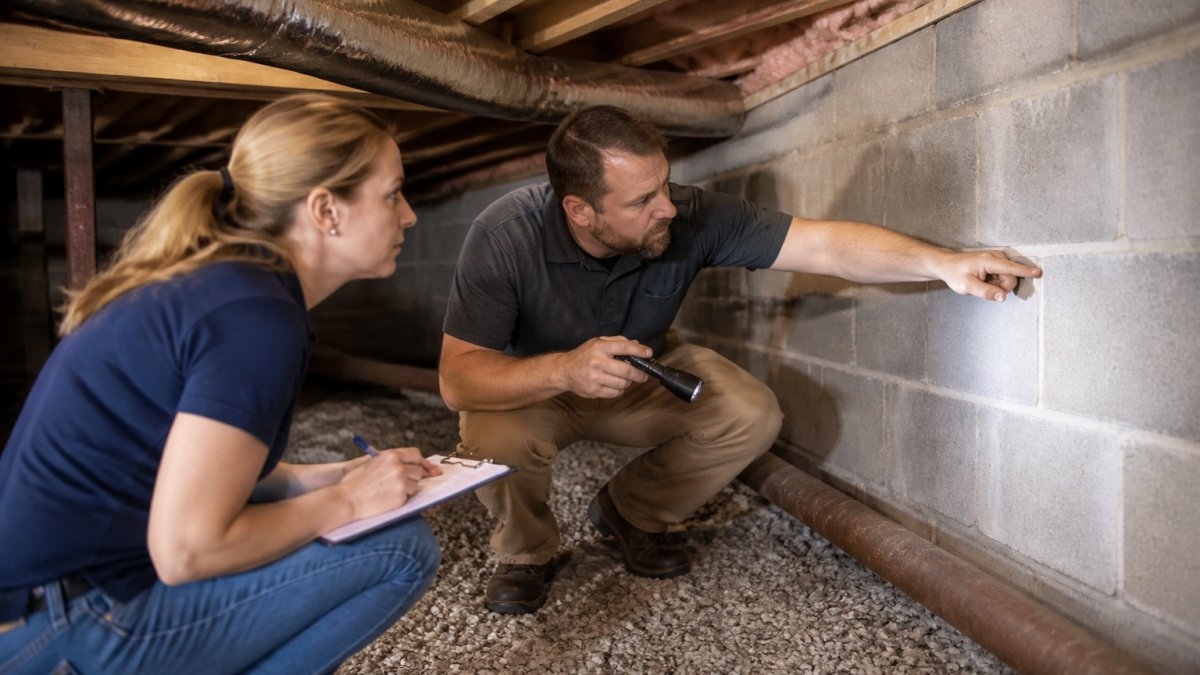
Before You Arrive
Dress appropriately. Wear closed-toe shoes with good traction, you’ll be in attics, basements, and crawl spaces.
Bring supplies. Pack a notebook and pen, a flashlight, and a camera or phone, though your inspector will provide detailed images in their report.
Review the property details. Know the home’s age, past renovations, and known issues so you can ask smarter questions.
Arrive on time. Inspections typically take 2-4 hours. Plan to stay for the entire appointment; arriving late means missing early findings.
During the Walkthrough
Follow the inspector closely. Stay with them through each area.
Observe their process. Notice what they check, how, and with what tools. At Full Disclosure Property Inspection, we use infrared thermal imaging to detect hidden moisture and temperature variations a visual inspection would miss.
Listen carefully. When the inspector finds something, write down the issue, its location, and their severity assessment.
Ask specific questions. Instead of “Is this a problem?”, ask targeted ones:
- “How long do you expect this to last before it needs repair?”
- “Is this a safety concern or a maintenance issue?”
- “Would a specialist need to evaluate this further?”
Take photos and notes. Document areas of concern and note the inspector’s exact location when they find something.
Don’t touch or move things. Your job is to observe and learn.
Ask about the good things too. Ask about the roof’s condition, HVAC age, and electrical quality.
After the Inspection
Review findings with the inspector. Most spend time at the end walking you through key findings, your chance to ask final questions and clarify priorities.
Request the detailed report. Ask when you’ll receive the full written report.
Don’t make immediate decisions. Give yourself a day or two to process the findings and review the report before deciding whether to renegotiate, request repairs, or proceed.
Follow up with specialists if needed. If the inspector flags structural, electrical, or HVAC concerns, contact a specialist.
Questions to Ask a Home Inspector
Most buyers freeze when the inspector is standing in front of them, either asking nothing or blurting out “Is this bad?”, a question the inspector can’t answer well because “bad” isn’t a category. Arrive with a short, prioritized question list organized by when you’ll use it.
The Three Questions That Matter Most
If you only remember three questions, make them these:
Schedule an Inspection or Request a Proposal →
-
“Is this a safety issue, a system issue, or a maintenance item?” This forces the inspector to categorize on the spot. Safety issues (exposed wiring, gas leaks, missing GFCI protection near water) generally need attention before or immediately after closing. System issues (a furnace near end of life, a roof with limited remaining life) affect your budget and negotiation. Maintenance items (caulking, grading, minor cracks) are yours to handle on your schedule.
-
“What’s the mechanism, and what happens if I do nothing?” A crack in a foundation wall isn’t the same as one in a driveway. Asking how the problem works, water intrusion, soil movement, thermal expansion, tells you whether it’s stable or progressive. Progressive problems get worse; stable ones often don’t.
-
“Would you recommend a specialist look at this, and which one?” General inspectors identify rather than diagnose at a trade level. When they flag something, ask whether it warrants a roofer, electrician, plumber, structural engineer, or HVAC technician.
Questions to Ask Before the Inspection Starts
- “How long do you expect this to take, and when do you typically do the final walkthrough summary?”
- “Do you want me to follow you the whole time, or is there a better way to stay out of your way?”
- “Will you narrate findings as you go, or save them for the end?”
That last question matters more than most buyers realize. Turnaround varies widely, some inspectors deliver same-day, others take 24 to 48 hours. If your inspection contingency window is tight, turnaround time can affect whether you have room to request specialist evaluations before your deadline.
Questions to Ask About Specific Systems
When the inspector is standing in front of a system, ask about remaining life, not just current condition:
- Roof: “What’s the approximate age, and how many years of useful life would you estimate remain?”
- HVAC: “What’s the manufacture date on the furnace and AC, and has it been serviced recently?”
- Electrical: “Is the panel a brand with known issues, and are there any double-tapped breakers or ungrounded outlets?”
Questions to Ask About the Report Itself
Before the inspector leaves, clarify how the report will be structured:
- “How do you categorize findings, by severity, by system, or both?”
- “Will you include photos and location notes for each finding?”
- “Do you include repair cost estimates, or do you leave that to contractors?”
Write your top five questions on a sticky note and put it on your dashboard before you drive to the inspection. You will not remember them in the moment, and the inspector will not prompt you.
Questions You Should Not Bother Asking
- “Should I buy this house?” The inspector’s job is to describe condition, not give investment advice.
- “How much will that cost to fix?” Inspectors generally avoid quoting repair costs because pricing varies by contractor, region, and scope. Use the finding to get real bids instead.
- “Will the seller pay for that?” That’s a negotiation question for your real estate agent, not the inspector.
What to Do With the Answers
Sort answers into three buckets on your notepad: safety, systems, and maintenance. When you get the written report, cross-check your notes against it. If something you heard verbally isn’t in the report, follow up with the inspector in writing so you have a record, that’s what you’ll hand to your agent when deciding what to request from the seller.
How Long Does a Home Inspection Take?
A typical home inspection takes 2-4 hours, depending on the property’s size, age, and condition. Smaller or newer homes may take closer to 2 hours; larger, older, or complex-system homes often take 3-4 hours.
Don’t rush the process. If an inspector finishes in under 2 hours on a full-sized home, they may not be conducting a complete evaluation. Budget enough time to be present for the entire appointment.
Home Inspection Checklist for Buyers
Most inspection checklists online list systems, roof, foundation, electrical, plumbing, the inspector already checks. What you need is a checklist for your behavior and observations during the appointment, plus things to confirm before the inspector leaves.
Before the Appointment
- Confirm the date, time, and expected duration with your agent and the inspector.
- Read the inspection agreement and any limitations or exclusions (for example, whether the inspector walks the roof or inspects it from the ground).
- Review the seller’s disclosure statement and any prior inspection reports.
Who to Bring (and Who Not To)
Bringing too many people turns the inspection into a tour and slows the inspector down.
- Bring your real estate agent if they can attend, they need to hear findings firsthand to advise on negotiation.
- Bring a partner or co-buyer if you’re purchasing together. Both decision-makers should see the property.
- Consider one trusted person, a parent, a contractor friend, only if they’ll stay quiet and observe.
During the Walkthrough, Your Observation Checklist
You are not there to inspect. You are there to observe, ask, and record.
- Follow the inspector from space to space. Do not wander off.
- Note the location of every finding in your own words (“north wall of basement, near water heater”).
- Photograph each area of concern, wide shot and close-up.
What Not to Do During the Inspection
- Do not open electrical panels, operate shut-off valves, or turn systems on and off. That’s the inspector’s job; doing it yourself can create liability and confusion.
- Do not enter a crawl space, attic, or roof unless the inspector explicitly invites you and it’s safe.
- Do not move the seller’s belongings, furniture, or stored items to see behind them.
If the home is occupied, treat it as someone’s residence. Do not use the bathrooms without asking, do not open the refrigerator, and do not let anyone in your group wander into rooms the inspector isn’t covering.
Before the Inspector Leaves, Confirm These
- Ask for a verbal summary of the top three to five findings.
- Confirm when and how you’ll receive the written report.
- Confirm how to reach the inspector with follow-up questions.
After the Appointment
- Give yourself a day to read the full report before making any decisions.
- Cross-check your notes and photos against the report. Flag anything missing.
- Email the inspector with follow-up questions so you have a written record.
Remote and Virtual Attendance
If you can’t be there in person, out of state, deployed, or the timeline won’t allow it, you still have options:
- Ask the inspector whether they offer a live video walkthrough via phone or tablet.
- If not, ask whether your agent can attend and video-call you at key moments.
- Request a narrated video summary in addition to the written report.
Virtual attendance is better than nothing but not equivalent. You lose the ability to smell, hear, and see the property in context, and can’t ask spontaneous follow-ups as easily. Treat it as a fallback, not a first choice.
Understanding Your Inspection Report and Next Steps
Categorize the findings. Most reports organize issues by severity: critical safety concerns, major systems needing replacement, and minor maintenance items.
Don’t panic over everything. Every home has issues.
Plan post-closing repairs. For issues you’ll handle after closing, create a priority list and budget.
Attending your home inspection as a buyer transforms you from a passive observer into an active participant in one of the biggest financial decisions of your life.
Full Disclosure Property Inspection has conducted thousands of inspections for buyers, sellers, and investors.
Ready to schedule your home inspection?
Frequently Asked Questions
Is it normal for a buyer to attend a home inspection?
Yes, attending the home inspection is standard practice and encouraged. Most buyers attend to see the property condition firsthand, ask questions, and understand what issues exist. Your real estate agent can confirm local customs, but attendance is your right under the purchase contract inspection contingency. Being present gives you firsthand knowledge of structural issues, safety concerns, and maintenance needs that the written report alone may not convey.
What should I look for during a home inspection?
Focus on major systems: the roof, foundation, electrical system, plumbing system, and heating and cooling system. Watch for visible water damage, cracks, or signs of poor maintenance. Ask the inspector to explain what they find and why it matters. Take photos or video of significant findings. Don’t try to diagnose problems yourself; instead, observe and document so you can review the inspection report carefully and decide whether to request repairs or negotiate the purchase price.
What questions should I ask the home inspector?
Ask about the age and condition of major systems, any safety concerns identified, and what maintenance the property needs soon. Request clarification on technical findings in the inspection report. Ask whether issues require specialist evaluation or are cosmetic. Inquire about the inspection limitations and what the inspector could not access. Ask how long major components typically last and what warning signs to watch for after purchase. These questions help you understand the true property condition and plan for future repairs.
Can I waive the home inspection to make my offer stronger?
You technically can waive the inspection contingency, but it is not recommended. Skipping a professional inspection means you lose due diligence protection and may miss major defects, safety concerns, or costly repairs. Even in competitive markets, a home inspection provides critical information to protect your investment. Consider negotiating other offer terms instead of waiving this protection. An independent, thorough inspection by a qualified professional is one of the most valuable tools available to mitigate investment risk.


