Table of Contents
- What Happens If a Home Inspection Fails: Your Options After the Report
- The Home Inspection Contingency Clause: Your Exit Strategy
- Negotiating Repairs After Home Inspection: Credit vs. Contractor
- Home Inspection vs Appraisal Explained: Two Different Verdicts
- How Insurance and Appraisal Impact Your Decision After a Failed Inspection
- Major Red Flags: Structural, Electrical, Plumbing, and HVAC Issues
- The Buyer’s Emotional Checklist: Deciding With Your Head, Not Your Heart
- Frequently Asked Questions
Last Updated: October 2, 2026
What Happens If a Home Inspection Fails: Your Options After the Report
What happens if a home inspection fails is rarely the end of the deal. A “failed” inspection isn’t a pass/fail grade, it’s a report full of findings, and you decide what to do with them.
A home inspection fails when the report reveals problems serious enough that you no longer want to buy at the agreed price or terms. There’s no official score, the findings are yours to weigh.
Your options boil down to four paths:
- Ask the seller to fix the problems
- Ask for money off the price
- Ask for a credit at closing
- Walk away using your contingency
Each path has trade-offs. Below, we’ll walk through all four, plus the fine print most guides skip.
U.S. Department of Housing and Urban Development homebuying guide
The Home Inspection Contingency Clause: Your Exit Strategy
A home inspection contingency clause is a contract term that lets you cancel or renegotiate if the inspection turns up problems. Without it, you may owe your earnest money even if the roof is caving in.
Here’s how the clause typically works:
- You sign a purchase agreement with the contingency included.
- You hire a licensed inspector within the set window.
- You review the report and respond before the deadline.
- You either accept, renegotiate, or terminate.
The deadline matters most. Miss it, and you may lose your right to walk away. A common mistake is waiting too long to schedule the inspection, especially in a busy market.
What the Clause Actually Says (and What to Look For)
Most contingency clauses bundle four separate rights, and each can be negotiated away:
- The right to inspect, how long you have, and who pays for the inspection.
- The right to request repairs or credits, the mechanism for your counteroffer.
- The right to terminate, your exit if the seller won’t budge.
- The right to your earnest money back, the part buyers care about most.
Read the clause for three specific things:
- The response deadline. It’s usually a set number of days from acceptance, not from the inspection date. If the inspector can’t get out for a week, your window may already be half gone.
- The notice method. Many contracts require written notice, often via email to a specified address or through a formal amendment form. A phone call to your agent is not notice.
- The remedy language. Some clauses let you terminate for any finding. Others only let you terminate for “material” defects, which is a much higher bar and a fight waiting to happen.
If your contingency window closes before you respond in writing, you can lose your deposit even when the report is full of major repairs. Send your response in writing, and send it early.
As-Is Clause Nuance: When the Contingency Doesn’t Protect You
An “as-is” clause says the seller won’t make repairs. Many buyers assume that kills their options. It usually doesn’t.
An as-is listing still lets you inspect and walk if your contingency is in place.
The catch: some contracts waive the inspection contingency entirely. Read that section twice.
A second catch: an as-is clause and a waived contingency are not the same thing, but sellers sometimes present them together.
Earnest Money: What’s Actually at Stake
Your earnest money is the deposit you put down when the offer is accepted. It sits in escrow and gets applied to your closing costs or down payment.
The amount varies by market and price point, but a common range is one to three percent of the purchase price.
If you’re worried about the timeline, ask your agent to confirm the deadline in writing before you sign.
Negotiating Repairs After Home Inspection: Credit vs. Contractor
Negotiating repairs after a home inspection comes down to one question: do you want the work done, or the money? Sellers usually prefer the money route because it’s faster and cleaner.
Your two main asks are a repair request (the seller fixes specific items before closing) or a price concession (the purchase price drops). Both are negotiable and depend on how motivated the seller is.
A few ground rules that save deals:
- Focus on safety hazards and major systems, not cosmetic flaws
- Ask for licensed remediation on serious items like mold or pests
- Put everything in writing with a deadline
- Keep your list short so it reads as reasonable
Sellers respond better to a short, prioritized list than a 40-item punch list. Lead with structural integrity, electrical wiring, and plumbing systems. Save the loose outlet covers for last.
Post-Inspection Credit vs. Repair: Which Protects You Better?
A post-inspection credit gives you cash at closing to handle repairs yourself. A seller repair means the work is done before you move in. Which is better depends on your situation.
| Option | Best For | Main Risk |
|---|---|---|
| Credit at closing | Buyers who want control | Lender may cap the credit |
| Seller repair | Buyers who want it done | Quality of the work |
| Price reduction | Long-term savings | Lower offer, slower deal |
If you take a credit, your mortgage lender may limit how much the seller can contribute. If the seller does the repair, you may not control who does the work or how well.
Why Sellers Prefer Credits Over Repairs
When a seller agrees to a repair, they take on three risks: finding a contractor on a tight timeline, paying for work that may not satisfy you, and delaying closing if the contractor runs late.
That’s why a credit request is often easier to get approved than a repair request, even when the dollar amount is the same. If your goal is speed and certainty, lead with the credit.
The Lender Cap on Seller Credits
Most mortgage programs cap how much a seller can contribute toward your closing costs. The cap is a percentage of the purchase price and varies by loan type and down payment, conventional, FHA, and VA loans each have their own limits, higher when you put less money down.
What this means in practice: if the repair estimate is $15,000 and your lender caps seller credits at $10,000, you can’t simply take the full amount as a closing credit. Your options are to:
- Reduce the purchase price instead (a price reduction is not a seller credit and is generally not subject to the same cap)
- Split the difference, take a partial credit and negotiate a price reduction for the rest
- Have the seller perform the repair directly, which sidesteps the credit cap entirely
Ask your loan officer for the exact cap before you make your ask. Negotiating a credit you can’t actually receive wastes your leverage.
Schedule an Inspection or Request a Proposal →
Repair Escrows and Holdbacks
When a repair can’t be completed before closing, a roof replacement scheduled three weeks out, for example, some lenders allow a repair escrow: the seller’s money is held back at closing, the work is done after you take possession, and funds are released once verified.
Escrows add complexity and not every lender offers them. But they’re a useful middle path when the seller won’t do the work and you can’t wait to close.
Re-Inspection: Don’t Skip It
If the seller agrees to repairs, you have the right to verify the work. A re-inspection is a second visit, often by the same inspector, to confirm the agreed items were completed, usually for a fraction of the original fee.
Ask for documentation, not just a visual check:
- Contractor invoices with the license number
- Permits for work that requires them (electrical, plumbing, structural)
- A roof certification if the roof was repaired or replaced
- Photos of the work before it was covered up
If the seller refuses a re-inspection or won’t provide documentation, that’s a signal. Treat it as a reason to renegotiate or walk, not as a minor inconvenience.
Home Inspection vs Appraisal Explained: Two Different Verdicts
Home inspection vs appraisal explained simply: an inspection checks the home’s condition, an appraisal checks its value. They answer different questions, and one failing doesn’t mean the other will.
An inspection looks at structure, systems, and safety; an appraisal compares the home to recent sales. A home can pass inspection and still appraise low, or have major defects and still appraise at the agreed price.
Why this matters after a failed inspection:
- A low appraisal can reopen your negotiation, even if the inspection was clean
- Major repairs can affect property value and the lender’s decision
- Your mortgage lender cares about both the condition and the value
If both come back poorly, you have real negotiating power. If only one does, your options narrow.
Consumer Financial Protection Bureau on appraisals
How Insurance and Appraisal Impact Your Decision After a Failed Inspection
Homeowners insurance and your mortgage lender both react to inspection findings, and most buyers don’t see it coming. Insurers may refuse to cover a home with a failing roof or old wiring; lenders may balk at funding one with code violations.
Watch for these triggers:
- Roof age or damage that blocks a roof certification
- Knob-and-tube or aluminum electrical wiring
- Active plumbing leaks or water damage
- Foundation cracks that suggest movement
If your insurer won’t write a policy, you can’t close. If your lender flags the property, your financing can stall.
Before you waive anything, call your insurance agent and lender. Their answers can decide the deal faster than the seller can.
Major Red Flags: Structural, Electrical, Plumbing, and HVAC Issues
Some findings are worth fighting over. Others are just noise. Here’s how to sort them.
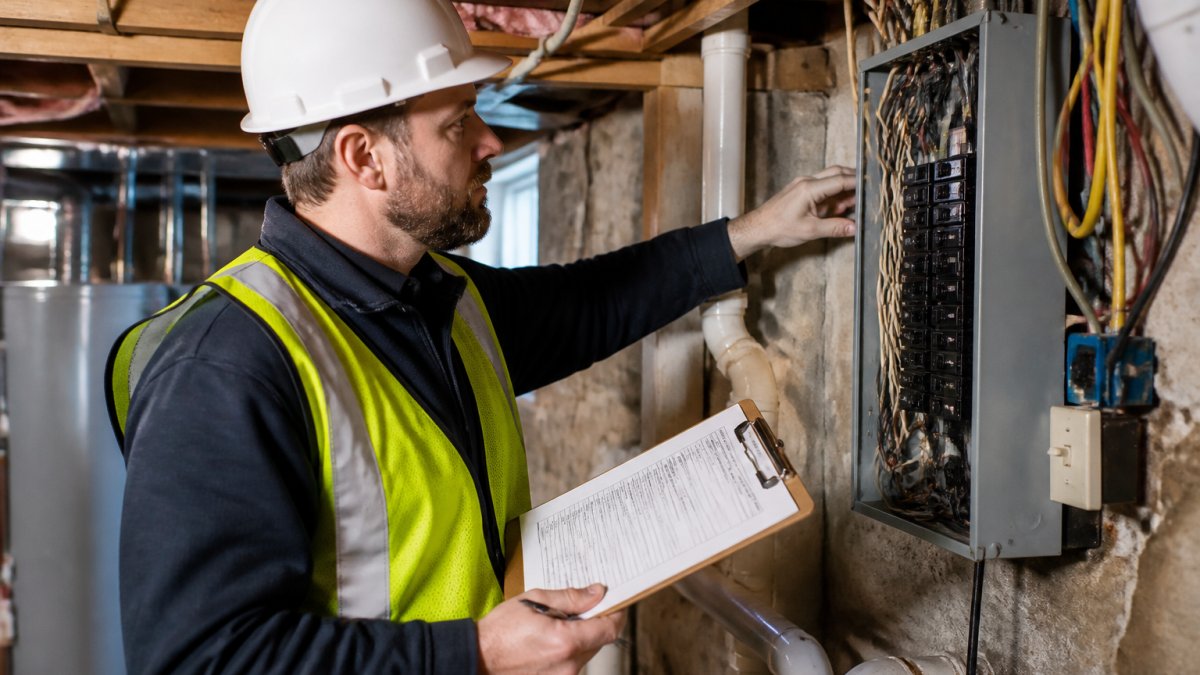
Structural and foundation issues top the list.
Roof and HVAC system problems are the most common dealbreakers. A roof near the end of its life means a big bill soon.
Minor defects, by contrast, are things like a sticky window or a worn caulk line. Don’t blow up a deal over paint.
A quick way to weigh findings:
- Dealbreaker: structural integrity, safety hazards, active leaks
- Negotiate: roof, HVAC performance, older but working systems
- Let it go: cosmetic wear, small maintenance items
Buyers who want a clear read on what actually matters versus what’s minor. A detailed, computer-generated report separates critical findings from cosmetic ones.
The Buyer’s Emotional Checklist: Deciding With Your Head, Not Your Heart
A failed inspection can rattle you, but the decision should be math, not mood.
Run this checklist before you respond:
- What’s the total repair cost, and can I cover it?
- Does the seller seem motivated or rigid?
- Will my lender and insurer still fund this home?
- Can I find a better home in my budget and timeline?
- Am I reacting to the report, or to the pressure of the market?
Answer honestly. If the numbers say walk, walk. If they say negotiate, negotiate. The report is information, not a verdict.
Frequently Asked Questions
Does a failed home inspection mean the deal is dead?
No. A failed inspection does not automatically kill the deal. It triggers your contingency clause, giving you options: request repairs, ask for seller concessions or a credit at closing, renegotiate the purchase price, or walk away if terms cannot be reached. The outcome depends on your purchase agreement, market conditions, and how motivated the seller is. In competitive markets, buyers sometimes accept minor defects while negotiating only major safety hazards or structural issues.
Can a seller refuse to fix items found in an inspection?
Yes, a seller can refuse any repair request. Your home inspection contingency clause lets you request repairs, but the seller is not legally obligated to agree unless the contract specifically requires it. If the seller refuses, you can accept the property as-is, renegotiate the price to reflect needed repairs, or terminate the contract and recover your earnest money if you are still within the contingency period. Your real estate agent can help you assess the seller’s motivation.
What is the biggest red flag in a home inspection?
Structural integrity issues top the list: foundation cracks that indicate movement, sagging rooflines, and significant water intrusion. Electrical wiring problems like aluminum branch wiring or unpermitted modifications, plumbing systems with polybutylene or galvanized pipes, and HVAC performance failures also rank as major concerns. These issues can cost tens of thousands to remediate and may affect homeowners insurance eligibility. A licensed inspector can detect hidden moisture or overheating before they become visible.
What happens if the appraisal comes in low after a failed inspection?
A low appraisal creates a separate problem from inspection findings. If the appraisal is below the purchase price, your mortgage lender may not approve the loan for the agreed amount. You would need to renegotiate the price with the seller, bring extra cash to closing, or walk away if your appraisal contingency allows. When both inspection and appraisal issues arise, your negotiating power increases because the seller faces the same financing risk with any other buyer.
A failed inspection forces a decision, and that decision is easier when you trust the report behind it. Full Disclosure Property Inspection delivers independent, detailed findings backed by infra-red thermal imaging and a Certified Master Inspector with a general contracting background, so you know exactly what you’re negotiating over. Schedule an inspection with Full Disclosure Property Inspection and make your next move with clear eyes and real leverage.


