Last Updated: November 1, 2026
Quick Summary
To handle foundation issues found during inspection, read the full report carefully, separate urgent structural risks like horizontal cracks from routine monitoring items, and bring in a licensed structural engineer for serious findings. Get comparable contractor estimates and negotiate repairs or a seller credit based on documented evidence.
- Hairline cracks in drywall or mortar are common and usually harmless as a house ages.
- Horizontal foundation cracks, bowing walls, and dropped floors are urgent and should never be ignored.
- Ask every contractor for repair method, scope, permit and engineering inclusion, and a written warranty.
- A seller credit lets you control who does the repair work after closing.
- A structural engineer evaluates stability and designs repairs, while a home inspector only identifies and reports.
Table of Contents
- Step 1: Read the Inspection Report Before You React
- Step 2: Know the Signs of Foundation Problems That Actually Matter
- Step 3: Separate Urgent Structural Risks From Routine Monitoring
- Step 4: When to Bring In a Structural Engineer Foundation Inspection
- Step 5: Getting a Foundation Repair Estimate You Can Compare
- Step 6: Negotiating Repairs After Home Inspection Findings
- Step 7: Schedule a Second Opinion Before You Commit
- Frequently Asked Questions
Step 1: Read the Inspection Report Before You React
Foundation issues found during a home inspection are not a verdict. It is a finding that needs interpretation before anyone decides what to do about it.
Most buyers read “foundation movement” and panic, walking away from solid homes or demanding repairs that were never needed. Slow down and read the whole report first.
Here is what matters most in those first few minutes:
- Read the full report, not just the summary page
- Note the inspector’s exact wording, not your memory of it
- Check whether the finding is flagged as a safety concern or a maintenance item
Inspection report language is deliberate. A qualified inspector writes “evidence of prior movement” differently than “active movement,” and those phrases lead to very different next steps.
If the wording is unclear, ask. A good inspector will explain what each finding means and does not mean.
Step 2: Know the Signs of Foundation Problems That Actually Matter
Not every crack is a crisis. The signs of foundation problems fall into two groups: cosmetic wear and structural warning signs. Learning the difference is the most useful skill in this process.
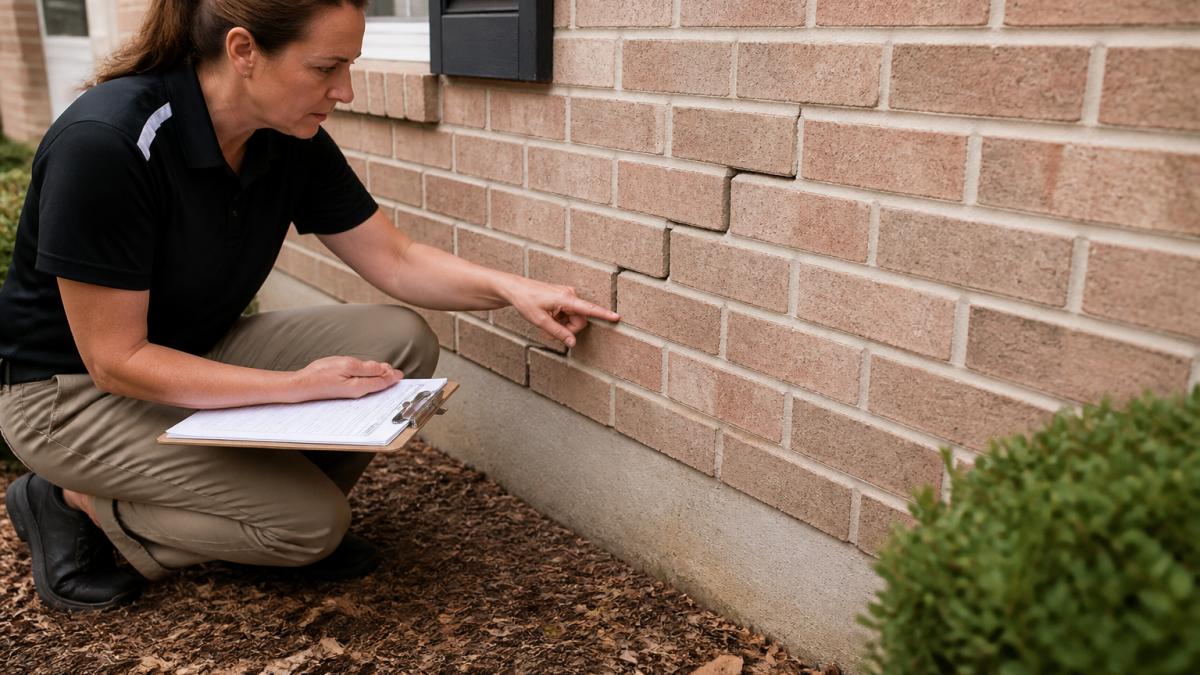
Cracks That Signal Trouble and Cracks That Do Not
Hairline cracks in drywall or mortar are common and usually harmless. They show up as a house ages and materials expand and contract.
These cracks deserve real attention:
- Stair-step cracks in brick or block, where the crack zigzags along the mortar joints
- Horizontal cracks in a foundation wall, especially near the middle of the wall’s height
- Vertical cracks that are wide at one end and narrow at the other
Crack width and progression matter more than crack count. A narrow crack unchanged for years is a monitoring item; a crack that grew between two visits is a different conversation.
Uneven Floors, Sticking Doors, and Water Staining
Cracks are only part of the picture. These signs often tell a clearer story:
- Sloping or uneven floors that you can feel underfoot
- Sticking doors and misaligned windows that suddenly do not latch
- Water staining on foundation walls or in a crawl space
Settling and differential settlement show up as a pattern, not a single symptom. One sticking door means little; three on the same side of the house plus a stair-step crack means something.
Step 3: Separate Urgent Structural Risks From Routine Monitoring
The real question is not “is there a problem?” but “how fast does this need attention?” That answer decides your timeline and budget.
Treat these as urgent:
- Horizontal cracks in a foundation wall
- Bowing or leaning walls
- A floor that has visibly dropped
Treat these as monitoring items:
- Hairline shrinkage cracks
- Old staining with no current moisture
- Minor settling with no progression
Treating every foundation issue as urgent invites inflated repair quotes and unnecessary panic. The opposite mistake is worse: waving off a horizontal crack as “just settling.”
Watch out: a horizontal foundation crack is the one finding you should never sit on.
Step 4: When to Bring In a Structural Engineer Foundation Inspection
A structural engineer foundation inspection is a focused evaluation of how well a foundation is carrying the load above it.
A home inspector identifies and reports. An engineer evaluates and designs. Those are different jobs, and both are worth having.
Bring in a structural engineer when:
- The report flags horizontal cracks, bowing, or significant settlement
- You need a repair design, not just an observation
- A contractor’s quote seems too big or too small for the finding
Ask for a written letter with a clear opinion and, if repairs are needed, a recommended method. That letter carries weight in negotiation and with lenders.
Step 5: Getting a Foundation Repair Estimate You Can Compare
A foundation repair estimate is only useful if you can line it up against another one. Contractors quote in different formats, which makes comparison hard. The goal is not the cheapest number but the proposal whose scope, method, and warranty match the finding in your report.
Schedule an Inspection or Request a Proposal →
What Drives the Price
Foundation repair pricing is not random. It tracks a few variables, and knowing them lets you spot a quote that is too low to be real or too high to be justified:
- Repair method. Crack injection, carbon-fiber strapping, wall anchors, helical or push piers, and mudjacking or polyurethane foam lifting are different trades with different equipment and labor. A pier system almost always costs more than crack injection because it involves excavation and load transfer.
- Linear feet or pier count. Most structural quotes are priced per pier or per linear foot of wall, so compare quantity, not the lump sum.
- Access and excavation. A crawl space, a finished basement, or a wall hemmed in by a deck or driveway changes labor hours substantially.
Low bids often exclude engineering, permits, and restoration, so the apparent savings evaporate once those are added back. Ask every contractor to state explicitly whether each is included.
The Four Things to Request From Every Contractor
Ask every contractor for the same four items so the proposals are comparable:
- The repair method, described in plain terms, with the product or system named
- Linear feet, pier count, or area covered, with a unit price
- Whether the price includes permits, engineering, and cleanup
Build a Comparison Sheet
Then fill in a simple sheet for each bid:
| Item to Compare | Contractor A | Contractor B | Contractor C |
|---|---|---|---|
| Repair method and product | |||
| Scope (linear feet or pier count) | |||
| Unit price | |||
| Engineering letter included | |||
| Permit included | |||
| Cleanup and restoration included | |||
| Warranty length and coverage | |||
| Transferable to a future buyer | |||
| Start date and duration |
Two quotes that look different in total often differ only in scope. Fill in the sheet before you decide anything.
How to Read the Warranty
A warranty is where proposals diverge most, and it is the part buyers skim. Read it for four things:
- Length. A one-year workmanship warranty and a lifetime structural warranty are not the same product; ask what happens in year two.
- Transferability. If you may sell the home, a warranty that transfers to the next owner has real value in a future negotiation.
- Exclusions. Movement caused by soil conditions, drainage, or grading is often excluded, which matters because those are common causes of recurrence.
Watch for These Red Flags
- A quote given before anyone inspected the crawl space or basement
- Pressure to sign the same day for a discount
- A proposal with no written scope, only a total price
A repair sales assessment is not the same as an engineering opinion. If the only professional who has looked at the problem is the contractor selling the fix, get an independent evaluation before you sign. Step 7 covers how.
Step 6: Negotiating Repairs After Home Inspection Findings
Negotiating repairs after a home inspection works best when you bring evidence, not emotion. The report and any engineer’s letter are your evidence.
You generally have two paths: seller credit or repairs.
- Ask the seller to complete the repairs before closing, using a licensed contractor
- Ask for a seller credit and handle the work yourself after closing
A credit gives you control over who does the work and how. Seller-completed repairs give you less say but no out-of-pocket cost.
Keep your ask tied to the documented finding. “The report shows a horizontal crack and the engineer recommends stabilization” is a stronger position than “we want money off.”
Step 7: Schedule a Second Opinion Before You Commit
A second opinion is not an insult to the first inspector. It is due diligence and often the cheapest part of the process, because it comes from someone who is not selling the repair.
Know Which Professional You Need
“Second opinion” is not one service. Match the professional to the question:
- Structural engineer. Evaluates whether the foundation is carrying its load, whether movement is active or historical, and what repair method is appropriate. This is the right call for horizontal cracks, bowing walls, significant settlement, or any disagreement about severity. Look for a licensed professional engineer (PE) who practices residential structural work and does not sell repairs.
- Geotechnical engineer. Evaluates the soil. If the concern is expansive clay, poor drainage, erosion, or a hillside, a geotechnical evaluation explains why the foundation is moving, which shapes the fix. A structural engineer may recommend this step.
- Repair contractor. Prices and performs a defined scope. Useful for cost, but a contractor’s assessment is a sales assessment, not an independent diagnosis.
For a serious finding, the cleanest sequence is engineer first, then contractor bids against the engineer’s recommended scope, so the scope is not shaped by whoever is bidding.
When a Second Opinion Is Worth It
Get one when the finding is serious, when a quote seems high or suspiciously low, when the seller disagrees about severity, or when you feel pressure to decide fast. A qualified second opinion can confirm the diagnosis, correct it, or reframe it as a monitoring item.
Ask the second professional:
- What they see and where
- Whether the movement looks active or historical
- What they would do if it were their house
Keep a Documentation File
Keep your documentation organized from day one: the inspection report, dated photos, engineer letters, contractor proposals, permits, and invoices. If the issue ever touches insurance or a future sale, that file protects you. A simple folder with dated file names is enough; the discipline matters more than the software.
Check Your Insurance Before You Assume
Homeowners often assume a foundation finding is covered. It usually is not, but the answer depends on cause and policy terms, so read the policy rather than guessing:
- Sudden events. Damage from a burst pipe, a vehicle impact, or a similar sudden event is more likely to be covered than long-term movement.
- Earth movement. Settling, soil movement, and earth movement are commonly excluded, though wording varies by policy.
- Water. Water intrusion coverage depends on whether it came from a plumbing failure or from outside drainage, and on whether the policy covers seepage.
Call your insurer and ask two questions in plain terms: does this policy exclude earth movement, and does it cover water intrusion from outside the home? Write down the answers and the date you asked.
At Full Disclosure Property Inspection, we are a locally owned and operated team led by a Certified Master Inspector with a background in general contracting and land development. We include infra-red thermal imaging free with fee-paid inspections. Our findings are an independent opinion protected by a strict Code of Ethics.
Frequently Asked Questions
What should I do first if a home inspection finds foundation issues?
Read the full report before reacting to the summary. Note whether the inspector flagged foundation issues as a structural concern or a maintenance item, and photograph the areas mentioned. Ask the inspector to clarify anything you do not understand, since a detailed report should distinguish critical problems from minor wear. From there, decide whether the finding warrants a structural engineer’s evaluation or simply a repair quote from a licensed contractor. Acting in that order keeps you from paying for repairs you may not need or skipping ones that matter.
How do I know whether a foundation crack is serious?
Width and progression matter more than the crack’s location alone. Hairline vertical cracks under about 1/8 inch are often normal settling, while horizontal cracks, stair-step cracks in brick, and any crack wider than 1/4 inch deserve a closer look. Watch whether a crack grows over weeks by marking its ends with a pencil and a date. Cracks paired with sticking doors, sloping floors, or water staining point to movement rather than cosmetic shrinkage, and that combination is when you call a qualified inspector or structural engineer.
Can I negotiate repairs or the purchase price for foundation problems?
Yes, and the strongest position comes from documentation. Get a written foundation repair estimate from a licensed contractor, plus a structural engineer’s opinion if the finding is significant. Use those documents to request either a price reduction, a seller credit, or the seller completing the work before closing. Sellers are more likely to agree when you present evidence rather than a vague concern, and a seller disclosure that omitted a known problem strengthens your case. Confirm any agreement in writing with your real estate agent.
Should I hire a structural engineer after a foundation issue is found?
Hire one when the inspection report describes movement, differential settlement, or cracks that concern the inspector, or when repair quotes conflict. A structural engineer foundation inspection evaluates the cause and the fix, while a repair contractor prices the work. Keep the roles separate so the person diagnosing the problem is not the person selling the solution. Expect the engineer’s written report to state whether the issue is urgent, monitorable, or cosmetic, which is exactly what you need for negotiation and for planning future maintenance.
A foundation finding does not have to derail your purchase or your sale. It needs a calm read, the right expert, and a clear paper trail. If you want an inspection you can actually understand, with thermal imaging included and an independent opinion behind it, get started with Full Disclosure Property Inspection and request a proposal for your property.


