Last Updated: November 18, 2026
Quick Summary
A sewer scope inspection is worth it in most cases, especially for older homes with clay or cast iron pipe, mature trees near the sewer route, or a history of backups. It reveals hidden defects a standard home inspection cannot see, and the cost is small next to a sewer repair bill.
- A standard home inspection is visual and non-invasive, so the buried lateral sewer line stays out of view.
- Prioritize a scope for older homes, mature trees near the sewer route, slow drains, or vacant properties.
- Most scopes take roughly 30 to 60 minutes on site, though access and line length change that.
- Ask whether you will receive raw footage and a report that locates defects by distance and rates severity.
- A clean scope is evidence of the line’s condition on inspection day, not a warranty.
Table of Contents
- What a Sewer Scope Inspection Reveals That a Standard Home Inspection Misses
- How a Sewer Scope Inspection Works: Camera, Cleanout, and Video Footage
- What a Sewer Scope Inspection Cost Buys You
- Should I Get a Sewer Scope Inspection When Buying a House?
- When a Failed Sewer Inspection Changes the Deal
- How Long Does a Sewer Scope Inspection Take?
- The Limits of a Sewer Scope and How to Read the Report
- Schedule Your Sewer Scope Before You Close
- Frequently Asked Questions
What a Sewer Scope Inspection Reveals That a Standard Home Inspection Misses
A sewer scope inspection is a video examination of the underground drain line that carries wastewater from a house to the municipal sewer or septic system. It answers a question a standard home inspection cannot: what condition is the main sewer line in, and will it fail soon after closing? The pipe is buried, can be expensive to fix, and is invisible to a general walkthrough.
A standard home inspection is generally visual and non-invasive, and the underground lateral sewer line typically stays out of view. A camera scope can show the inside of that pipe directly.
A sewer scope can reveal conditions such as:
- Root intrusion where tree roots have entered joints and begun to choke flow
- Cracked, broken, or collapsed pipe sections that no longer hold their shape
- Corrosion and pipe deterioration in older cast iron or clay lines
- Offset joints where pipe sections have shifted out of alignment
- A bellied pipe that has sagged and collects standing water
- Blockages and clogs from grease, debris, or collapsed material
A scope is one way to see hidden damage in the underground line before you own it.
How a Sewer Scope Inspection Works: Camera, Cleanout, and Video Footage
Generally, a sewer camera is fed through an accessible cleanout or a roof vent and pushed down the lateral line to the main sewer, transmitting video to a monitor while defects are noted by distance.
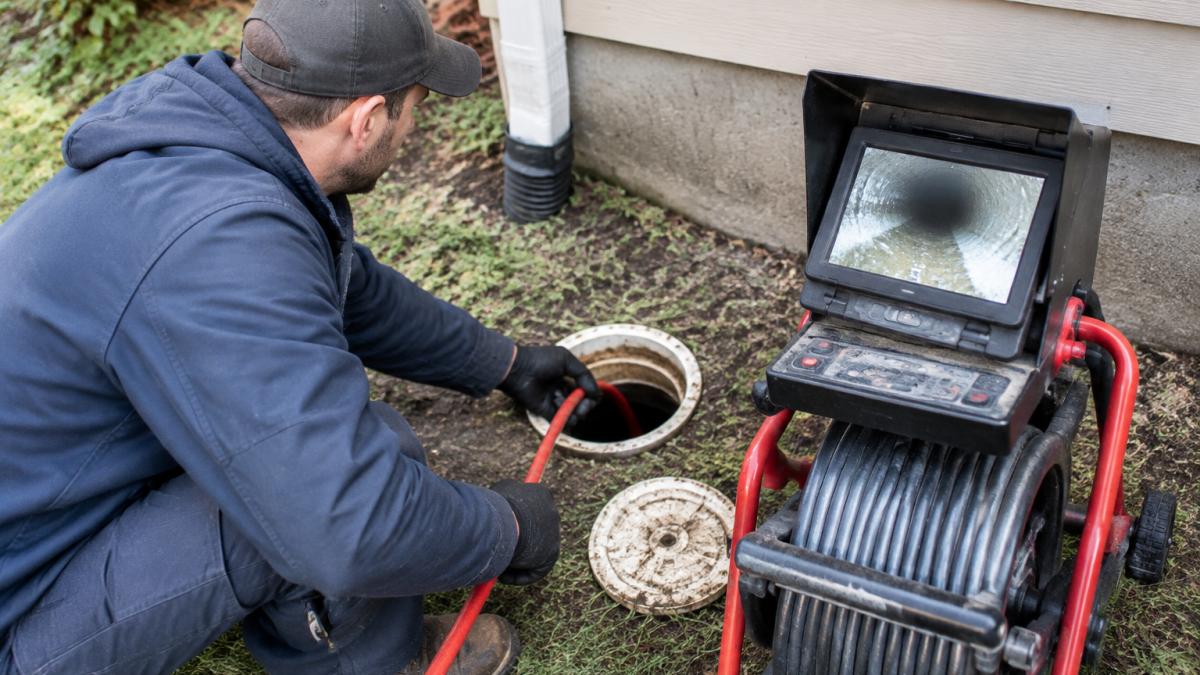
Access can affect a sewer scope. If the property has no cleanout, or the cleanout is buried or damaged, access may need to be created, which can add time and cost. Ask about access before the appointment.
A sewer scope can produce video footage and a written report, and that footage can serve as evidence.
What a Sewer Scope Inspection Cost Buys You
Pricing depends on how the technician accesses the line, how far the camera travels, how much time the run takes, and how much documentation you receive. Request a current quote from Full Disclosure Property Inspection for the specific property rather than relying on a generic figure.
What you are actually buying is risk reduction. A sewer line repair or replacement can be one of the larger hidden costs in a home purchase, and a scope is a direct way to learn whether that cost is waiting for you. The value of the inspection depends on getting a deliverable you can actually use.
That is where most buyers get burned. A bargain scope with no written report or footage is not worth much, because you cannot hand a verbal summary to a seller during negotiation. A useful deliverable generally includes the recorded video, defect locations by distance, a severity rating for each finding, the camera’s stopping point, and a recommended next step for each defect.
Before you book, ask the provider whether you will receive the raw footage, whether the report locates defects by distance and rates severity, and what the turnaround time is. A scope that produces footage but no usable report is a cost, not an investment.
Confirm what any fee includes before you compare quotes, because two scopes at different prices may not be the same service.
Should I Get a Sewer Scope Inspection When Buying a House?
Yes, in most cases, and especially when the property shows risk factors. The question of whether you should get a sewer scope inspection when buying a house comes down to how much you would lose if the line failed right after closing.
Prioritize a scope when you see:
- An older home with original clay or cast iron pipe
- Mature trees near the sewer route
- Slow drains, sewage backup history, or foul odors
- A property that has sat vacant
- Any home where the seller cannot document recent sewer work
Newer construction is not automatically exempt, but the risk profile differs. For a competitive market where your agent suggests trimming contingencies, the scope is one of the last items to cut, because it protects against a hidden cost no walkthrough can catch. A failed sewer inspection can turn a “great deal” into an expensive surprise.
When a Failed Sewer Inspection Changes the Deal
A failed sewer inspection does not automatically kill a purchase. What it does is give you use and clarity. The right response depends on severity, and that is where a decision framework helps.
| Finding | Severity | Typical Next Step |
|---|---|---|
| Minor root intrusion | Low | Schedule a cleaning, monitor |
| Offset joints, small cracks | Moderate | Get a repair estimate, negotiate |
| Bellied pipe with standing water | Moderate to high | Price a spot repair, request credit |
| Collapsed or broken pipe | High | Get replacement quotes, renegotiate |
The key is distinguishing a major defect from routine maintenance. A localized clog is a cleaning; a collapsed line is a replacement. How do you distinguish major defects from minor home repairs walks through that judgment call, which is exactly what you need at the negotiating table. Depending on your inspection contingency, you can request a repair credit, ask the seller to fix it, or walk away.
How Long Does a Sewer Scope Inspection Take?
Most scopes take roughly 30 to 60 minutes on site, though access and line length change that. A clean, straight run with an accessible cleanout moves quickly. A buried cleanout, a long lateral, or heavy root intrusion adds time.
Scheduling matters as much as duration. Book the scope during your inspection period so findings arrive before your contingency deadline. Questions to ask a home inspector: 15 must-ask is worth reviewing before you book, so you know what to confirm about access, reporting, and turnaround.
The Limits of a Sewer Scope and How to Read the Report
A sewer scope is powerful but not perfect, and knowing its limits is what separates a useful result from a false sense of security. The camera shows the condition of the line it travels, nothing more. It cannot assess portions it cannot reach, and a collapsed, offset, or heavily root-bound section may stop the camera before the end of the lateral. Access problems are the most common limitation: a buried, damaged, or missing cleanout can force the technician to pull a toilet or create access, and some lines simply cannot be fully traversed in one visit. The camera also cannot predict exactly when a marginal pipe will fail, and an intermittent issue, a partial clog that only appears under heavy flow, may not show up during a short run.
When you read the report, focus on four things: the defect type, its location by distance, the severity rating, and the recommended action. A report that says “roots present” without a distance or severity is not usable at the negotiating table. Ask the inspector directly: How far did the camera travel, and where did it stop? What is the severity of each finding? Which defects need a follow-up inspection or a specialist estimate? Pair the footage with your overall findings using how to read a home inspection report: 7 key steps.
A common pattern is that buyers treat a clean scope as a guarantee. It is not. A scope that reaches the main sewer with no defects is a strong signal, but it does not cover every inch of pipe or every future failure mode. Treat the report as evidence of the line’s condition on the day of inspection, not a warranty. If a report is vague about location or severity, ask for clarification before you rely on it in negotiation, and if the camera could not reach a section, say so in your contingency request rather than assuming the unseen portion is fine.
Schedule Your Sewer Scope Before You Close
The sewer line is the one major system most buyers never see, and that is exactly why it deserves a closer look. If you are weighing whether a sewer scope inspection is worth it, the honest answer is that the cost is small next to the repair bill a hidden defect can create. Full Disclosure Property Inspection provides independent inspections with detailed computer-generated reports, and infra-red thermal imaging is included with fee-paid inspections.
Ready to protect your investment? Schedule your sewer scope inspection and get clear answers before you close.
A buried pipe can hide a five-figure problem until it is yours to fix. Full Disclosure Property Inspection gives you the full picture before closing, with independent inspections led by a Certified Master Inspector, detailed computer-generated reports, and thermal imaging included free with fee-paid inspections. Get started with Full Disclosure Property Inspection and buy with confidence instead of guesswork.
Frequently Asked Questions
Is a sewer scope part of a standard home inspection?
No. A standard home inspection covers the visible plumbing system inside the house, but it does not include running a camera through the main sewer line. A sewer scope inspection is a separate service that requires specialized equipment and access through a cleanout. If you want the underground lateral line checked, you have to request it specifically, and it is best scheduled at the same time as the general inspection so findings land before your inspection contingency deadline.
What are signs that a sewer line may be damaged?
Watch for slow drains in multiple fixtures, gurgling sounds after water runs, foul odors near floor drains or the yard, and standing water or unusually green patches over the sewer line. A sewage backup is the clearest warning. These signs point to a possible blockage, root intrusion, or a bellied pipe. Older homes with cast iron or clay pipe carry higher risk, and a camera inspection confirms the cause before you commit to a purchase.
What happens if a sewer scope inspection finds a problem?
You get video footage and a written report describing the defect, its location, and severity. From there you can ask the seller to repair it, request a credit toward the repair estimate, or renegotiate the price. Minor issues like a small root intrusion may only need cleaning. A cracked or collapsed pipe can require excavation and replacement, which is a major cost. Knowing the difference lets you decide whether to proceed, negotiate, or walk away.
Can a sewer scope inspection save money?
It can. Repairing or replacing a main sewer line often runs into the thousands of dollars, and that cost usually falls on the buyer after closing unless it was negotiated. A camera inspection gives you documented evidence to negotiate with. Even when the line is clean, the video footage confirms the pipe’s condition and gives you a baseline for future maintenance.


