Table of Contents
- What Is a Sewer Scope Inspection and How Does It Work?
- Why You Need a Sewer Scope Inspection Before Buying
- Signs of Sewer Line Damage You Should Never Ignore
- Home Inspection vs Sewer Scope: What Each One Covers
- Sewer Scope Inspection Cost and What Affects the Price
- What Happens If the Inspection Finds a Problem?
- DIY Camera vs Professional Sewer Scope: Key Differences
- Frequently Asked Questions
Last Updated: September 20, 2026
What Is a Sewer Scope Inspection and How Does It Work?
A sewer scope inspection is a video-recorded examination of the underground pipe carrying waste from a home to the municipal sewer main or septic tank. A technician feeds a specialized camera through the cleanout access, recording the lateral sewer line to spot blockages, cracks, root intrusion, and other defects before they become costly repairs.
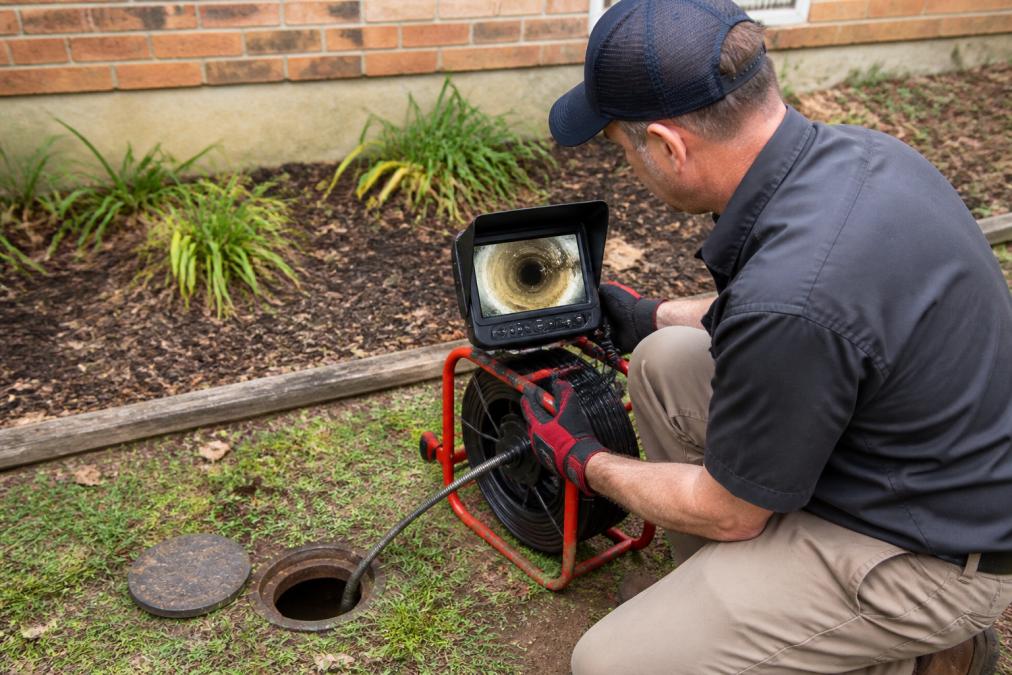
The Camera and Equipment Used
The core tool is a push-rod sewer camera, typically 1.5 to 2 inches in diameter, with a self-leveling head. Higher-end units add LED lighting, a sonde transmitter, and a footage counter that logs camera travel, letting the technician correlate defects with a physical location in the yard.
Step-by-Step: What Happens During the Inspection
- Locate the cleanout access, usually near the foundation or at the property line
- Remove the cleanout cap and inspect for standing water or debris
- Feed the camera reel into the line, recording continuously
- Watch the monitor for cracks, root intrusion, offset joints, or a belly in the line
- Mark any defect location using the sonde
- Pull the camera back and confirm findings
- Deliver a recorded video and written summary
The process takes 30 to 60 minutes for a typical residential lateral. You should receive the video file, not just a verbal summary.
Why You Need a Sewer Scope Inspection Before Buying
The strongest argument for a sewer scope is simple: the most expensive repair on a property is often the one you can’t see. A main sewer line replacement can run into the tens of thousands of dollars, and homeowner’s insurance almost never covers it because it’s considered a maintenance issue. Once you close, the lateral sewer line is yours, defects and all, a scope before closing is the only reliable way to know what you’re buying.
- Older homes: Cast iron and clay pipes degrade over decades and are prone to root intrusion
- Homes with mature trees: Roots seek moisture and exploit any crack or joint gap
- Properties with prior backups: A sewer backup is a warning sign, not a fluke
- Investment purchases: Knowing the pipe condition protects your property value and rental cash flow
Signs of Sewer Line Damage You Should Never Ignore
Most sewer line damage announces itself long before a full backup, but homeowners attribute the early signs to something else.
Warning Signs Inside the Home
- Slow drains in multiple fixtures at once, not just one
- Gurgling sounds from toilets or drains after use
- Sewer odor in the basement or near floor drains
- Repeated clogging in the same fixture
- Water backing up in a tub or shower when the washing machine drains
When several fixtures drain slowly at once, the blockage is likely in the main sewer line, not an individual branch, a lateral problem that needs a video inspection.
Warning Signs in the Yard
- Soggy or unusually green patches of grass over the sewer path
- Sunken soil or a depression along the pipe route
- Foul smell outdoors near the cleanout
- Foundation cracks that appear alongside drainage issues
- Rodent or insect activity concentrated near the sewer line
A belly in the line, where the pipe sags and traps waste, often shows up as a recurring slow drain that snaking can’t fix.
Never accept a seller’s assurance that the sewer line “was just cleaned” as proof it’s healthy. A cleaning clears the symptom. Only a video inspection reveals the cause, and a cleaned line can look deceptively clear on the surface while hiding cracks, offset joints, or root intrusion beneath.
Home Inspection vs Sewer Scope: What Each One Covers
A standard home inspection and a sewer scope are complementary, not interchangeable: the home inspection evaluates visible, accessible systems, while the sewer scope examines the buried pipe it cannot reach.
| Feature | Standard Home Inspection | Sewer Scope Inspection |
|---|---|---|
| Scope | Structure, roof, electrical, plumbing, HVAC | Underground lateral sewer line only |
| Method | Visual, non-invasive | Video-recorded examination |
| Access | Above-ground systems | Cleanout access to sewer main |
| Finds | Visible defects and safety issues | Cracks, root intrusion, bellies, offset joints |
| Typical duration | 2-4 hours | 30-60 minutes |
| Report | Written with photos | Video plus written summary |
Sewer Scope Inspection Cost and What Affects the Price
Sewer scope inspection cost generally varies. The spread comes down to how the service is sold and how hard the line is to access:
- Bundled with a full home inspection: $100 to $250 as an add-on. This is the cheapest path because the inspector is already on site and the trip charge is absorbed into the larger job.
- Standalone scope: $250 to $600. You are paying for a dedicated trip, setup, and report, so the base cost is higher.
- Real estate transaction rush: Add $50 to $150 if you need the report back within 24 hours to hit a contingency deadline.
- Difficult access: Add $75 to $200 if the cleanout is buried, missing, or requires roof vent entry.
What drives the price up or down:
- Line length and complexity: A straight 40-foot lateral is quick work; a 120-foot line with multiple bends, a backwater valve, or a septic connection costs more.
- Access point: A clearly marked cleanout near the foundation is ideal. A buried or missing cleanout adds labor to locate an entry point.
- Roof vent access: Some older homes have no exterior cleanout, forcing the technician to feed the camera from the roof vent, slower, riskier, and priced accordingly.
- Add-ons: A locating sonde, a written report with still images, and a USB or cloud-hosted video file may each carry a small upcharge. Ask before you book.
- Bundle vs. standalone: Bundling with a home inspection almost always lowers the total by avoiding a second trip charge.
- Market and season: Pricing varies by metro area and demand; spring and summer, when real estate activity peaks, tend to be busiest and priciest.
A few practical notes on getting a fair price:
- Ask whether the quote includes the recorded video file and a written summary. Video-only quotes are useless at the negotiation table.
- Ask whether the sonde is included. Without it, a defect can’t be pinpointed for a repair bid, and you may pay a second contractor just to find the problem.
- Get the quote in writing before the technician arrives. Verbal estimates that shift on site are a red flag.
- If you’re already paying for a full home inspection, ask for the bundled rate. Most firms price the scope as an add-on.
Ask whether the scope includes a locating sonde and a recorded video file, not just a live view. Without the sonde, a defect can’t be pinpointed for repair bidding, and without the recording, you have no documentation to bring to the negotiation table.
What Happens If the Inspection Finds a Problem?
A failed scope is not the end of the deal, it’s information. What you do with it depends on the defect’s severity, the transaction structure, and who pays for the fix once you own the home.
Negotiation Options After a Failed Scope
- Request a repair credit: Ask the seller to reduce the price by the estimated repair cost. This is the most common outcome because it keeps the closing on schedule and lets you choose the contractor.
- Require repair before closing: Have the seller fix the line, with a re-scope to confirm the work. Insist on a licensed plumbing contractor and a copy of the invoice and warranty.
- Split the cost: A common compromise when the defect is moderate and both sides want the deal to close.
- Adjust the offer: Renegotiate based on a contractor’s written estimate rather than a guess.
- Walk away: If the defect is severe and the seller won’t budge, the scope just saved you a fortune.
Get a written repair estimate from a licensed plumbing contractor before you negotiate. A vague “there’s a crack” won’t move a seller. A documented estimate for a specific repair will.
A Negotiation Script You Can Actually Use
Most buyers freeze when it’s time to ask for money. Here is language that works for the three most common scenarios.
Scenario 1, Moderate defect, seller is reasonable:
Schedule an Inspection or Request a Proposal →
Scenario 2, Severe defect, seller is resistant:
Scenario 3, Seller offers to ‘just snake it’:
Repair Methods: Trenchless vs Excavation
Trenchless repair rehabilitates the existing pipe from the inside using pipe lining or pipe bursting. It preserves landscaping and usually costs less, and works best when the pipe is structurally sound enough to reline and defects are localized.
Does Homeowners Insurance Cover Sewer Line Repair?
This is the question buyers ask most often after a failed scope, and the answer is usually no. Standard homeowners insurance policies typically exclude sewer line repair because the damage is classified as a maintenance issue or gradual deterioration, not a sudden accidental loss.
What is generally not covered:
- Root intrusion
- Pipe deterioration from age
- Offset joints and bellies
- Collapsed clay or cast iron pipe
- Damage from normal wear and tear
What may be covered, depending on your policy:
- Sudden damage from a covered peril, such as a vehicle driving over the line or a contractor accidentally cutting it
- Backup of sewage into the home, but only if you have added the sewer backup endorsement. This covers the mess inside the house, not the pipe itself.
- Some policies offer limited “service line” coverage as an optional rider. Read the exclusions carefully, the coverage is often narrower than it sounds.
Service Line Warranties: The Coverage Buyers Actually Need
Because insurance usually won’t pay, the practical protection for a sewer lateral is a service line warranty, sometimes sold as a “sewer line protection plan” or “exterior service line coverage.” You pay a modest monthly or annual premium, and the warranty covers repair or replacement of the exterior sewer line up to a coverage cap. Most plans require the line to be in working order at enrollment, so a known defect usually disqualifies the property until repaired, and claims require a covered failure, not a pre-existing condition.
A few practical notes:
- If the scope finds a defect, you generally cannot buy a warranty to cover that defect. Fix it first, then enroll.
- If the scope comes back clean, a service line warranty is a reasonable low-cost hedge against a future failure, especially on older clay or cast iron laterals.
- Read the exclusions. Many plans exclude root intrusion unless it is the direct cause of a covered failure, and some cap payouts well below the cost of a full replacement.
- Some utility companies offer their own service line protection programs. Check with your municipal provider before buying a third-party plan.
Do not assume a clean scope means you are off the hook forever. A clean scope documents the condition of the line on the day of inspection. It does not prevent future root intrusion, soil movement, or pipe deterioration. On an older lateral, a service line warranty is often the cheapest peace of mind available.
What to Do First, In Order
- Get the written scope report and video.
- Get one or two written repair estimates from licensed plumbing contractors.
- Decide whether to negotiate a credit, require repair, or walk.
- If you close, fix any known defect before enrolling in a service line warranty.
- If the line is clean, price a service line warranty and read the exclusions.
A failed scope is not a dead deal, it is leverage. The buyer who shows up with a video, a written estimate, and a clear ask almost always gets a better outcome than the buyer who just says “the sewer is bad.”
DIY Camera vs Professional Sewer Scope: Key Differences
A DIY sewer camera is a tempting shortcut. The gap between a consumer unit and a professional scope, though, is the difference between seeing something and understanding it.
- Image quality: Consumer cameras produce grainy footage that hides hairline cracks and early root intrusion
- Locating ability: Professional units include a sonde to mark defect positions; most DIY kits don’t
- Interpretation: A professional knows what a normal offset joint looks like versus a failing one
- Documentation: Professional reports produce a recorded video and written findings usable in negotiation
- Safety and access: Feeding a camera through a cleanout risks damage and exposure without proper equipment
A sewer scope is one of the few inspection services that can pay for itself many times over in a single transaction. The cost of the scope is trivial next to the cost of a main line replacement you didn’t see coming.
Frequently Asked Questions
What exactly happens during a sewer scope inspection?
A technician feeds a flexible cable with a waterproof camera through the home’s cleanout access, then pushes it down the lateral sewer line toward the city tap. The camera sends live video to a monitor, and the technician records the entire run. They look for cracks, root intrusion, offset joints, bellies in the line, and blockages. Afterward, you receive a video-recorded examination with notes on pipe material, condition, and any defects found.
How much does a sewer scope inspection cost?
Sewer scope inspection cost varies based on your location, the length of the lateral line, and whether the inspector has to access the roof or use additional equipment. Pricing depends on the specific property and scope of work, so request a quote from your inspection provider for an exact figure.
Can a standard home inspection detect sewer line issues?
No. A standard home inspection is visual and non-invasive. It covers the structure, roof, electrical, plumbing fixtures, and HVAC, but the underground sewer lateral is buried and cannot be evaluated without a camera. The home inspection vs sewer scope distinction matters: a home inspector may note slow drains or a cleanout in poor condition, but only a sewer scope reveals what is actually happening inside the pipe.
What are the common signs of sewer line damage?
Signs of sewer line damage include slow drains throughout the house, gurgling toilets, sewage odors in the basement or yard, soggy patches of grass, and frequent backups. In older homes, clay pipes and cast iron are prone to root intrusion, cracks, and offset joints. If you notice any of these warning signs, a sewer scope inspection can confirm the cause before you commit to a purchase.
Is a sewer scope inspection worth it for a new home?
Yes. Newer construction can still have sewer problems. Settling soil can create a belly in the line, and construction debris sometimes ends up in the pipe. A scope gives you a baseline record of the lateral’s condition. For buyers in competitive markets, that information provides negotiation leverage and protects against costly repairs that a standard home inspection would miss entirely.
What happens if the inspector finds a blockage or break in the line?
If the scope reveals a blockage, root intrusion, or pipe collapse, you have options. You can ask the seller to repair it before closing, request a credit toward the repair cost, or walk away if the damage is severe. Minor blockages may be cleared with hydro-jetting, while cracked or collapsed pipes often need trenchless repair or excavation. A written report with video evidence gives you solid ground for negotiation.


