Table of Contents
- Why Property Inspection for Real Estate Investors Is Non-Negotiable
- How an Investor Inspection Differs from a Standard Home Inspection
- The Investment Property Inspection Checklist: Key Systems to Scrutinize
- How to Read a Home Inspection Report for Investors: Separating Deal-Breakers from Minor Repairs
- Using Inspection Findings as Negotiation use
- Step 1: Price Every Finding as a Capital Expenditure
- Step 2: Rank Findings by Negotiation Strength
- Step 3: Use the “Cost-to-Cure” Formula, Not the Repair Estimate
- Step 4: Submit a Single, Itemized Request
- Step 5: Know Your Walk-Away Number Before You Negotiate
- The “Seller Credit vs. Price Reduction” Decision
- The Property Inspection Contingency for Investors: Protecting Your Offer
- What the Standard Contingency Actually Says
- The Three Contractual Traps Investors Hit
- The “Pass-Fail” Contingency: A Competitive-Market Compromise
- How the Inspection Contingency Interacts with Financing and Appraisal
- The Legal Consequence of Waiving the Contingency
- A Sample Addendum for Investor Protection
- Post-Inspection Project Management: From Report to Renovation
- Conclusion: Turn Due Diligence into a Stronger Investment Portfolio
- Frequently Asked Questions
Last Updated: September 6, 2026
Why Property Inspection for Real Estate Investors Is Non-Negotiable
A property inspection for real estate investors is the single most effective tool for quantifying risk before you commit capital to a deal. Unlike a homeowner, an investor must underwrite every defect as a future capital expenditure that directly impacts cash flow and return on investment.
At Full Disclosure Property Inspection, we have guided many investors through this process. Our team, led by a Certified Master Inspector with a background in general contracting and land development, views every property through the lens of your balance sheet. The inspection report is the bridge between the seller’s asking price and the actual asset valuation you should use for your projections.
Waiving inspections to make offers more competitive transfers risk directly to you, often to the tune of thousands in deferred maintenance. A smarter approach: keep the contingency but use the findings to negotiate.
How an Investor Inspection Differs from a Standard Home Inspection
A standard home inspection asks whether a house is safe and functional. An investor inspection asks the projected lifespan of every major system, what replacement will cost in year three versus year seven, and which flaws threaten the building envelope or structural integrity.
A buyer-focused report notes the HVAC is operational. An investor-focused report estimates remaining service life, notes the model year, and flags whether the system is sized correctly. That distinction matters because replacement costs drive your exit cap rate.
For residential investors, the scope should expand to a property condition assessment covering tenant safety, code compliance, and durability of finishes under heavier wear. Landlords need to know about water heater capacity and flooring condition, not just whether outlets are grounded.
The Investment Property Inspection Checklist: Key Systems to Scrutinize
An effective investment property inspection checklist organizes findings by severity and projected cost. You are looking for safety hazards, structural defects, and pending failures that will demand cash within the first 24 months of ownership.
Structural Integrity and the Building Envelope
Start with the foundation and building envelope, which carry the highest repair costs. Look for cracks in foundation walls, uneven floors, and sticking doors that signal settlement. The inspector should also evaluate the roof’s age and condition, gutters, downspouts, and grading to confirm water drains away from the foundation.
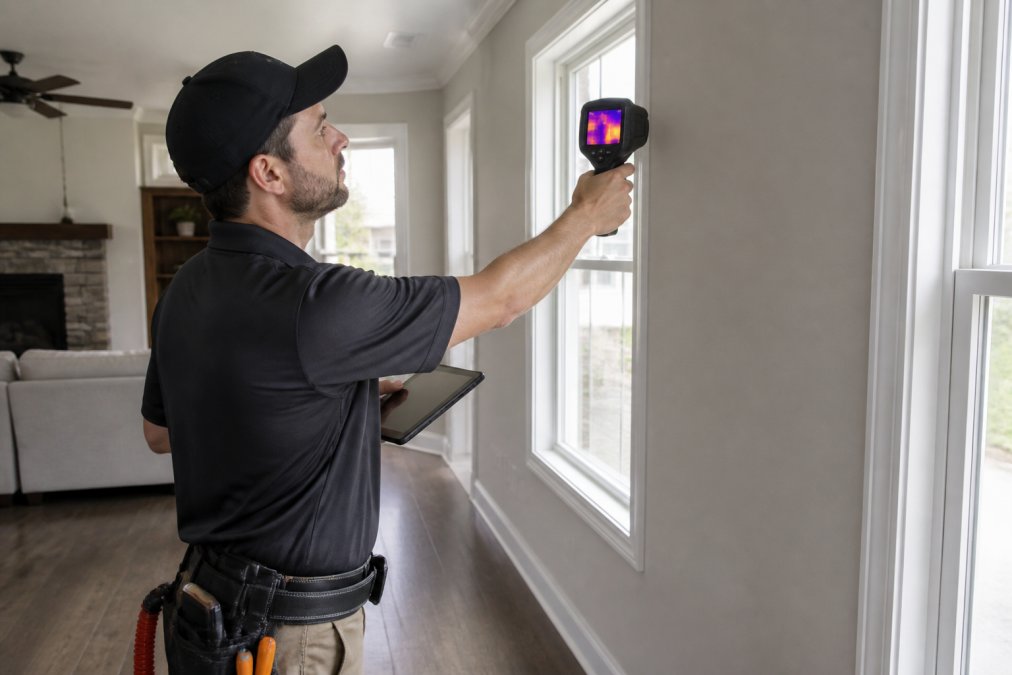
Thermal imaging reveals moisture intrusion behind walls, missing insulation, and air leaks that drive up utility costs. At Full Disclosure Property Inspection, infrared thermal imaging is included free with every fee-paid inspection. A wet insulation pack in a wall cavity is a small problem today and a major mold remediation tomorrow.
Major Systems: HVAC, Plumbing, Electrical, and Roofing
The four major systems, HVAC, plumbing, electrical, and roofing, consume the bulk of your repair reserves. HVAC failures are expensive but predictable; plumbing leaks cause immediate property damage; outdated electrical panels are a safety and insurance issue; and an aging roof accelerates every other problem.
For each system, ask for three data points: current condition, estimated remaining lifespan, and approximate replacement cost. A 15-year-old roof with 5 years of life left is a different investment thesis than one with 20 years remaining (nahb.org). The same logic applies to the water heater, electrical panel, and HVAC condenser.
How to Read a Home Inspection Report for Investors: Separating Deal-Breakers from Minor Repairs
Reading a home inspection report for investors means triaging findings into deal-breakers, negotiable items, and deferred maintenance. Deal-breakers are safety hazards, structural defects, or code violations that cost more to fix than the deal’s profit margin can absorb.
Use the severity ratings most inspectors assign. Items marked “safety hazard” or “major defect” require immediate attention and should anchor your negotiation. Items marked “maintenance item” or “minor repair” are routine costs. Treating every flagged item as equal leads to over-negotiating on trivial items or ignoring a systemic issue.
The real skill is reading between the lines. “Evidence of previous termite treatment” is history; “active infestation in the garage sill plate” is an active problem requiring a licensed pest control contractor and likely structural repair. When in doubt, ask your inspector to clarify severity and projected cost before responding to the seller.
Using Inspection Findings as Negotiation use
Most guides stop at “ask for a credit,” which is useless without a framework for what to ask for, how much, and when to walk away. Your leverage is in translating defects into a revised purchase price that protects your return.
Step 1: Price Every Finding as a Capital Expenditure
Before contacting the seller’s agent, convert every major finding into a dollar amount using three sources, in this order of authority:
- A licensed contractor’s written quote for the specific repair. This is the number sellers respect most because it is third-party and itemized.
- The inspector’s estimated cost range if they provide one. This is a useful cross-check but is often a rough number.
- Your own replacement cost database from past deals. If you have replaced a 15-year-old HVAC in a 1,200-square-foot unit before, you know the real number better than any generic estimate.
Create a table with columns for finding, severity, repair cost, and remaining useful life if no repair is made. This becomes your negotiation document.
Step 2: Rank Findings by Negotiation Strength
Not all defects carry equal weight. Rank them into three tiers:
- Tier 1, Non-negotiable concessions: Active roof leaks, foundation movement, active knob-and-tube wiring, active mold, or any code violation that prevents occupancy or insurance. These justify a price reduction equal to the full repair cost, or a seller credit at closing.
- Tier 2, Strong grounds for a shared cost: End-of-life systems that still function (a 22-year-old water heater, an HVAC past its service life) or latent defects like an aging sewer line. Sellers often split these costs 50/50 or offer a credit for half the replacement estimate.
- Tier 3, Weak grounds: Cosmetic wear, minor cracks, outdated fixtures. Do not raise these in the same communication as Tier 1 items. They dilute your position and make you look like a nickel-and-dimer.
Step 3: Use the “Cost-to-Cure” Formula, Not the Repair Estimate
Your negotiation target is not the repair cost, it is the cost-to-cure minus the risk premium you already priced in. If your underwriting assumed a $4,000 HVAC replacement in year three and the inspection reveals one year of life left, you are out the difference between your assumption and the accelerated timeline. Ask for that difference, not the full replacement cost.
Example: You underwrote a $6,000 roof replacement in year five, but the inspection shows it is actively leaking and needs replacement now. Your ask should be $6,000 (the accelerated cost), not $6,000 plus interior water damage, if you can show the leak was pre-existing and disclosed.
Step 4: Submit a Single, Itemized Request
Send one written request to the seller’s agent, not a series of emails:
- Summary line: “Based on the inspection report dated [date], we request a seller credit of $X to address the following items.”
- Itemized list: Each Tier 1 and Tier 2 finding with the contractor quote attached.
- Proposed resolution: A single closing credit, not a list of repairs the seller must complete. Credits are cleaner because they avoid arguments over workmanship and let you control the contractor selection.
Step 5: Know Your Walk-Away Number Before You Negotiate
Decide in advance the maximum credit or price reduction that still makes the deal work at your target return. If the seller counters below that number, accept the risk and adjust your reserve, or walk. The inspection contingency exists to give you that exit. Negotiate from your spreadsheet, not emotion.
The “Seller Credit vs. Price Reduction” Decision
A seller credit at closing is almost always better than a price reduction. A credit reduces your cash needed at closing dollar-for-dollar; a price reduction lowers your basis but does nothing for your immediate cash position (irs.gov). If the seller insists on a price reduction, calculate the difference in closing costs and property tax basis, a $5,000 reduction may only save $150 in annual taxes, while a $5,000 credit saves $5,000 in cash today.
Schedule an Inspection or Request a Proposal →
The Property Inspection Contingency for Investors: Protecting Your Offer
The inspection contingency is a contractual clause giving you the right to conduct inspections and negotiate repairs, request credits, or withdraw without penalty within a specified window. For investors, it is a financial instrument that determines how much risk you absorb before you own the asset.
What the Standard Contingency Actually Says
Most state real estate commission forms include an inspection contingency with these core elements: (nar.realtor)
- Inspection period: A defined number of days, typically 7 to 14, from contract acceptance.
- Notice requirement: You must deliver a written request for repairs or a notice of termination before the deadline. Missing the deadline means you waive the contingency.
- Seller response window: The seller typically has 3 to 5 days to respond to your request.
- Resolution options: The seller can agree to your request, counter with a different resolution, or refuse. If they refuse, you can terminate or accept the property as-is.
The Three Contractual Traps Investors Hit
Trap 1: The “repair request” language is too narrow. Standard forms often say you can request “repairs,” which can be interpreted to exclude credits or price reductions. If your form is restrictive, add an addendum stating you may request “repairs, replacements, credits, or a price adjustment” based on the findings. A seller’s agent who sees a credit request under a form that only mentions “repairs” can legally refuse to present it.
Trap 2: The inspection period starts at contract acceptance, not your convenience. Buying sight-unseen or out of state may require 14 to 21 days to schedule the inspector, get quotes, and evaluate findings. A 7-day window is rarely enough for multifamily. Negotiate the inspection period as a separate line item before signing.
Trap 3: The contingency does not cover everything. A standard contingency covers the physical inspection, not a sewer scope, structural engineer’s review, environmental assessment, or survey. If you need those, list them explicitly in the contingency or add a separate due diligence addendum, or you may discover a sewer line collapse after the deadline.
The “Pass-Fail” Contingency: A Competitive-Market Compromise
In a multiple-offer situation, a full inspection contingency can make your offer less attractive. The compromise experienced investors use is a pass-fail contingency: you retain the right to terminate only if the inspection reveals a “major defect” as defined in the addendum, typically structural, safety, or code violations exceeding a dollar threshold (for example, repairs above $5,000). You agree in advance not to negotiate on minor items.
This gives sellers confidence you will not nickel-and-dime them while protecting you from a catastrophic defect. Define “major defect” in writing with a dollar threshold and examples. Vague language like “significant issues” invites disputes.
How the Inspection Contingency Interacts with Financing and Appraisal
Running the inspection contingency concurrently with financing and appraisal creates a sequencing problem: if the appraisal comes in low, you may want to renegotiate price, but the inspection period may have expired. Align all three deadlines so your inspection period ends after the appraisal is delivered. If your lender cannot commit, add a clause extending the inspection period if the appraisal is delayed.
The Legal Consequence of Waiving the Contingency
Waiving the inspection contingency does not waive the seller’s duty to disclose known defects, but the disclosure form is only as good as the seller’s honesty. If you later discover a defect the seller knew about but did not disclose, you may have a misrepresentation claim, but that requires litigation costing more than the inspection. The practical reality: waiving the inspection transfers risk to you, and the legal remedy is slow, expensive, and uncertain.
If you waive the inspection contingency to win a bid, do not waive your right to a pre-closing walkthrough. The walkthrough is your last chance to verify the property is in the same condition as when you made the offer. Document everything with photos and video.
A Sample Addendum for Investor Protection
If your purchase agreement form is restrictive, add this language before signing:
“Buyer’s right to inspect shall include the right to conduct a general property inspection, sewer scope, and any specialized evaluations Buyer deems necessary. Buyer may request repairs, replacements, credits, or a price adjustment based on the findings. The inspection period shall be [X] days from contract acceptance. If the property is not delivered in substantially the same condition as of the inspection date, Buyer may terminate this agreement.”
This is not a substitute for an attorney’s review, but it covers the gaps most standard forms leave open. Have your attorney or broker review any addendum before submitting it.
Post-Inspection Project Management: From Report to Renovation
Once you close, the inspection report becomes your renovation roadmap and property management playbook. Transfer findings into a project management system tracking each item by priority, estimated cost, and target completion date. Safety hazards and code violations take precedence; deferred maintenance can be scheduled around tenant turnover.
A common mistake is treating the report as a one-time document. It is a baseline for the property’s condition at purchase. Update it annually with your own walkthroughs, tracking which systems are aging and when replacements are due. This prevents emergency repairs, which always cost more than planned replacements.
For larger portfolios, standardize your inspection process across every acquisition. Use the same checklist, report format, and severity criteria to compare properties and track capital expenditure history. Over time, this data refines your underwriting and identifies which property types and vintages carry the least deferred maintenance risk.
Conclusion: Turn Due Diligence into a Stronger Investment Portfolio
Property inspection for real estate investors is not an optional expense; it is the cheapest insurance you will ever buy for your portfolio. Every report either validates your offer price or reveals issues that give you negotiation leverage, and every finding you address before closing is a repair you will not fund out of operating reserves later.
The investors who build lasting wealth are not the ones who skip inspections to win bidding wars. They are the ones who use due diligence to buy with their eyes open, pricing in every capital expenditure and walking away from deals that do not pencil out. That discipline separates a profitable portfolio from a collection of expensive lessons.
At Full Disclosure Property Inspection, we support that discipline with detailed, computer-generated reports that highlight critical areas and an independent opinion protected by a strict Code of Ethics. Led by a Certified Master Inspector with over 5,000 inspections performed, we use infra-red thermal imaging to uncover issues a standard visual inspection would miss. Schedule an inspection or request a proposal and turn your next deal into a confident, data-backed investment.
Frequently Asked Questions
How does an investor property inspection differ from a standard home inspection?
An investor inspection focuses on long-term capital expenditure and projected lifespan of major systems, not just safety and habitability. The inspector evaluates the property’s condition to forecast repair costs, identify deferred maintenance, and estimate the remaining useful life of the HVAC, roof, and other components. This data helps you calculate your return on investment and avoid surprise costs that could hurt your cash flow.
What should real estate investors look for in a property inspection report?
Focus on the report’s findings related to structural integrity, major systems, and safety hazards. Separate deal-breakers, like foundation issues or active leaks, from minor repairs that are normal for an older property. Pay attention to the inspector’s notes on the age and condition of the roof, HVAC, and electrical panel. This information helps you create accurate repair estimates and negotiate with the seller.
Can a property inspection help investors negotiate a lower purchase price?
Yes. A thorough inspection report provides documented evidence of issues that can be used as negotiation leverage. If the report reveals a failing HVAC system or needed roof replacement, you can request a credit or a price reduction based on contractor quotes for the repairs. This process is more effective when you have a property inspection contingency in your purchase agreement, which gives you the right to renegotiate or withdraw your offer.
How do I know the inspection is independent and objective?
Choose a Certified Master Inspector who adheres to a strict Code of Ethics that prohibits accepting referral fees or commissions from contractors or real estate agents. An independent inspector’s only obligation is to you, the client. Their findings are not influenced by outside relationships, ensuring an objective property condition assessment. Ask about their background and any potential conflicts of interest before hiring them.


