Last Updated: October 30, 2026
Quick Summary
The most damaging home repair mistakes are deferring roof, foundation and water damage repairs, since these problems compound and spread. Unpermitted work, poor DIY workmanship and cosmetic fixes applied over unresolved problems also erode equity. Buyers price a home based on what inspectors find, not on what you spent.
- Treat any active leak as urgent, even when visible impact looks small.
- Sort repairs by safety first, then active water intrusion and structural movement, then aging systems.
- Keep permits, inspection sign-offs and invoices, since buyers and lenders look for them.
- Schedule a professional inspection before listing or purchasing to fix problems on your own terms.
Table of Contents
- Why Small Repair Mistakes Erode Home Equity
- Deferring Roof, Foundation and Water Damage Repairs
- Building a Home Repair Priority List
- DIY Repairs and Poor Workmanship That Hurt Appraisals
- Permits, Disclosure and Insurance Consequences of Unpermitted Work
- How Property Inspections Help Investors Spot Costly Problems
- Using a Home Maintenance Checklist for Investors
- Scheduling Your Next Inspection to Protect Property Value
- Frequently Asked Questions
Why Small Repair Mistakes Erode Home Equity
Home repair mistakes rarely feel expensive when you make them.
Home equity is the portion of a property you truly own, meaning its market value minus what you still owe (What is a home equity line of credit (HELOC)?).
Repair mistakes destroy equity in three main ways:
- Visible damage lowers offers and invites negotiation.
- Hidden damage surfaces during inspection and can kill a deal.
- Unpermitted or poor work raises red flags with lenders and appraisers.
Most homeowners underestimate how fast these small issues compound. A small plumbing leak can turn into a costly subfloor replacement once moisture spreads.
Deferring Roof, Foundation and Water Damage Repairs
Deferring repairs on the roof, foundation, or water intrusion points is the single most expensive of all home repair mistakes a homeowner can make.
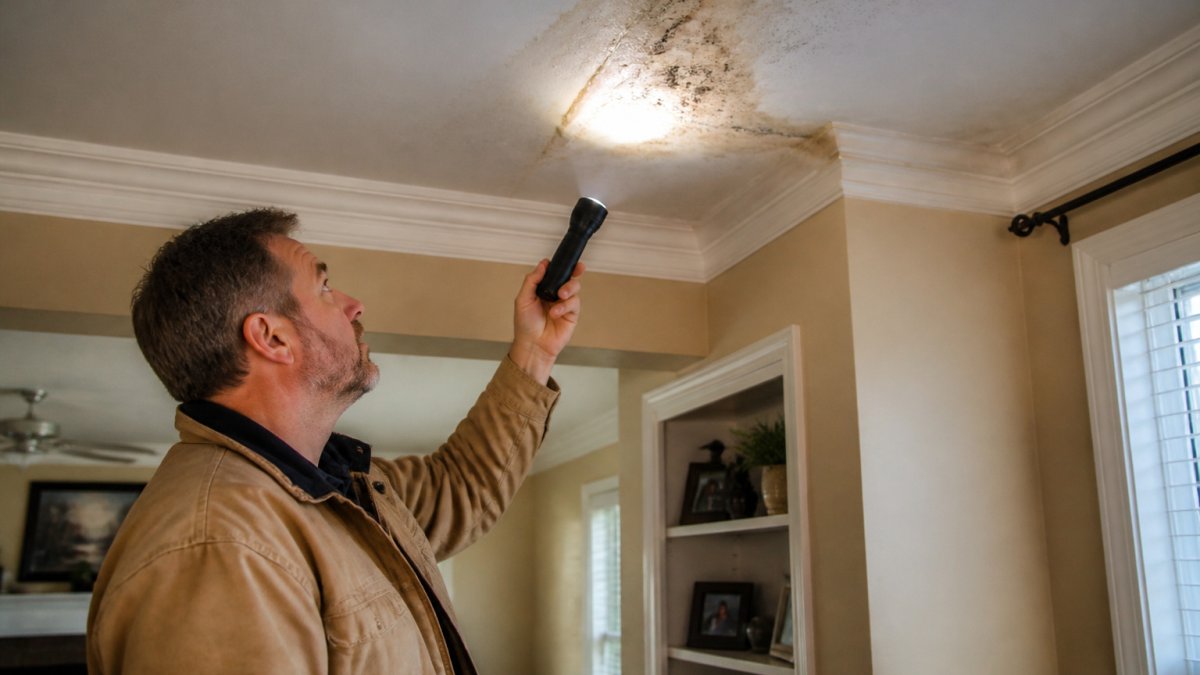
Roof leaks are a common example. Use this guide to estimating repair costs after inspection to gauge what deferred work may actually cost.
Foundation cracks follow a similar pattern. Hairline cracks are often cosmetic, but widening cracks or sticking doors may signal movement that needs professional evaluation.
How Deferred Maintenance Costs Grow Over Time
Deferred maintenance costs grow because damage compounds. Water finds a path, mold develops, wood rots, and electrical components corrode. Each stage makes the eventual repair larger and more disruptive.
A practical rule: the longer a moisture problem persists, the more likely it is to affect structural material.
The table below summarises how deferred repairs compound and which warning signs to act on first.
| Problem | Cause | Fix |
|---|---|---|
| Roof leak | Small shingle problem lets water into attic | Repair early before insulation, framing and drywall are damaged |
| Foundation cracks | Movement signalled by widening cracks or sticking doors | Get professional evaluation before structural repair costs grow |
| Water intrusion | Moisture persists and spreads | Treat any active leak as urgent, even if impact looks small |
| Deferred maintenance | Damage compounds over time | Each stage makes the eventual repair larger and more disruptive |
Building a Home Repair Priority List
A home repair priority list is not a wish list. Read a structured guide to ranking repair items for a step-by-step approach. For guidance on budgeting for capital expenditures found in an inspection, you can see how inspection findings translate into planned spending.
Start by sorting every known issue into four tiers, in this order:
- Safety and habitability: gas leaks, electrical hazards, missing smoke and carbon monoxide alarms, blocked combustion vents, handrails and guardrails, active roof leaks over living space
- Active water intrusion and structural movement: plumbing leaks, failed flashing, poor grading and drainage, foundation cracks that are widening, sticking doors and windows, sagging floors
- Systems at end of life: water heater, HVAC, roof covering, electrical panel, sewer line, anything a buyer’s inspector will flag as near-term replacement
- Cosmetic and convenience: paint, flooring wear, fixture updates, landscaping refresh
Work tier one first, then tier two, and only move to tier three once tiers one and two are stable. Cosmetic upgrades rarely recover their cost if a buyer’s inspector finds an unresolved structural or moisture problem, because the buyer discounts the cosmetic work and prices in the repair.
Repair-by-Repair Impact on Appraisal, Inspection and Offers
Each mistake has a different path to equity loss. A few common examples:
- An active roof leak shows up as attic staining, deteriorated decking, and sometimes elevated moisture readings. An inspector will call for further evaluation, and a buyer will typically ask for a credit or a price reduction that exceeds the cost of the repair, because the buyer is pricing in uncertainty.
- Poor grading and downspouts that discharge at the foundation create recurring dampness in basements and crawl spaces. This is one of the most common findings in older housing stock and one of the cheapest to correct early.
- A failed water heater or HVAC unit is a known near-term cost. Buyers and appraisers treat it as a deduction, not a negotiating point, especially when the unit is past its typical service life.
- Cosmetic wear, scuffed paint, worn carpet, dated fixtures, is the easiest to defer and the least likely to kill a deal. It affects perceived value but rarely triggers inspection findings.
Keep a written log with the date each issue was noticed, the date it was repaired, and the invoice. Buyers and their agents respond well to documented maintenance history, and it supports the condition disclosures you will sign at listing.
A Practical Order of Operations
A workable sequence for most homeowners:
- Stop active water intrusion and correct any safety hazard this week.
- Get professional evaluations for structural movement and roof condition within the month.
- Budget for systems at end of life over the next 12 to 24 months, before they fail.
- Schedule cosmetic work last, and only after the first three tiers are stable.
This order also protects you at appraisal. Appraisers weigh condition, age of major systems, and evidence of deferred maintenance. A home with a documented repair history and functioning systems supports a higher opinion of value than a cosmetically updated home with unresolved moisture or structural issues.
DIY Repairs and Poor Workmanship That Hurt Appraisals
Do-it-yourself projects can save money, but poorly executed work often costs more later.
Schedule an Inspection or Request a Proposal →
A common mistake is covering damage instead of fixing its source. A stain painted over without addressing the leak will return, and buyers will notice the patch.
If a DIY project affects structure, electrical, plumbing, or gas, consider a licensed professional. Poor workmanship in these systems can create safety hazards and can lower an appraisal.
Permits, Disclosure and Insurance Consequences of Unpermitted Work
Unpermitted work creates equity risk that many homeowners overlook, and it is one of the few repair mistakes that can follow a property through multiple sales. In most U.S. jurisdictions, structural, electrical, plumbing, and gas changes require a building permit and inspection by the local building department. Skipping that step leaves no record that the work was done to code, and that missing record is what buyers, lenders, and insurers react to.
What Unpermitted Work Does to a Sale
Unpermitted improvements can affect a transaction in several ways:
- Buyer due diligence: A buyer’s inspector may flag work that appears newer than the rest of the house, or work that lacks visible permits. Buyers then request removal, retroactive permitting, or a price reduction.
- Lender underwriting: Some loan programs require evidence that additions and major systems were permitted. A lender may decline to finance, or require the work to be permitted before closing.
- Appraisal: Appraisers value what is legally permitted and physically present. An unpermitted addition may not be counted in gross living area, which can reduce the appraised value below the contract price.
- Retroactive permitting: Many building departments allow a homeowner to permit existing work, but the process can require opening walls, correcting deficiencies, and paying fees and penalties. The cost often exceeds what permitting would have cost up front.
Insurance Complications
Homeowners insurance is written around disclosed conditions. If a claim arises from unpermitted work, a fire traced to unpermitted wiring, or water damage from an unpermitted bathroom, the insurer may investigate whether the work was permitted and inspected. Coverage disputes are common in these cases, and even when a claim is paid, the loss history can affect future premiums.
Before you buy a home with recent renovations, ask the seller for permits, inspection records, and contractor invoices. If the seller cannot produce them, treat the work as unpermitted until your building department confirms otherwise.
Disclosure Obligations
Most states require sellers to disclose known defects and, in many cases, known unpermitted improvements on a standard disclosure form. The exact requirements vary by state and by the form used, so check your state’s real estate commission guidance and your local building department before listing. Failing to disclose can expose a seller to legal claims after closing, and it can also complicate the buyer’s financing if the lender learns of the issue during underwriting.
How to Document Repairs and Protect Value
The best defense against these problems is a clean paper trail. Keep:
- Permits and final inspection sign-offs for any structural, electrical, plumbing, or gas work
- Contractor invoices, licenses, and warranties
- Before-and-after photos of major repairs
- Inspection reports and any follow-up repair documentation
This file supports buyer due diligence, demonstrates maintenance history, and gives an appraiser concrete evidence of condition and updates. It is also the record you will rely on when you complete your seller’s disclosure.
How Property Inspections Help Investors Spot Costly Problems
Investors face higher stakes because every repair cost reduces the return on a purchase. A property inspection for real estate investors identifies issues before the purchase closes, when negotiation use is greatest.
Independent inspection matters here. Learn more about why independent property inspections matter and what they add to a purchase decision. The full guide to property inspections for investors covers what to expect from each stage of the process.
Using a Home Maintenance Checklist for Investors
A home maintenance checklist for investors keeps recurring issues from becoming equity losses. Review these items at least twice a year:
- Roof surfaces, flashing, and gutters
- Foundation perimeter and drainage grading
- Plumbing joints, water heaters, and visible leaks
- HVAC filters, condensate lines, and ductwork
Log each inspection and repair with dates, photos, and invoices. Documentation supports higher resale prices and smoother appraisals.
Scheduling Your Next Inspection to Protect Property Value
Schedule a professional inspection before listing, before purchasing, and after any major storm or unexplained damage. Timing matters: an inspection before listing lets you fix problems on your terms, rather than in response to a buyer’s demands.
To book a comprehensive inspection, schedule an inspection or request a proposal from Full Disclosure Property Inspection. Your inspection report can become the roadmap for protecting the equity you have already built.
Frequently Asked Questions
What home repairs can lower property value?
Repairs that involve the roof, foundation, water intrusion, electrical systems and HVAC tend to have the greatest effect on value when neglected. Buyers and appraisers treat active leaks, cracked foundations and outdated electrical panels as deductions from price, and they often request credits or walk away. Cosmetic issues like worn paint matter less. Addressing structural and safety items first protects both sale price and the equity you have built. Document completed repairs with invoices and permits so a buyer or appraiser can verify the work was done properly.
Which home repairs should be prioritized first?
Start with anything that threatens the structure or allows water in, because those problems spread and multiply repair costs. Next address safety hazards such as electrical faults, gas leaks and failing railings. Mechanical systems that are near the end of their life come after that, followed by cosmetic items. A home repair priority list sorted by damage risk and cost of delay gives you a defensible order of work and helps you budget for the most important items first.
How do you estimate the cost of deferred maintenance?
Estimate deferred maintenance costs by listing each item, its current condition and the age of the component. Compare the cost of repairing now with the projected cost after another one to three years of deterioration, including secondary damage such as rot or mold. Get two or three written quotes from licensed contractors. A property inspection report that identifies and dates each defect gives you a reliable baseline for these estimates, which is especially useful when negotiating a purchase price.
Should you repair a home before selling it?
Repair items that buyers will find during inspection, especially active leaks, safety hazards and failing major systems, because these tend to trigger price reductions or repair requests that cost more than the repair itself. Cosmetic upgrades should be weighed carefully, since they rarely recover their full cost at sale. A pre-listing inspection lets you see what a buyer’s inspector will likely report so you can decide which repairs are worth making before listing.
Full Disclosure Property Inspection, led by Certified Master Inspector Melanie Crabtree, helps buyers, sellers, and investors in the greater Chattanooga area identify problems early. Our detailed, computer-generated reports highlight the repairs that matter most, so you can protect your investment with confidence.


