Table of Contents
- Why Electrical Hazards Top the List of Inspection Findings
- Faulty Wiring, Overloaded Circuits, and Panel Problems
- Double-Tapped Breaker Home Inspection Findings
- Missing GFCI Outlets Home Inspection Red Flags
- Exposed Wires, Damaged Outlets, and Water Intrusion
- Your Home Inspection Electrical Checklist: What to Inspect and What to Leave Alone
- From Home Inspection Report Electrical Repairs to a Safe Closing
- Frequently Asked Questions
Last Updated: October 19, 2026
Why Electrical Hazards Top the List of Inspection Findings
Electrical hazards are a common safety issue found during a home inspection, and they show up in new builds as often as older homes.
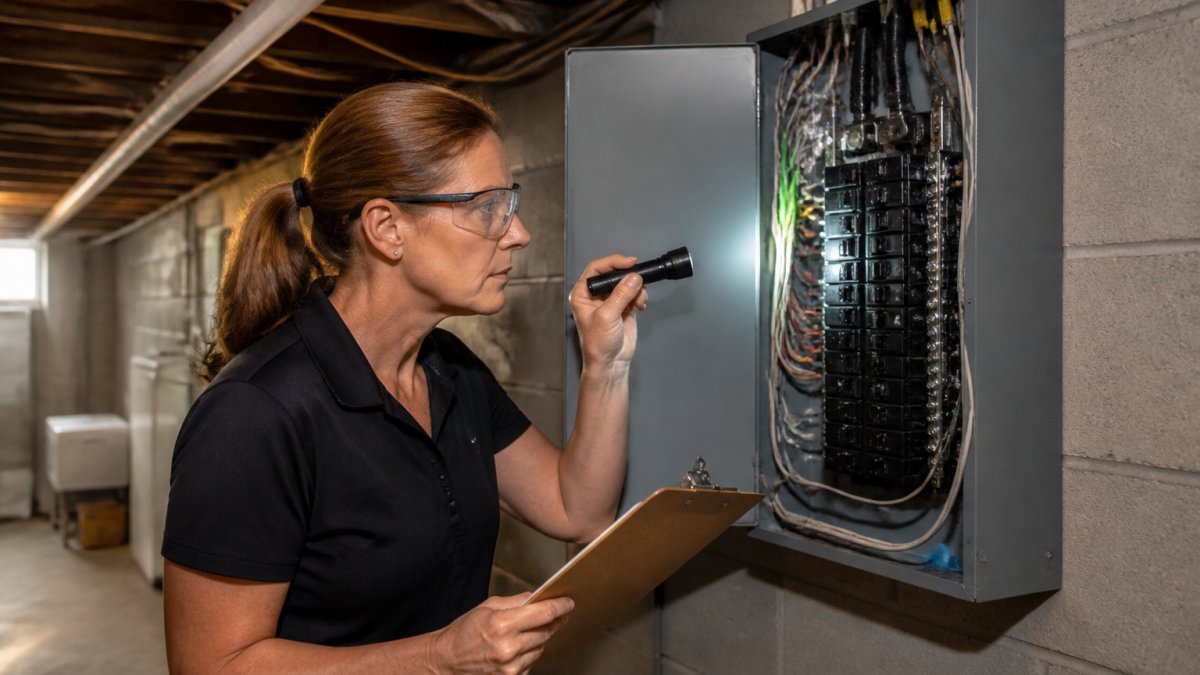
Electricity is the one system in a house that fails invisibly.
The U.S. Fire Administration tracks electrical fire causes each year, and the pattern holds: faulty wiring, overloaded circuits, and loose connections stay near the top.
Here is the part most buyers miss. An electrical defect on a report is not a deal-breaker.
Electrical findings rank high on inspection reports because they are invisible, common, and genuinely dangerous when ignored. Severity, not quantity, should drive your response.
Faulty Wiring, Overloaded Circuits, and Panel Problems
Faulty wiring is any wiring that is damaged, deteriorated, or installed in a way that cannot safely carry current, the broadest category of electrical hazard, covering everything from aged insulation to amateur DIY work.
Outdated or Insufficient Electrical Panels
The service panel is the heart of the electrical system. An outdated or undersized panel cannot safely handle modern demand, and that gap creates real fire risk.
Older fuse panels are the classic example. Many were built for a fraction of the load a house carries today, so adding central air, a heat pump, or an EV charger is asking for trouble.
Watch for these panel problems:
- Fuse panel still in service with no upgrade history
- Panel rated below the home’s actual load
- Unpermitted work inside the panel with no labels
- Rust, scorching, or moisture damage on the enclosure
A panel that is full, hot to the touch, or buzzing needs a licensed electrician, not a second opinion from a neighbor.
Overloaded Circuits and Electrical Fire Risk
An overloaded circuit carries more current than its breaker and wiring are rated for. The breaker should trip before the wire overheats, but that protection fails when breakers are mismatched or bypassed.
Common signs of an overloaded circuit:
- Breakers that trip repeatedly
- Flickering lights when appliances start
- Warm or discolored outlet covers
- An unusual smell near outlets or the panel
Never replace a tripping breaker with a larger one to “fix” the problem. The breaker is doing its job. Upsizing it removes the safety limit and lets the wiring overheat, which is how electrical fires start.
Double-Tapped Breaker Home Inspection Findings
A double-tapped breaker has two wires connected to a single terminal designed for one. It is one of the most frequent findings on an inspection report, and a genuine fire risk.
The two wires rarely sit evenly under the screw. One connection loosens over time, heats up, and arcs, damaging the breaker and the wire insulation around it.
Double-tapped breakers usually appear in three places:
- Kitchen and garage circuits added after the fact
- Panel upgrades where a circuit was moved instead of added
- DIY electrical work done without a permit
Some breakers are listed for two conductors. Most are not.
Missing GFCI Outlets Home Inspection Red Flags
A GFCI outlet is a ground-fault circuit interrupter, a device that cuts power when it senses current leaking to ground. Missing GFCI outlets are a top red flag because they protect people, not just property.
Where GFCIs are expected:
- Kitchens and bathrooms
- Garages and unfinished basements
- Outdoors and near pools
- Laundry areas and near sinks
- Crawl spaces and boathouses
The absence of GFCI protection near water is a shock risk, especially for children and anyone using appliances on a wet floor. An ungrounded receptacle in those same spots compounds the problem, because the grounding path that would normally clear a fault is missing too.
GFCI versus AFCI: different devices, different jobs
A GFCI protects people from shock. An AFCI, arc-fault circuit interrupter, protects against the parallel and series arcs that start fires in aging wiring. Modern panels often use dual-function breakers that provide both. If a report flags a missing GFCI in a kitchen but says nothing about AFCI protection on bedroom circuits, that is not an oversight; the two requirements come from different code cycles and cover different rooms.
Why missing GFCI ranks high on the urgency scale
A missing GFCI near a sink or in a garage is a shock hazard, not a fire hazard, and the injury can happen on the first use, which puts it in the prompt-repair category.
Testing is simple. Press the test button on each GFCI. It should click off. Press reset and it should restore power. If it does not trip or will not reset, the device has failed and needs replacement.
A GFCI that trips repeatedly is not necessarily defective. It may be sensing a real ground fault in a downstream appliance or a moisture problem in an exterior outlet. Do not replace the device to stop the tripping until an electrician has checked the circuit.
Missing GFCI protection near water is a prompt-repair item because it protects people on first use, the fix is inexpensive, and code requirements vary by jurisdiction and adoption year.
Exposed Wires, Damaged Outlets, and Water Intrusion
Exposed wires and damaged outlets are hazards homeowners can often spot without tools. Water intrusion near electrical equipment hides best and does the most damage.
Schedule an Inspection or Request a Proposal →
Look for these during a walkthrough:
- Exposed wire at open junction boxes with no cover plate
- Damaged outlet with cracks, scorch marks, or a loose fit
- Ungrounded receptacle with a two-prong outlet where a three-prong is expected
- Moisture damage or rust around the service panel
- Water intrusion near exterior outlets or basement fixtures
Loose connections and improper installation sit behind these visible clues. A fixture that flickers or a switch that feels warm points to a connection that was never tightened properly.
Infrared thermal imaging shows temperature differences behind walls and inside panels. It reveals hot spots from loose connections and overloaded circuits that a visual inspection alone cannot see. We include it free with every fee-paid inspection.
Your Home Inspection Electrical Checklist: What to Inspect and What to Leave Alone
This home inspection electrical checklist separates what you can safely check yourself from what requires a licensed electrician, and adds the piece most checklists leave out: a severity and urgency framework so you know which findings to act on first.
Safe for homeowners to check:
- Test each GFCI outlet with its test button
- Note any breaker that trips repeatedly
- Look for cracked or discolored outlet covers
- Confirm every junction box has a cover plate
- Check for rust or water stains at the service panel
- Listen for buzzing at outlets and fixtures
- Note flickering lights when appliances start
- Confirm smoke and carbon monoxide alarms are present and test them
Leave to a licensed electrician:
- Removing the service panel cover
- Any work inside the panel or on breakers
- Chasing down loose connections behind walls
- Replacing or rewiring outlets and fixtures
- Grounding and bonding checks
- Any repair to exposed wire
- Verifying breaker-to-wire sizing and manufacturer listings
Severity and urgency: how to prioritize what the report flags
Not every electrical finding carries the same weight. A practical way to sort them is into three tiers.
Immediate attention, address before occupancy or before closing:
- Scorching, burning smell, or heat at the panel or an outlet
- Exposed live conductors at an open junction box
- Water intrusion or active moisture at the service panel
- A breaker that will not reset or trips immediately
- Missing GFCI protection at a bathroom, kitchen, or exterior outlet in active use
Prompt repair, schedule within weeks:
- Double-tapped breaker on a circuit not listed for two conductors
- Ungrounded three-prong receptacles
- Outdated fuse panel with no upgrade history
- Damaged outlet or switch plates with exposed wiring
- Missing cover plates on junction boxes in dry locations
Routine follow-up, monitor and plan:
- A single ungrounded receptacle in a low-use area
- Panel at or near capacity with no current symptoms
- Older wiring with intact insulation and no evidence of overheating
- Missing AFCI protection on circuits where local code does not require it
What a standard inspection can and cannot verify
An inspection is a visual, non-invasive safety inspection. It cannot see inside walls, verify conductor size behind drywall, or predict every failure. A standard inspection typically does not remove panel dead-fronts beyond what is safely accessible, perform insulation resistance testing, or open devices. That scope limit is why the report flags conditions, not guarantees, and why “evidence of overheating” is a prompt to get a licensed electrician’s evaluation rather than a final diagnosis.
Documenting a finding and confirming the fix
When a report flags an electrical hazard, the follow-up matters as much as the finding. Ask the seller for the electrician’s written evaluation, not a verbal assurance, and request documentation of permits where the jurisdiction requires them for panel changes or new circuits. After the work is complete, confirm the corrective scope matches the original finding, for example, that a double-tapped breaker was corrected by adding a breaker or moving a circuit, not by tightening the existing connection.
| Hazard | Severity | Who Should Handle It |
|---|---|---|
| Double-tapped breaker | High | Licensed electrician |
| Missing GFCI near water | High | Licensed electrician |
| Overloaded circuit | High | Licensed electrician |
| Outdated fuse panel | Medium to high | Licensed electrician |
| Exposed wire at junction box | Medium | Licensed electrician |
| Damaged outlet cover | Low | Homeowner or electrician |
Photograph every finding you plan to negotiate, including the panel label and the breaker in question. A clear photo paired with the inspector’s narrative is far more persuasive than a line item alone.
Sort electrical findings into immediate, prompt, and routine tiers, document each one, and confirm corrective work with a licensed electrician’s written record, that is how a checklist becomes a safe closing.
From Home Inspection Report Electrical Repairs to a Safe Closing
Turning a home inspection report electrical repairs list into a safe closing takes a clear process. The goal is a documented repair, not a promise.
Here is how to handle it:
- Sort findings by severity. Urgent safety items first, cosmetic notes last.
- Get written quotes from licensed electricians for each repair.
- Negotiate a credit or a completed repair before closing.
- Request documentation of the work, including permits where required.
- Re-inspect the completed repairs before you sign.
Unpermitted work is the snag that trips up closings. If a repair was done without a permit, ask for proof it was corrected and inspected.
The U.S. Consumer Product Safety Commission publishes guidance on electrical safety in the home that is worth reading before you close.
This is where a detailed report pays for itself.
A repair is only complete when it is documented, permitted where required, and re-inspected. Verbal promises do not close the loop.
Frequently Asked Questions
What are the most common electrical problems found during a home inspection?
Inspectors most often flag double-tapped breakers, missing GFCI protection in kitchens and baths, outdated two-prong outlets, exposed wiring in junction boxes, and panels that are undersized for modern demand. Loose connections and moisture near fixtures also appear frequently. Each of these electrical hazards carries a different urgency, which is why a report should rate severity rather than list defects equally.
Are double-tapped breakers dangerous?
A double-tapped breaker has two wires connected to a terminal designed for one. The second wire often works loose, creating heat and arcing that can start a fire. It is not automatically an emergency, but it is a defect that needs correction by a licensed electrician. A double-tapped breaker home inspection finding should be repaired before closing, not deferred indefinitely.
Where should GFCI outlets be installed in a home?
GFCI protection is required in bathrooms, kitchens, laundry areas, garages, unfinished basements, outdoors, and near pools or spas. Missing GFCI outlets home inspection findings are common in older homes built before these requirements were adopted. Adding GFCI receptacles is a relatively low-cost repair that meaningfully reduces shock risk.
What should I do if a home inspection finds electrical hazards?
Prioritize findings by severity: exposed live wires and overheating panels first, missing GFCI protection and double-tapped breakers next. Get quotes from licensed electricians for the home inspection report electrical repairs, then negotiate credits or repairs with the seller. Do not attempt DIY fixes on panel or wiring defects; unpermitted work can complicate insurance and future sales.
Electrical hazards are the findings most likely to cost you money or safety after closing, and the report is only useful if you act on it with a clear plan. Full Disclosure Property Inspection brings infrared thermal imaging, a Certified Master Inspector’s eye, and detailed computer-generated reports to every inspection, so you can separate urgent repairs from minor notes and negotiate with confidence. Schedule an Inspection or Request a Proposal and get the full picture before you sign.


