Table of Contents
- Understanding Common Electrical Hazards in Older Homes
- Identifying Signs of Faulty Electrical Wiring
- Recognizing Overloaded Circuit Warning Signs
- Outdated Wiring Types: Knob-and-Tube and Aluminum Wiring
- Electrical Safety Inspection Checklist for Older Properties
- When to Call an Electrician for Electrical Problems
- Electrical Panel and Capacity Issues in Older Homes
- Safe Boundaries: What Homeowners Can and Cannot Do
- Frequently Asked Questions
Last Updated: October 10, 2026
Understanding Common Electrical Hazards in Older Homes
Older homes carry electrical risks that newer construction typically doesn’t. The wiring, panels, and circuits installed decades ago weren’t designed for today’s power demands. Understanding electrical hazards older homes present is the first step toward protecting your family and your investment.
At Full Disclosure Property Inspection, we’ve seen firsthand how aging electrical systems fail. The good news: most hazards are identifiable before they become dangerous.
Why older electrical systems pose greater risk
Electrical systems degrade over time. Wiring insulation cracks and hardens. Connections loosen. Panels designed for 60 amps get asked to handle 200 amps worth of devices.
Older homes typically have one or more of these vulnerabilities:
- Wiring installed 50+ years ago with deteriorated insulation
- Electrical panels undersized for modern appliance loads
- Two-prong outlets instead of three-prong grounded outlets
- Outdated circuit breaker designs that fail to trip properly
- Aluminum wiring that oxidizes and creates fire hazards
The real danger isn’t one problem. It’s the combination. An overloaded circuit plus degraded wiring plus an undersized panel creates a perfect storm for electrical fires.
Identifying Signs of Faulty Electrical Wiring
Visual clues tell you when wiring is failing. Physical sensations and sounds do too. Learning to spot these warning signs can prevent disaster.
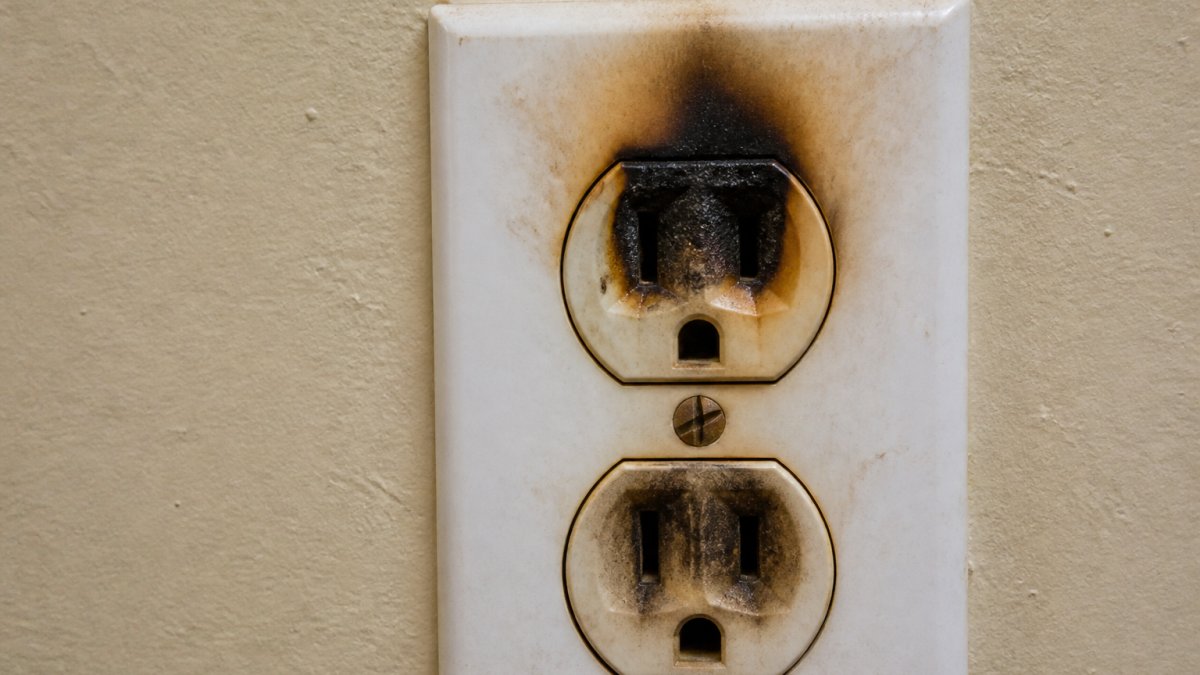
Visual clues to inspect
Look for these specific indicators when checking outlets and switches:
- Discolored or darkened outlets: Black or brown stains around outlet plates signal heat damage or arcing
- Melted or warped outlet covers: Plastic that’s bent or melted means excessive heat
- Visible burn marks: Charring on the wall around outlets indicates serious problems
- Loose or cracked outlet plates: These allow dust and moisture to enter, creating fire risk
- Outlets that don’t fit plugs snugly: Loose connections generate heat
Check behind furniture and in closets. Outlets hidden from view often show the worst damage.
Physical sensations and sounds that signal problems
Trust your senses. Your body detects problems your eyes might miss.
A warm outlet is abnormal. If you touch an outlet and it’s hot, turn off the circuit immediately and call an electrician. Never ignore this warning sign.
Buzzing or humming sounds from outlets, switches, or the electrical panel mean something is arcing or vibrating loose.
Burning smells near outlets or the panel demand immediate attention. This smell indicates insulation failure or wire damage. Don’t wait. Cut power to that circuit and get professional help.
A tingling sensation when you touch an outlet, switch, or appliance means the outlet is not properly grounded. This is a serious electrocution hazard, especially in bathrooms or kitchens. Turn off the circuit and call an electrician immediately.
Recognizing Overloaded Circuit Warning Signs
Circuits have limits. When you exceed them, the system fails.
Overloaded circuits trip breakers repeatedly or blow fuses. This is your electrical system’s safety mechanism working, but it’s also a sign of deeper problems.
Flickering or dimming lights when appliances turn on indicate voltage drop from overload.
Here’s what’s actually happening: when demand spikes, voltage to other circuits drops. Lights dim.
Signs of an overloaded circuit:
- Breaker trips multiple times per month
- Lights flicker when the refrigerator or HVAC kicks on
- Outlets feel warm to the touch
- Burning smell near the electrical panel
- Fuses blow instead of breakers tripping
- Multiple devices on one outlet causing dimming lights
Electrical hazards older homes face often stem from insufficient circuits. One circuit might serve an entire bedroom.
If you’re using extension cords as permanent solutions, your electrical system is telling you it’s overloaded. Extension cords are temporary only. Permanent solutions require adding circuits or upgrading your panel.
Outdated Wiring Types: Knob-and-Tube and Aluminum Wiring
Two wiring types common in older homes pose specific hazards.
Knob-and-tube wiring hazards
Knob-and-tube wiring was standard in homes built before 1950. It consists of individual wires run through ceramic knobs and tubes that space the wires apart.
This system has critical flaws:
- Insulation hardens and cracks after 50+ years
- No ground wire for safety
- Vulnerable to moisture damage
- Cannot handle modern electrical loads
- Fire risk when insulation fails
- Insurance companies often refuse to cover homes with knob-and-tube wiring
If you see cloth-wrapped wires in your attic, you likely have knob-and-tube. The ceramic knobs and tubes are distinctive. This wiring needs replacement, not repair.
Some insurance companies and lenders may have concerns about homes with active knob-and-tube wiring, which can create financial consequences.
Aluminum wiring risks
Aluminum wiring was used in the 1960s and 1970s as a copper substitute. It has a fatal flaw: aluminum oxidizes.
When aluminum oxidizes, it creates a poor connection. Poor connections generate heat. Heat creates fire risk.
Aluminum wiring problems:
- Oxidation increases electrical resistance over decades
- Connections loosen as aluminum expands and contracts
- Creates hot spots at connection points
- Fire risk increases significantly over time
- Difficult to work with for electricians
- Incompatible with standard copper connections
You can identify aluminum wiring by looking at exposed wires in the attic or basement. Aluminum is silver-colored. Copper is reddish-brown.
The fix for aluminum wiring involves either replacing it with copper or using special connectors at all connection points. This is not a DIY project.
Electrical Safety Inspection Checklist for Older Properties
You can safely inspect some things yourself. Other areas require a professional.
What you can safely inspect yourself
Walk through your home and check these items. You don’t need special tools, just your eyes and common sense.
Schedule an Inspection or Request a Proposal →
Outlets and switches:
- Check for discoloration, burn marks, or warmth
- Look for loose or cracked covers
- Test that three-prong outlets aren’t being used with two-prong adapters
- Verify that outlets in bathrooms and kitchens have GFCI protection (reset buttons)
Visible wiring:
- Look in the attic for cloth-wrapped wires (knob-and-tube) or silver wires (aluminum)
- Check for wires touching insulation or stored items
- Look for rodent damage to wire insulation
Electrical panel:
- Check that the panel door closes properly
- Look for rust or corrosion
- Verify that breakers are labeled
- Check that the main disconnect is accessible
Extension cords:
- Look for damaged cords or overloaded outlets
- Check for cords running under carpets or through walls
- Identify temporary setups that should be permanent circuits
Inspection checklist for older homes:
| Item | What to Check | Safe for Homeowner |
|---|---|---|
| Outlets | Discoloration, warmth, loose covers | Yes |
| Switches | Burn marks, loose plates, warmth | Yes |
| Visible wiring | Cloth wrap, silver color, damage | Yes |
| Electrical panel | Door closure, rust, labeling | Visual only |
| Cords | Damage, proper routing, overload | Yes |
| GFCI outlets | Reset buttons, proper function | Yes |
Areas requiring professional assessment
Never open the electrical panel yourself. Never test circuits with tools. Never work inside walls or attic spaces where you can’t see all hazards.
A licensed electrician should evaluate:
- The electrical panel capacity and condition
- All wiring inside walls or conduit
- Grounding and bonding systems
- Proper circuit sizing and load distribution
- Code compliance for your area
- Aluminum wiring connections
- Knob-and-tube wiring safety
Professional electricians have tools and training to safely assess what you cannot. They can identify hidden hazards in walls and behind panels.
When to Call an Electrician for Electrical Problems
Some electrical issues demand immediate professional attention. Others can wait for a scheduled appointment.
Immediate hazards requiring emergency response
Stop using affected circuits immediately and call an electrician today:
- Burning smell from outlets, switches, or the panel
- Outlets or switches that are hot to the touch
- Visible sparks or arcing
- Tingling sensation when touching outlets or appliances
- Water damage near the electrical panel or outlets
- Melted outlet covers or charred walls
- Breaker that won’t reset or keeps tripping immediately
These are fire and electrocution hazards. Don’t delay.
Non-emergency issues that still need professional attention
Schedule an appointment within days or weeks:
- Frequent breaker trips (more than once per month)
- Flickering or dimming lights
- Outlets that don’t hold plugs securely
- Two-prong outlets in kitchen or bathroom
- Aluminum wiring discovered during inspection
- Knob-and-tube wiring visible in attic
- Electrical panel that’s outdated or undersized
- Home older than 50 years with original wiring
These problems won’t cause immediate danger but will worsen over time. Professional assessment prevents future emergencies.
The difference between emergency and routine is simple: if it involves heat, sparks, smell, or physical sensation, it’s emergency. If it’s just inconvenient or inefficient, it can wait a few days for professional diagnosis.
Electrical Panel and Capacity Issues in Older Homes
The electrical panel is your home’s main defense against overload. Older panels often can’t meet modern demands.
Most homes built before 1980 have 60-amp or 100-amp service. Modern homes typically have 200-amp service.
Today’s homes have dozens of high-draw devices. Air conditioners, electric water heaters, heat pumps, and charging stations didn’t exist when your panel was installed.
Signs your panel is undersized:
- Frequent breaker trips during high-demand times
- Inability to run multiple appliances simultaneously
- Dimming lights when major appliances activate
- Breakers that are double-tapped (two wires connected to one breaker)
- Fuses instead of circuit breakers
- Panel that’s hot to the touch
- Age of 40+ years
Upgrading the electrical panel is a major project. It requires a licensed electrician and permits. It’s also essential for safety and property value.
Safe Boundaries: What Homeowners Can and Cannot Do
Know your limits. Electrical work has strict safety and legal boundaries.
You can:
- Inspect outlets, switches, and visible wiring
- Replace outlet covers and switch plates
- Use surge protectors (temporary, not permanent)
- Turn off breakers at the panel
- Keep records of electrical issues
You cannot:
- Open the electrical panel
- Install new outlets or switches
- Run new circuits or wiring
- Upgrade the electrical service
- Work on wiring inside walls
- Modify grounding or bonding systems
- Repair the main disconnect or meter
Electrical code violations create liability. Insurance won’t cover damage from unpermitted work. Future buyers will discover the problems during inspection.
When in doubt, call a licensed electrician. The cost of professional work is far less than the cost of fire damage, electrocution injury, or legal liability.
Electrical hazards in older homes are real, but they’re manageable with knowledge and professional help. At Full Disclosure Property Inspection, we use advanced tools like thermal imaging to identify problems you can’t see.
If you’re buying, selling, or investing in an older property, a comprehensive inspection reveals hidden electrical issues before they become expensive or dangerous. We recommend scheduling an inspection before making major decisions. The National Electrical Code provides standards for safe electrical systems, and a licensed inspector ensures your home meets current safety requirements.
Schedule an inspection with Full Disclosure Property Inspection and get peace of mind knowing your electrical system has been thoroughly evaluated by a Certified Master Inspector.
Frequently Asked Questions
What are the most common electrical hazards in older homes?
Older homes frequently contain knob-and-tube wiring, aluminum wiring, outdated electrical panels with insufficient capacity, and overloaded circuits. These hazards create fire risk and electrocution risk. Additionally, two-prong ungrounded outlets, deteriorating wiring insulation, and overheating wires are common in properties built before modern electrical codes were established. A licensed electrician can identify these hazards during a professional electrical inspection.
How can I tell if there are signs of faulty electrical wiring in my home?
Look for warm or hot outlets and switches, discolored or scorch-marked outlets, a burning smell near electrical fixtures, and visible damage to wiring insulation. Listen for buzzing or crackling sounds from outlets or the electrical panel. Flickering or dimming lights, frequent breaker trips, and blown fuses are also warning signs. If you notice any of these symptoms, stop using that outlet or switch and contact a licensed electrician immediately.
What should I do if an outlet or switch feels warm to the touch?
A warm outlet or switch is a serious warning sign and should never be ignored. Stop using that outlet immediately and unplug any devices connected to it. Do not attempt to repair it yourself. Contact a licensed electrician as soon as possible to inspect the outlet and identify the underlying cause, which could be a short circuit, overloaded circuit, or faulty wiring. Warm outlets pose a fire risk and electrocution hazard.
When should I hire a professional for an electrical safety inspection checklist?
Schedule a professional electrical inspection before purchasing an older home, when buying investment properties, or if you notice any warning signs like frequent breaker trips, flickering lights, or burning smells. A licensed electrician can perform a comprehensive assessment that homeowners cannot safely complete, including testing grounding, checking circuit capacity, and evaluating the condition of wiring insulation. Professional inspections provide the detailed findings needed to make informed decisions about repairs or upgrades.


