Table of Contents
- How Home Inspectors Find Hidden Defects
- Material Defects Defined: What Counts and What Doesn’t
- Home Inspection Limitations: Why Some Problems Stay Out of Sight
- The Hidden Defect Hit List: Where Problems Actually Hide
- Specialized Inspection Add-Ons That Go Deeper
- Questions to Ask Your Home Inspector Before You Hire
- What to Do When a Defect Surfaces After Closing
- Frequently Asked Questions
Last Updated: September 14, 2026
How Home Inspectors Find Hidden Defects
The short answer is yes, but with real limits. A home inspector can find hidden defects, provided they are observable, accessible, and within the scope of a visual, non-invasive inspection. This guide from Full Disclosure Property Inspection explains what a thorough inspection can realistically uncover, where problems tend to hide, and what to do when something surfaces after closing.
The distinction matters because “hidden” is not one category. Some defects are concealed behind drywall or under insulation. Others are hiding in plain sight, and a trained eye catches them in seconds. The tool set determines which problems get found.
What Tools Actually Help
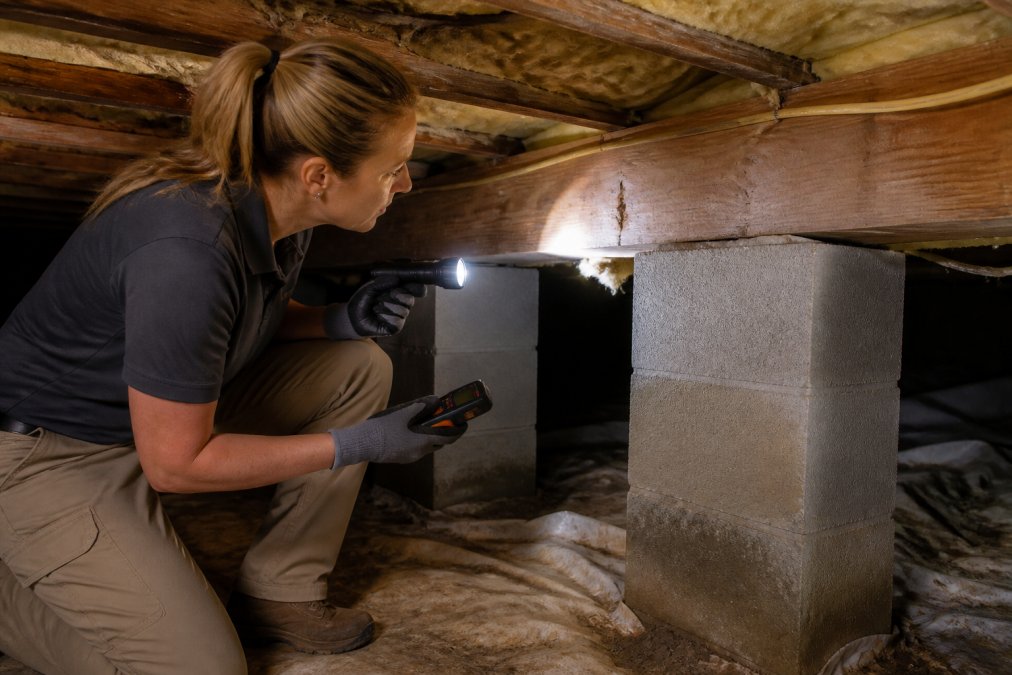
Standard equipment includes flashlights, moisture meters, outlet testers, and ladders. Those basics locate most visible problems. Infrared thermal imaging changes the equation by reading surface temperature differences that reveal moisture intrusion behind finished walls, missing insulation in an attic, and overheating electrical components before they fail (energy.gov).
A moisture meter confirms what the camera suggests. An outlet tester checks grounding and polarity at receptacles. None of these tools see through solid concrete, and none of them evaluate what is buried underground.
Thermal imaging works best when there is a temperature differential across the building envelope. An inspection scheduled in the late afternoon on a hot day, or early morning in winter, produces clearer images than a mild afternoon when indoor and outdoor temperatures sit close together.
Material Defects Defined: What Counts and What Doesn’t
A material defect is a condition that significantly affects the value, safety, or intended use of a property, or that presents an unreasonable risk to people on the premises. That definition comes from the ASHI Standard of Practice and similar professional standards, and it is narrower than most buyers assume.
Loose cabinet hardware is not a material defect. A foundation crack that allows water into a crawl space is. The gap between the two is where expectations get set, and where a good inspection report earns its value by separating cosmetic items from conditions that carry real remediation costs.
- Safety hazards: exposed wiring, gas leaks, missing stair rails
- Structural concerns: foundation settlement, compromised framing, roof deflection
- Major systems: HVAC performance, plumbing leaks, electrical service capacity
- Moisture and environmental issues: active leaks, mold growth, poor drainage
Home Inspection Limitations: Why Some Problems Stay Out of Sight
Home inspection limitations fall into three categories: what the inspector cannot access, what the inspector cannot damage, and what the inspector cannot predict. Understanding these constraints before you hire prevents the frustration of discovering them afterward.
The Non-Invasive Constraint
A home inspection is a non-invasive, visual examination of readily accessible systems and components. That phrase comes straight from professional standards of practice, and every word in it carries weight:
- Non-invasive means the inspector does not open walls, pull up flooring, excavate soil, dismantle equipment, or move the seller’s personal belongings. Furniture, rugs, stored boxes, and appliances stay where they sit.
- Visual means the inspector relies on what can be seen, touched, and operated with normal controls, not on laboratory testing, destructive sampling, or X-ray vision.
- Readily accessible means the inspector evaluates what can be reached without special equipment, climbing over stored items, or entering spaces that are unsafe or too small to enter.
This constraint is deliberate. It protects the property, limits the inspector’s liability, and keeps the inspection affordable. It also means a defect sealed behind a finished surface can go undetected even when the inspector is thorough.
What the Constraint Looks Like in Practice
A few concrete examples make the boundary clear:
- A slow supply-line leak inside a wall cavity shows up as a faint stain on drywall months later. The inspector sees the drywall, not the pipe.
- A cracked heat exchanger inside a furnace is a serious safety concern, but confirming it typically requires dismantling the unit, outside the scope of a standard inspection. A technician with a combustion analyzer is the right call.
- A sewer line that has settled and formed a belly holds water and eventually backs up. Nothing visible above grade reveals it; only a camera run through the pipe does.
- A roof covered in two feet of snow cannot be walked or fully evaluated. The inspector notes the limitation and recommends re-inspection when conditions allow.
What That Means for You
The inspection reduces risk; it does not eliminate it. A seller’s property condition disclosure, combined with the inspection report, gives you two independent sources of information about the same property, and neither is a guarantee. The realistic goal is to shrink the unknown to a size you can price.
If a defect is important enough to worry you and it lives behind a finished surface, underground, or inside a sealed component, a standard inspection will not resolve it. That is the signal to bring in a specialist before your contingency period ends.
Three Limits That Are Not About Access
Access is only part of the story. Two other limits matter:
- What the inspector cannot predict. A roof that looks serviceable today can fail next season. An HVAC system that cycles correctly during the inspection can fail the following month. Inspectors report conditions, not futures.
- What the inspector cannot damage. Even when a problem is suspected, an inspector will not cut, pry, or disassemble to confirm it. The recommendation is always to defer to a licensed specialist.
- What the seller conceals. Staged rooms, freshly painted basement walls, and furniture placed over damaged flooring are common patterns. A visual inspection cannot see through intentional concealment, that is a disclosure and legal issue, not an inspection one.
The Hidden Defect Hit List: Where Problems Actually Hide
Problems cluster in predictable places. Knowing where to look helps you read a report and ask better follow-up questions.
Schedule an Inspection or Request a Proposal →
| Location | What Hides There | Why It’s Missed |
|---|---|---|
| Crawl space | Moisture intrusion, wood rot, plumbing leaks | Limited access, standing water |
| Attic | Insulation gaps, roof deck staining, exhaust leaks | Restricted movement, low clearance |
| Electrical panel | Double-tapped breakers, undersized service | Cover must be removed |
| Behind finished walls | Hidden leaks, missing insulation | Non-invasive scope |
| Foundation | Settlement cracks, drainage failures | Grading obscures evidence |
Specialized Inspection Add-Ons That Go Deeper
A standard inspection covers the major systems. Add-on services extend the scope into areas the base inspection cannot reach, and they are worth the extra time when the property or your risk tolerance calls for it.
- Sewer scope: A camera run through the main line reveals root intrusion, bellies, and collapsed pipe, none of which a visual inspection can see.
- Radon testing: Radon is invisible and odorless. Testing is the only way to know whether mitigation is needed.
- Mold and air quality sampling: Useful when moisture readings or visible staining suggest a chronic problem.
- Chimney and fireplace evaluation: Masonry and flue liners deteriorate in ways that require a dedicated look.
- Well and septic inspection: For properties on private systems, these are separate evaluations with their own standards.
Questions to Ask Your Home Inspector Before You Hire
The right questions reveal whether an inspector will give you an independent, useful opinion or a checklist that leaves you guessing.
- What does your inspection include, and what costs extra?
- Do you use thermal imaging, and is it included or an add-on?
- What is your background before inspection work?
- How soon will I receive the report, and what format is it in?
- Will you walk me through the findings in plain language?
- What happens if you miss something?
The answer to that last question separates professionals. At Full Disclosure Property Inspection, our reports are detailed and computer-generated, and we walk buyers through what actually matters versus what is minor. Melanie Crabtree, our Certified Master Inspector, brings a general contracting and land development background to every inspection, which shapes how findings get explained.
What to Do When a Defect Surfaces After Closing
A defect discovered after closing is not automatically a dead end, but your options depend on what kind of defect it is, what the seller knew, and how much time has passed. The distinction that drives most outcomes is latent versus patent.
Latent defects are hidden conditions that a reasonable inspection would not have revealed, a sewer line that collapsed two months after closing, a roof leak that only appears after a hard rain. Patent defects are observable to a careful buyer or inspector, a cracked driveway, a stained ceiling, a missing handrail. Patent defects are generally the buyer’s responsibility once the sale closes, because they were there to be seen. Latent defects are where legal recourse lives, and a state consumer protection guidance on property disclosure can help you understand what sellers in your situation are required to disclose.
The First 72 Hours After You Find Something
Speed matters because evidence degrades and deadlines run. A practical sequence:
- Stop and document. Photograph the defect from multiple angles, note the date you first observed it, and save any contractor invoices or written assessments. Do not begin repairs before documenting.
- Re-read the inspection report and the seller’s disclosure. Search both for any mention of the area or system. If the inspector flagged it as a limitation or recommended further evaluation, that changes your position. If the seller’s disclosure said ‘no known issues’ and you can show they knew, that changes it more.
- Get a written opinion from a licensed specialist in the relevant trade, a plumber for a sewer failure, a roofer for a leak, a structural engineer for foundation movement. A specialist’s report carries far more weight than your own observation.
- Check your inspector’s errors and omissions (E&O) coverage. Most professional inspectors carry it, and it exists precisely for missed-defect claims. Contact the inspector in writing and give them a chance to respond before you escalate.
- Consult a real estate attorney if the remediation cost is significant or the seller appears to have concealed a known condition. Many offer a short initial consultation at low or no cost.
Negotiating Before You Close: The Option Period Playbook
The strongest position you will ever have is the one you hold while your inspection contingency is still open. Once you close, your leverage drops sharply. If the defect surfaces during the option period, treat it as a negotiation, not a confrontation.
- Get remediation cost estimates first. A request grounded in a written bid from a licensed contractor is far harder to dismiss than a round number you invented.
- Ask for repairs to be completed by a licensed contractor, with receipts and permits where required. This is the cleanest outcome when the work is straightforward.
- Request a credit at closing instead of repairs when you want control over who does the work and how it is done. Credits are often faster and avoid disputes over workmanship.
- Prioritize safety hazards and major systems, electrical, structural, roofing, HVAC, plumbing, over cosmetic items. Sellers routinely concede on the first category and push back on the second.
- Be willing to walk. The contingency exists so you can. A seller who refuses to address a genuine material defect is telling you something about the rest of the transaction.
Waiving the inspection to strengthen an offer removes your best opportunity to negotiate and your strongest documentation if a defect surfaces later. In a competitive market, a shorter inspection window is a safer concession than no inspection at all. If you do shorten the window, line up your specialist add-ons, sewer scope, radon test, thermal imaging, before you make the offer, so they can be scheduled inside it.
When the Defect Surfaces After Closing
Once the sale is final, your options narrow to three paths, and the right one depends on what you can prove:
- Seller non-disclosure. If the seller knew about a latent defect and failed to disclose it, you may have a claim for misrepresentation or fraud. The burden is on you to show they knew, repair receipts, contractor estimates, or prior inspection reports from the seller’s side are the evidence that matters.
- Inspector negligence. If the defect was within the scope of the inspection and a reasonably thorough inspector should have caught it, an E&O claim may be viable. These claims typically hinge on whether the defect was visible and accessible at the time of the inspection.
- Neither. Many post-closing defects fall into a third bucket: real problems that were genuinely hidden, outside the inspection scope, or caused by conditions that developed after closing. In those cases, the cost is yours, and the practical move is to get it fixed correctly and move on.
A Note on Timing
Legal claims are subject to statutes of limitation that vary by state, and the clock usually starts when you discovered the defect, not when you closed. If you believe you have a claim, do not sit on it. A short conversation with a real estate attorney early is almost always cheaper than waiting.
Frequently Asked Questions
What is considered a defect in a home inspection?
A material defect is a specific issue with a property that could adversely affect its value, safety, or livability, or that would cause a reasonable buyer to reconsider the purchase. Examples include foundation settlement, active plumbing leaks, faulty electrical wiring, roof damage, and HVAC systems that don’t function. Cosmetic issues like scuffed paint or a worn cabinet handle typically don’t qualify. The distinction matters because inspectors focus on material defects, not every minor imperfection.
Are home inspectors liable for missed defects?
Liability depends on the inspection agreement, the inspector’s standard of practice, and whether the missed issue falls within the scope of a non-invasive visual inspection. If an inspector fails to identify a defect they should have caught under normal conditions, that may constitute professional negligence. However, if the defect was hidden behind finished walls or under insulation, the contract’s limitations often apply. Review the inspection report’s scope of work and contractual limitations before assuming liability.
How thorough is a standard home inspection?
A standard inspection covers major systems including structural components, electrical systems, plumbing, HVAC performance, roofing, and visible insulation. Inspectors examine accessible areas like the attic, crawl space, basement, and garage. What they cannot do is move stored items, cut into walls, or dismantle equipment. That non-invasive constraint means some defects, such as moisture intrusion behind tile or wiring hidden inside walls, may not surface during a standard visual inspection.
What specialized inspections can find hidden defects a standard inspection misses?
Several add-ons go deeper. Thermal imaging uses infrared cameras to detect temperature differences that reveal moisture intrusion, missing attic insulation, or electrical hot spots. Sewer scope inspections use cameras to check underground drain lines for cracks or blockages. Radon testing and mold sampling address environmental hazards. Foundation-specific evaluations and roof certifications provide focused assessments. These tools complement a standard inspection and are worth asking about, especially for older homes or properties with prior water damage.


