Table of Contents
- What a Condo Inspection Actually Covers
- HOA vs Individual Unit Responsibility: Who Fixes What
- Home Inspection Cost for Condos: What Drives the Price
- Condo Inspection Checklist: What Inspectors Flag Most
- Condo vs Single-Family Home Inspections
- When an Inspection Pays for Itself (and When It Doesn’t)
- Frequently Asked Questions
Last Updated: September 30, 2026
What a Condo Inspection Actually Covers
A condo inspection is a visual, non-invasive review of the systems and fixtures inside your unit, plus a limited look at shared spaces. We tell buyers the same thing every time: you are inspecting the unit you own, not the building you share.
That distinction surprises people. It also changes whether is a home inspection worth the cost for condos comes out in your favor.
Inside the Unit: Systems and Fixtures
The inspector checks everything inside your four walls. That includes:
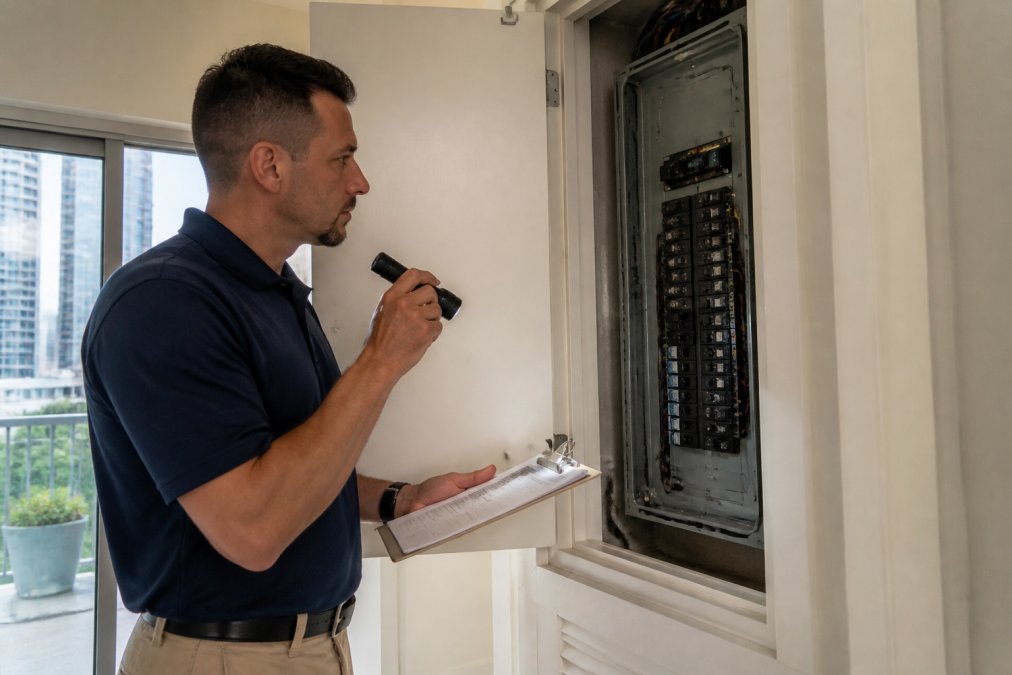
- Electrical panel, outlets, and wiring
- Plumbing fixtures, shut-off valves, and drains
- HVAC equipment and its condition
- Water heater, if the unit has one
- Appliances, run through a normal cycle
- Windows, doors, and interior walls
- Signs of water intrusion around ceilings and floors
These are the repairs that land on your bill after closing. Nobody else pays for them.
The Common Area Limitation
Here is the part most buyers never hear until it’s too late. A standard condo inspection does not cover the roof, foundation, elevators, or exterior walls. Those belong to the HOA.
The inspector can note visible red flags in shared areas. But a full assessment of common elements is not part of the job. That gap matters, and we’ll come back to it.
If your inspector never explains the common area limitation, ask directly. Buyers who assume the roof was “checked” often discover the opposite when a special assessment arrives.
HOA vs Individual Unit Responsibility: Who Fixes What
Who fixes what comes down to one document: the HOA’s recorded declaration, sometimes called the CC&Rs, plus its bylaws and rules. In most condominium buildings, the split works like this.
| Item | Typically HOA | Typically Owner |
|---|---|---|
| Roof and siding | Yes | No |
| Foundation and structure | Yes | No |
| Elevators and lobby | Yes | No |
| HVAC system | Sometimes | Sometimes |
| Water heater | Sometimes | Sometimes |
| Plumbing inside walls | Yes | No |
| Fixtures and appliances | No | Yes |
| Interior walls and floors | No | Yes |
| Windows and doors | Sometimes | Sometimes |
That “sometimes” column is where money gets lost. Some declarations put the HVAC condenser and air handler on the association. Others push them to the owner as “limited common elements.” The same is true for water heaters, balcony doors, and window glazing. The only way to know is to read the recorded documents, not the sales listing.
Ask for the declaration, bylaws, rules, current budget, reserve study, and the last two years of board meeting minutes before your inspection contingency expires. If the HOA maintains the roof, a bad roof is not your repair bill. If it does not, that changes your offer.
How to Inspect the HOA’s Financial Health
This is the step most condo buyers skip, and it is the one that decides whether the inspection fee was worth it. A physical inspection tells you about your unit. The HOA documents tell you about the building’s balance sheet, and that is where six-figure special assessments hide.
Read the reserve study first. It has two numbers that matter: the current reserve fund balance and the recommended funding level for the association’s age and components. If the fund sits well below the recommended level, the board has three options, raise monthly dues, levy a special assessment, or defer maintenance. All three land on you as the owner.
Then check the budget for the percentage of gross income going to reserves.
Schedule an Inspection or Request a Proposal →
- Pending or threatened litigation, especially construction defect claims against the developer
- Deferred maintenance items the board has discussed but not funded
- Special assessments already approved but not yet billed
- Insurance premium increases or coverage gaps
- Owner delinquency rates above a few percent, which squeeze cash flow
If the seller or listing agent will not provide the reserve study and minutes before your contingency deadline, treat that as a red flag. In most states you have a statutory right to review HOA documents before closing, but the clock on your inspection contingency is shorter than the clock on document delivery.
Pull the HOA’s reserve study alongside the inspection report and compare the two. The inspector tells you what is broken today. The reserve study tells you what the association is saving to fix tomorrow. An underfunded reserve is a future special assessment waiting to happen.
What the Inspector Cannot See
Even a thorough condo inspection has hard limits. The inspector generally cannot open walls, pull up flooring, access the roof, or test shared mechanical systems the association controls. That means the physical report covers your unit, and the HOA documents cover everything else. Buyers who treat the inspection as the whole picture are the ones surprised by a special assessment six months after closing.
Home Inspection Cost for Condos: What Drives the Price
Condo inspection pricing depends on a few moving parts, not a flat rate. Expect the number to shift based on:
- Unit size in square feet
- Age of the building and its systems
- Number of systems the inspector can access
- Whether thermal imaging is included
- Travel distance to the property
Condo Inspection Checklist: What Inspectors Flag Most
- Water intrusion around windows, ceilings, and under sinks
- Failed caulking and grout in bathrooms and kitchens
- Electrical panel problems, including double-tapped breakers
- HVAC age and condition, often near end of life
- Water heater corrosion or missing drain pans
- Appliance defects found during testing
- Poor ventilation in bathrooms and laundry areas
Water intrusion is the most common and most costly condo defect. Thermal imaging finds moisture behind walls that a visual check cannot.
Condo vs Single-Family Home Inspections
A condo inspection and a single-family inspection are not the same job. The scope differs, and so does the risk.
So the two inspections answer different questions:
- House: What am I buying, top to bottom?
- Condo: What am I responsible for, and what is the HOA responsible for?
When an Inspection Pays for Itself (and When It Doesn’t)
An inspection pays for itself when it uncovers a defect you can negotiate over or walk away from. It earns its keep in three situations.
How to Negotiate After a Condo Inspection
Negotiation is where the report earns its money, and condo negotiation works differently from a single-family deal. With a house, you can ask the seller to fix almost anything on the property. With a condo, the seller can only fix what the seller owns. If the report flags a shared roof or a failing elevator, the seller cannot repair it, and asking them to is a waste of your contingency window.
Here is how experienced buyers use a condo report:
- Separate owner items from HOA items. Only owner-responsibility defects belong in your request to the seller. HOA items belong in your decision about whether to proceed at all.
- Ask for a credit, not a repair, on owner items. A closing cost credit or price reduction lets you choose the contractor and control the quality. A seller-brokered repair often uses the cheapest bid.
- Price the credit from the report, not from a guess. If the inspector notes an HVAC unit at end of life, get a written quote from a licensed contractor and attach it to your request. A documented number is far harder to refuse than a round figure.
- Use HOA findings as a walk-away trigger, not a repair request. If the reserve study shows a five-figure special assessment on the horizon, no seller repair fixes that. Your options are to renegotiate the price to absorb the future cost or to terminate.
- Watch your contingency deadlines. In most transactions the inspection contingency runs ten to seventeen days from acceptance. Document requests, contractor quotes, and seller responses all have to fit inside that window, so start the HOA document review the day you go under contract.
Use inspection findings as negotiation tools, not just a to-do list. A documented defect with a contractor quote attached gives you a concrete reason to ask for a repair credit before closing.
When Walking Away Is the Right Call
Some findings are not negotiable. Active construction defect litigation, a reserve fund with almost no money and a roof past its service life, or a special assessment already approved but not disclosed are all reasons to terminate rather than renegotiate. The inspection fee you spent to learn that is the cheapest money you will spend on that building.
A condo inspection pays for itself when it changes your decision or your price. Pair the physical report with an HOA document review, negotiate only on owner-responsibility items, and treat HOA financial problems as walk-away triggers rather than repair requests.
Frequently Asked Questions
Do I really need a home inspection for a condo?
Yes, in most cases. A condo inspection examines the systems inside your unit, including the HVAC system, electrical panel, plumbing fixtures, and appliances, which the HOA typically does not cover. It also identifies water intrusion, safety hazards, and major defects that could cost thousands after closing. Skipping it to strengthen an offer shifts that repair risk onto you.
What is the biggest red flag in a condo inspection?
Water intrusion tops the list. Stains on ceilings, soft drywall, or musty odors often point to roof or plumbing leaks that can repeat and spread. Other serious findings include an aging HVAC system near the end of its service life, an outdated electrical panel, and structural cracks. Any of these can trigger repair negotiations or justify walking away from the purchase agreement.
What does a condo inspection cover compared to a house?
A condo inspection covers the interior systems and components within the unit: HVAC, electrical, plumbing, appliances, windows, and visible structural elements. Unlike a single-family home inspection, it excludes the roof, siding, foundation, and other common elements owned by the homeowners association. Reviewing HOA maintenance records and the reserve study helps fill that gap.
How much does a home inspection cost for condos?
Condo inspection pricing depends on unit size, age, location, and any add-on services, so there is no single figure that applies everywhere. Because condos have fewer exterior components than houses, the fee is often lower than a full single-family inspection. Request a quote from your inspection provider for current pricing based on your specific unit.


