Last Updated: November 2, 2026
Quick Summary
Plumbing red flags are warning signs in an inspection report that point to active damage, aging systems, or failures that could worsen over time. Leaks, low water pressure, water staining, corroded pipes, and slow drains are the most common ones. Sort each finding by urgency and cost before deciding how to respond.
- Plumbing red flags are not always emergencies; some are inexpensive fixes.
- Treat ‘recommend further evaluation by a licensed plumber’ as an unresolved item needing a written estimate.
- Concealed pipes and the main sewer line are usually outside a standard inspection and need separate review.
- A sewer scope inspection is worth the added cost for older homes or properties with large nearby trees.
- Get at least two itemized written estimates for any major finding before your contingency deadline.
Table of Contents
- Why Plumbing Findings Deserve Close Attention in an Inspection
- Common Plumbing Problems in Home Inspection Reports
- How to Read Plumbing Language in an Inspection Report
- Sewer Line Inspection Before Buying a House
- Plumbing Inspection Checklist for Home Buyers
- Estimating Repair Costs After a Plumbing Finding
- Your Next Steps After Reviewing the Plumbing Findings
- Frequently Asked Questions
Why Plumbing Findings Deserve Close Attention in an Inspection
Plumbing problems rarely announce themselves. A slow drip under a sink or a faint stain on a ceiling can signal a larger failure behind the walls.
Buyers often focus on the roof and foundation while overlooking pipes and drains. Plumbing repairs can be costly, and some problems stay hidden until after closing.
Plumbing red flags are warning signs that point to active damage, aging systems, or failures that could get worse over time. They are not always emergencies.
Common Plumbing Problems in Home Inspection Reports
Most plumbing findings fall into a few familiar groups. Knowing them makes the report easier to read.
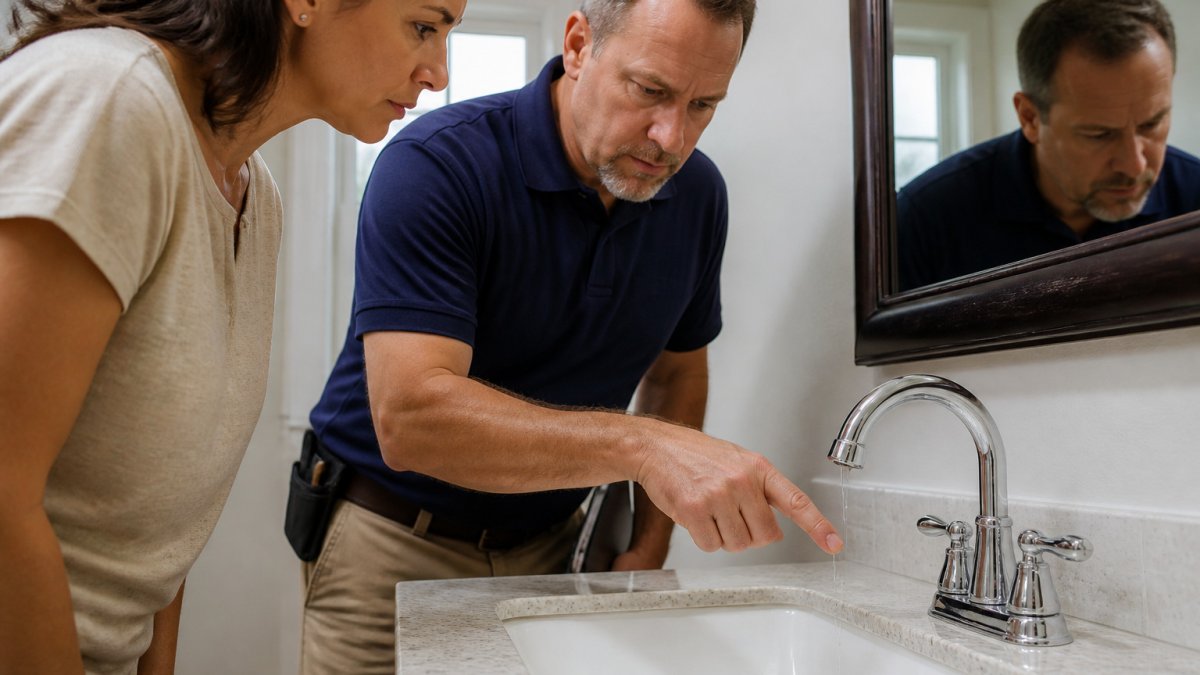
Common issues include:
- Leaks at fixtures, pipes, or the water heater
- Low water pressure
- Water damage or staining near plumbing
- Corroded or outdated pipe materials
- Slow drains or sewer problems
Each one can range from minor to serious, depending on the cause and the age of the home.
Leaks at Faucets, Pipes, Toilets and Fixtures
Leaks are among the most common plumbing red flags. A dripping faucet wastes water and is usually an easy fix. A leak inside a wall or under a slab is a different story. It can rot framing, feed mold, and cause damage you cannot see.
Watch for:
- Water stains under sinks or around toilet bases
- Soft or warped flooring near fixtures
- Musty odors that do not go away
Low Water Pressure and Its Possible Causes
Low water pressure is frustrating, but it also points to specific causes. Common ones include mineral buildup in pipes, a partly closed valve, a failing pressure regulator, or corroded galvanized pipes that have narrowed over decades. Some causes are simple. Others mean the supply lines need replacement. Ask the inspector which cause they suspect.
Water Damage, Stains and Signs of Water Intrusion
Stains on ceilings, walls, or floors often trace back to plumbing. Check whether the stain is old and dry or fresh and spreading. Staining with a tide-line pattern can mean repeated wetting. Persistent odors and bubbling paint are also worth a closer look.
How to Read Plumbing Language in an Inspection Report
Inspection reports are written in a defensive, observational vocabulary. A useful skill for buyers is translating an inspector’s wording into a decision about urgency, cost exposure, and who should look next.
The standard rating terms
- Functional / serviceable: The item was operating as intended at the time of inspection. It does not mean new, code-compliant, or problem-free, only that no defect was observed.
- Marginal: Working but near the end of useful life. A marginal water heater or supply valve is a budgeting item, not an emergency, but it is likely to fail during your ownership.
- Defective: Broken, failing, or not performing its intended function. Defective plumbing items usually warrant a specialist evaluation and a repair estimate before closing.
- Safety concern / hazard: Could cause injury, fire, gas exposure, or serious water damage. These move to the top of the list regardless of cost.
- Not inspected / not visible / concealed: The inspector could not see the item, common for pipes inside walls, under slabs, or behind finished ceilings. This is not a clean bill of health; it is an open question.
Translating the hedged phrases
Inspectors use soft language for liability reasons, and buyers routinely misread it as reassurance. A practical translation:
- “Monitor”, The inspector saw something that is not failing today but could progress: a slow weep, early corrosion, a hairline crack in a supply line, mineral staining. It means re-check at a set interval (often annually) and budget for repair. It does not mean ignore.
- “Recommend further evaluation by a licensed plumber”, The inspector found evidence of a problem but is not qualified or able to diagnose the cause. Treat this as an unresolved item: get the plumber’s written findings and a repair estimate before your inspection contingency expires.
- “Recommend further evaluation by a sewer scope contractor”, The main line was not camera-inspected. This is common on older homes and properties with mature trees. The cost of a scope is small next to a main-line replacement.
- “Not inspected” / “concealed” / “inaccessible”, No conclusion was reached. For supply lines, drains, and the sewer lateral, this is the most common place for expensive surprises to hide.
- “Appears to be” / “no visible evidence of”, The inspector is describing surface conditions only. No visible leak at a fixture does not rule out a leak inside the wall or under the slab.
Reading patterns, not just line items
A single note about a corroded fitting is routine. Three notes about corrosion, staining, and low pressure in the same bathroom point to a systemic supply or drainage problem in that branch.
Schedule an Inspection or Request a Proposal →
Watch out: do not treat a report with no plumbing comments as a clean plumbing system. Standard inspections are visual and non-invasive, and concealed pipes, slab leaks, and the full sewer lateral are routinely outside that scope.
Sewer Line Inspection Before Buying a House
A standard home inspection usually does not include the main sewer line. That line runs from the house to the municipal connection and can be expensive to repair. Tree roots, cracks, and offset joints are common culprits, especially in older homes.
A sewer scope inspection uses a camera to view the inside of the line. Many buyers order one separately, particularly for older homes or properties with large trees nearby.
Plumbing Inspection Checklist for Home Buyers
Use this list as a starting point when reviewing the plumbing section:
- Run every faucet and check for leaks at the base and spout
- Flush each toilet and look for running water or cracked tanks
- Check water pressure at several fixtures
- Look under sinks for moisture, stains, or warped cabinets
- Note the water heater’s age and any signs of leaking
- Ask about the pipe material (copper, PEX, galvanized, or cast iron)
Estimating Repair Costs After a Plumbing Finding
Cost is where most buyers freeze. You do not need a precise number to negotiate well, you need a rough tier so you can tell a manageable repair from a deal-altering one, and you need written estimates before your contingency deadline. A current guide to estimating repair costs after inspection walks through how to build that picture before you negotiate.
A rough cost-tier framework
Use these tiers to sort findings, then replace the tier with a real estimate from a licensed plumber. Figures below are typical U.S. ranges for planning only; actual prices vary by region, home layout, access difficulty, and whether permits are required.
- Tier 1, Fixture and minor repair (roughly $100-$500): dripping faucets, running toilet flappers, a failed supply valve, a loose toilet base, a leaking P-trap. Usually a same-day service call. These are rarely worth renegotiating over, but they add up.
- Tier 2, Component replacement (roughly $500-$2,500): water heater replacement, a section of corroded supply or drain pipe, a failed pressure regulator, a sump pump, disposal replacement. Budget items, not emergencies.
- Tier 3, System-level repair (roughly $2,500-$10,000+): partial repipe, main sewer line repair or spot lining, slab leak access and repair, replacing a failed well pump or pressure tank. These are negotiation items and often require a specialist estimate.
- Tier 4, Major system replacement ($10,000 and up): whole-house repipe, full sewer lateral replacement, extensive water-damage remediation with mold work. These can change whether a purchase pencils out.
What drives the number up or down
- Access: A leak under a sink is cheap to reach. The same leak inside a finished wall, under a slab, or behind tile adds demolition and restoration, often more than the plumbing itself.
- Pipe material and age: Galvanized steel and polybutylene are common replacement candidates; copper and PEX are generally easier to repair in place. A partial repipe can force a larger one if the remaining pipe is the same age.
- Permits and inspection: Most jurisdictions require permits for water heater replacement, repipes, and sewer work. Permit fees and inspection scheduling add cost and time.
- Water damage and mold: Once drywall, flooring, or framing is wet, remediation and restoration can exceed the plumbing repair. Ask the plumber whether the estimate includes access, drywall, and cleanup, many do not.
- Emergency timing: Weekend and after-hours rates run higher. If a finding is not active, schedule the work during normal hours.
How to get estimates that hold up
Consider getting at least two written estimates for any major finding. Ask each contractor to itemize labor, materials, permits, access and restoration, and cleanup, and to state what is excluded. Confirm licensing and insurance, and ask whether the price is fixed or time-and-materials.
Watch out: a low bid that excludes access, drywall repair, permits, or restoration is often the most expensive option once the wall is open. Compare scope, not just the bottom line.
The article sorts plumbing repairs into rough cost tiers, which you can scan at a glance.
| Tier | Typical range | Examples |
|---|---|---|
| Tier 1: Fixture and minor repair | Roughly $100-$500 | Dripping faucet, running toilet flapper, P-trap leak |
| Tier 2: Component replacement | Roughly $500-$2,500 | Water heater, corroded pipe section, pressure regulator |
| Tier 3: System-level repair | Roughly $2,500-$10,000+ | Partial repipe, main sewer line repair, slab leak |
| Tier 4: Major system replacement | $10,000 and up | Whole-house repipe, full sewer lateral, water-damage remediation |
Your Next Steps After Reviewing the Plumbing Findings
Start by sorting the report’s plumbing items into three groups: immediate safety concerns, repairs needed soon, and items to monitor. Ask your inspector to explain anything unclear. Then decide whether you need a specialist, such as a plumber or sewer scope contractor, before you move forward.
Full Disclosure Property Inspection, led by Certified Master Inspector Melanie Crabtree, can walk you through what each finding means for your purchase. Schedule an inspection or request a proposal to get a clear, detailed report you can act on.
Frequently Asked Questions
What are the most serious plumbing red flags in a home inspection report?
The most serious findings are usually active leaks, evidence of water intrusion, sewer or drain failures, and corroded or high-risk supply piping. Leaks and water damage can point to hidden rot, mold or structural harm, so they deserve prompt attention. Sewer problems can be expensive to repair and disruptive to live with. Less urgent items such as a worn fixture or a minor drip are usually simpler to correct. Ask the inspector to rank findings by severity so you know which ones to raise with the seller first.
Does a home inspection report tell you how much plumbing repairs will cost?
Most standard inspection reports describe the condition of a system and recommend further evaluation, but they generally do not provide repair pricing. Repair costs depend on the material, access, scope and local labor rates, so an inspector cannot quote them precisely. For major findings, such as a suspected sewer line problem, get an itemized estimate from a licensed plumber or a specialist before you finalize your offer or negotiation.
Can a home inspector identify problems inside pipes or sewer lines?
A standard visual inspection can only evaluate what is accessible, such as visible supply lines, drain stoppage signs and fixtures. Problems hidden inside walls or underground often require specialized equipment, such as a sewer camera scope, to confirm. Inspectors commonly note these limits in the report and recommend a plumber or sewer scope inspection when symptoms suggest a concealed issue.
What should you do if an inspection report mentions a plumbing leak?
Start by asking the inspector where the leak is, how severe it appears and whether there is related water damage. Then have a licensed plumber evaluate the source and provide a written repair estimate. Use the findings to request repairs, a credit or a price adjustment from the seller. If the leak shows signs of longer-term damage, consider a moisture or mold evaluation before closing.


