Table of Contents
- Why Knob and Tube Wiring Still Shows Up in Chattanooga Homes
- What Does Knob and Tube Wiring Look Like?
- Where to Find Knob and Tube Wiring in a House
- Knob and Tube Wiring Safety Risks You Should Not Ignore
- Knob and Tube Wiring Inspection: What a Professional Looks For
- How to Identify Knob and Tube Wiring in Chattanooga Homes: A Step-by-Step Checklist
- What You’ll Need
- Step 1: Check the Home’s Build Date [Time: 2 minutes]
- Step 2: Inspect the Attic First [Time: 10 minutes]
- Step 3: Check the Basement and Crawl Space [Time: 10 minutes]
- Step 4: Test Outlets and Switches [Time: 10 minutes]
- Step 5: Look at the Electrical Panel [Time: 5 minutes]
- Step 6: Document Everything [Time: 3 minutes]
- What to Do If You Find Knob and Tube Wiring Before You Buy
- Frequently Asked Questions
Last Updated: October 15, 2026
Why Knob and Tube Wiring Still Shows Up in Chattanooga Homes
Knob and tube wiring is an early electrical system that used ceramic knobs and tubes to hold cloth-wrapped copper wires apart.
We find this wiring during routine evaluations more often than most buyers expect.
The problem is simple. Knob and tube was never designed for the electrical load a modern household demands.
Homes from that era had a few lights and maybe a radio.
Knob and tube wiring is not automatically a deal-breaker, but it is a known safety concern that insurers and lenders treat seriously. Knowing how to identify it early protects your budget and your negotiating position.
What Does Knob and Tube Wiring Look Like?
Knob and tube wiring looks like bare copper wires wrapped in cloth or rubber, strung between white ceramic knobs and threaded through ceramic tubes.
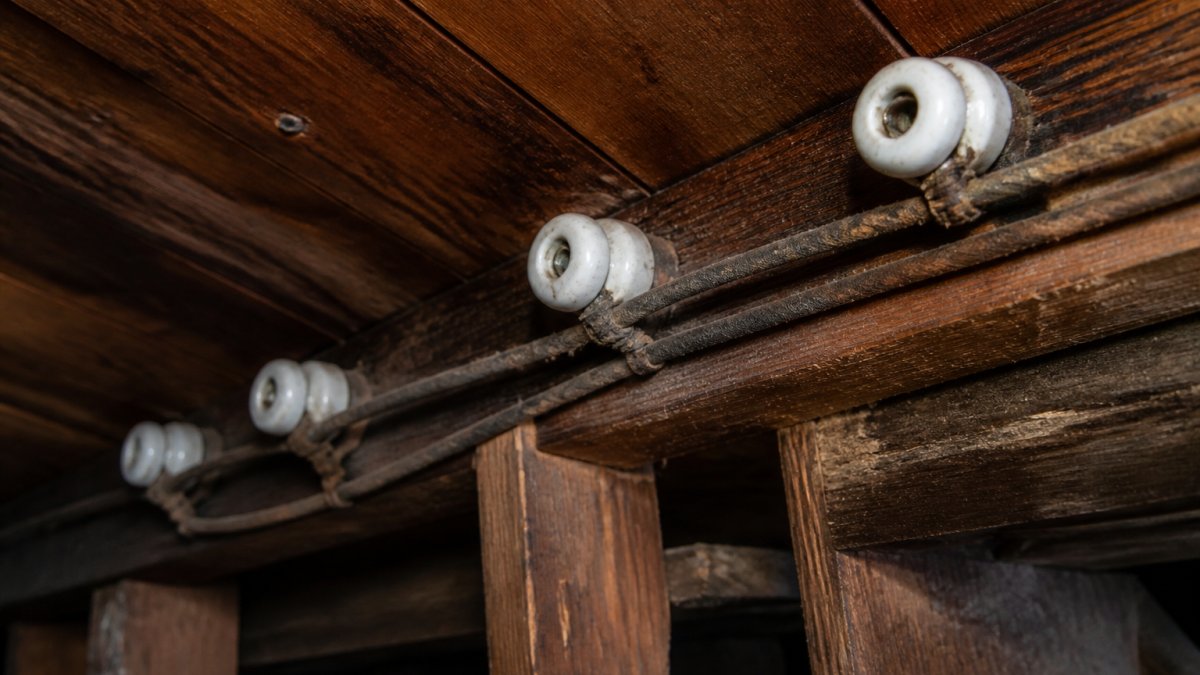
That look is unmistakable once you know it. The U.S. Consumer Product Safety Commission guidance on older home wiring notes that this type of wiring was common in homes built before 1950.
The Porcelain Knobs, Tubes, and Cloth-Covered Wires
The system has three visible parts:
- Knobs: white ceramic spools nailed to joists that hold wires in place
- Tubes: ceramic sleeves that protect wires where they pass through wood
- Wires: single copper conductors covered in cloth or rubber, often brittle
The knobs keep wires spaced apart. The tubes stop wood from rubbing the insulation.
How It Differs From Modern Romex Cable
Modern homes use Romex, a flat cable with two or three wires inside a plastic sheath. It includes a ground wire for safety.
Knob and tube has no ground wire and no sheath. Each wire runs alone. That difference alone tells you a lot about the age and safety of the system.
Where to Find Knob and Tube Wiring in a House
Knob and tube wiring hides in unfinished spaces where the wires were originally run. Attics, basements, and crawl spaces are the most common spots.
The National Fire Protection Association sets the electrical code standards that modern wiring must meet. Older systems often fall short of those standards.
Attics, Basements, and Crawl Spaces
Start your search in these open areas:
- Attic joists near the center of the home
- Basement ceiling framing
- Crawl space floor joists
- Top plates where walls meet the attic floor
Look for ceramic knobs nailed in rows. That pattern is the giveaway.
Behind Walls, Ceiling Fixtures, and Outlets
Wires also run inside walls and ceilings. Check these spots:
- Light fixtures in older rooms
- Switch plates that feel warm
- Outlets with two-prong plugs only
- Ceiling boxes in bedrooms and hallways
Pull a switch plate cover and look at the wire behind it. Cloth-covered wire means you likely have knob and tube.
Never remove an outlet or switch from the wall to inspect wiring unless the circuit is switched off at the breaker. Live knob and tube wiring with brittle insulation can shock or spark.
Knob and Tube Wiring Safety Risks You Should Not Ignore
Knob and tube wiring safety risks center on three issues: no ground wire, brittle insulation, and overloaded circuits.
The wire insulation dries out over decades. It cracks and falls away, leaving bare copper exposed.
Other concerns include:
- No equipment ground, so surge protectors cannot work properly
- Heat buildup when circuits carry more current than designed
- Poor connections at splices that loosen over time
- Insurance carriers that may refuse to cover homes with active knob and tube
Many insurers now ask about wiring type before issuing a policy. That question alone shows how seriously the industry treats it.
Knob and Tube Wiring Inspection: What a Professional Looks For
A professional knob and tube wiring inspection goes beyond a quick visual scan. It checks the full system, not just the parts you can see, and it separates two things buyers often blur together: time at the property and time to produce the report.
At Full Disclosure Property Inspection, our team uses infra-red thermal imaging on every fee-paid inspection. That tool spots hot spots behind walls that a visual check would miss.
On-Site Time Versus Report Turnaround
A general home inspection on a typical single-family house runs about two to four hours on site.
The report is a separate clock. Computer-generated reports with photos, thermal images, and annotated findings take longer to assemble than a handwritten checklist, so ask your inspector for the turnaround window before you book.
How a Pro Confirms Hidden Knob and Tube
Finished walls hide most of the system. A thorough evaluation uses several methods together:
Schedule an Inspection or Request a Proposal →
- Visual tracing in open spaces: Attics, basements, and crawl spaces usually expose at least part of the run, and the inspector follows it toward the walls.
- Outlet and switch sampling: Removing a representative sample of cover plates shows wire type and grounding at the endpoints.
- Panel mapping: The main electrical panel shows how many circuits exist and whether any were added later. A 60-amp fuse panel with a handful of circuits is a strong signal.
- Thermal imaging: Infra-red scans reveal warm spots at connections and splices that are not visible to the eye.
What the Inspector Documents
A useful report does not just say “knob and tube present.” It records:
- Which circuits are still active and which have been replaced
- Locations of visible runs by room or area
- Any splices, taping, or amateur repairs
- Signs of overheating or brittle insulation
- The panel type, amperage, and any double-tapped breakers
The U.S. Department of Energy recommends upgrading older wiring when it cannot safely handle modern demand. The inspector’s job is to tell you whether that threshold has been crossed.
That is the real question. Not whether the wiring exists, but whether it can do the job safely, and how much of it is left.
Ask your inspector up front whether thermal imaging is included or an add-on. It changes both the price and the depth of what you get.
How to Identify Knob and Tube Wiring in Chattanooga Homes: A Step-by-Step Checklist
Use this checklist to identify knob and tube wiring in Chattanooga homes before you make an offer. Work through it in order, and stop if you feel unsure at any step.
Total Time: 30-45 minutes
Difficulty: Beginner, with a flashlight and screwdriver
What You’ll Need
- A bright flashlight
- A screwdriver for switch plates
- Work gloves
- A notepad or phone camera
Step 1: Check the Home’s Build Date [Time: 2 minutes]
Homes built before 1950 are the most likely to have knob and tube. Pull the build year from the listing or county records.
Step 2: Inspect the Attic First [Time: 10 minutes]
Look along the joists for white ceramic knobs in a row. Wires running between them confirm the system.
Expected Result: You either see knobs and cloth wire or you do not.
Step 3: Check the Basement and Crawl Space [Time: 10 minutes]
Scan the ceiling framing and floor joists. Ceramic tubes passing through wood are another clear sign.
Step 4: Test Outlets and Switches [Time: 10 minutes]
Look for two-prong outlets with no ground slot. Remove one cover with the power off and check the wire type.
Step 5: Look at the Electrical Panel [Time: 5 minutes]
Older panels with screw-in fuses often pair with knob and tube. Note the panel brand and any signs of added circuits.
Step 6: Document Everything [Time: 3 minutes]
Photograph each finding. Share the images with your inspector and your agent.
| What You Find | What It Means | Next Step |
|---|---|---|
| Ceramic knobs and cloth wire | Active knob and tube likely present | Get a professional evaluation |
| Two-prong outlets only | System may lack grounding | Ask about rewiring scope |
| Screw-in fuse panel | Older service, possible overload risk | Request panel review |
| Modern Romex with ground | System likely updated | Confirm no hidden runs remain |
A common mistake is assuming a home was fully rewired because the panel looks new. Partial upgrades are common. Old knob and tube often stays live in the attic even after the panel is replaced.
What to Do If You Find Knob and Tube Wiring Before You Buy
Finding knob and tube wiring before you buy gives you options. It is information, not a dead end. What most guides skip is the sequence: who to call first, what each path actually costs you in time, and how to keep the deal alive while you sort it out.
Step 1: Get a Licensed Electrician’s Scope, Not a Guess
A home inspector identifies and documents. A licensed electrician prices and scopes. Those are different jobs, and you need both.
Ask the electrician for a written scope that answers three questions:
- How many circuits are still active knob and tube?
- Which runs are accessible versus buried in finished walls?
- What is the path to a full or partial rewire, and what does each option involve?
A partial rewire that replaces the most heavily loaded circuits is sometimes enough to satisfy an insurer. A full rewire is a larger project that typically requires opening walls, running new cable, and installing grounded outlets throughout.
Step 2: Check Insurance Before You Check Your Budget
Many carriers now ask about wiring type during the quote process. Some will write a policy on a home with active knob and tube; some will not; some will write it only with a documented upgrade timeline.
Call your carrier before you remove contingencies. A home you can afford but cannot insure is not a home you can close on.
Step 3: Weigh the Four Paths
- Negotiate: Ask the seller to cover part or all of the rewiring cost, backed by the electrician’s written scope. This works best when you have a firm number, not a range.
- Budget for it: Plan the upgrade into your purchase numbers and your timeline. Rewiring is disruptive, so factor in where you will live during the work if the scope is large.
- Walk away: If the scope is too large for your comfort or the seller will not move, this is a legitimate outcome.
- Insure carefully: Confirm your carrier will cover the home as-is, or get a written commitment to cover it after a documented upgrade.
Step 4: Keep the Deal Moving
For investors looking at multiple properties, an independent inspection keeps deals moving. We handle evaluations across the greater Chattanooga area for buyers, sellers, and investors alike.
If you are buying new construction instead, an inspection still matters. We have seen quality issues in homes only a few years old.
Do not rely on a seller’s verbal assurance that the home was rewired. Ask for permits, receipts, or an electrician’s sign-off. Partial upgrades are common, and old knob and tube often stays live in the attic even after the panel is replaced.
Frequently Asked Questions
What does knob and tube wiring look like?
Knob and tube wiring uses white ceramic knobs nailed to joists and ceramic tubes set into drilled holes. The wires are single conductors wrapped in cloth or rubber insulation, often darkened or brittle with age. You will not see a ground wire or a bundled cable jacket. Modern wiring, by contrast, comes as Romex sheathed in plastic with two or three conductors plus a bare ground.
Is knob and tube wiring dangerous?
Knob and tube wiring safety risks include brittle insulation that cracks and exposes live conductors, no equipment ground, and overheating when buried under attic or floor insulation. It was designed for lower electrical loads than today’s appliances draw. The Consumer Product Safety Commission notes that older wiring systems contribute to residential fires, so a licensed electrician should evaluate any active knob and tube circuits before you close.
Should a home inspector check for knob and tube wiring?
Yes. A thorough knob and tube wiring inspection covers visible wiring in attics, basements, crawl spaces, and at the service panel. Inspectors note the presence, extent, and condition of any knob and tube circuits, then flag safety concerns for an electrician to review. Infrared thermal imaging can help spot overheating connections that are not visible to the naked eye during a standard walkthrough.
Does knob and tube wiring need to be replaced?
Not always immediately, but most insurers and lenders treat active knob and tube as a problem. Many carriers refuse to insure homes with it, and some lenders will not fund a mortgage until it is addressed. The safest path is to have a licensed electrician assess how much of the system is still live, then plan a partial or full rewire. Expect the cost to vary based on square footage, access, and how many circuits are involved.


